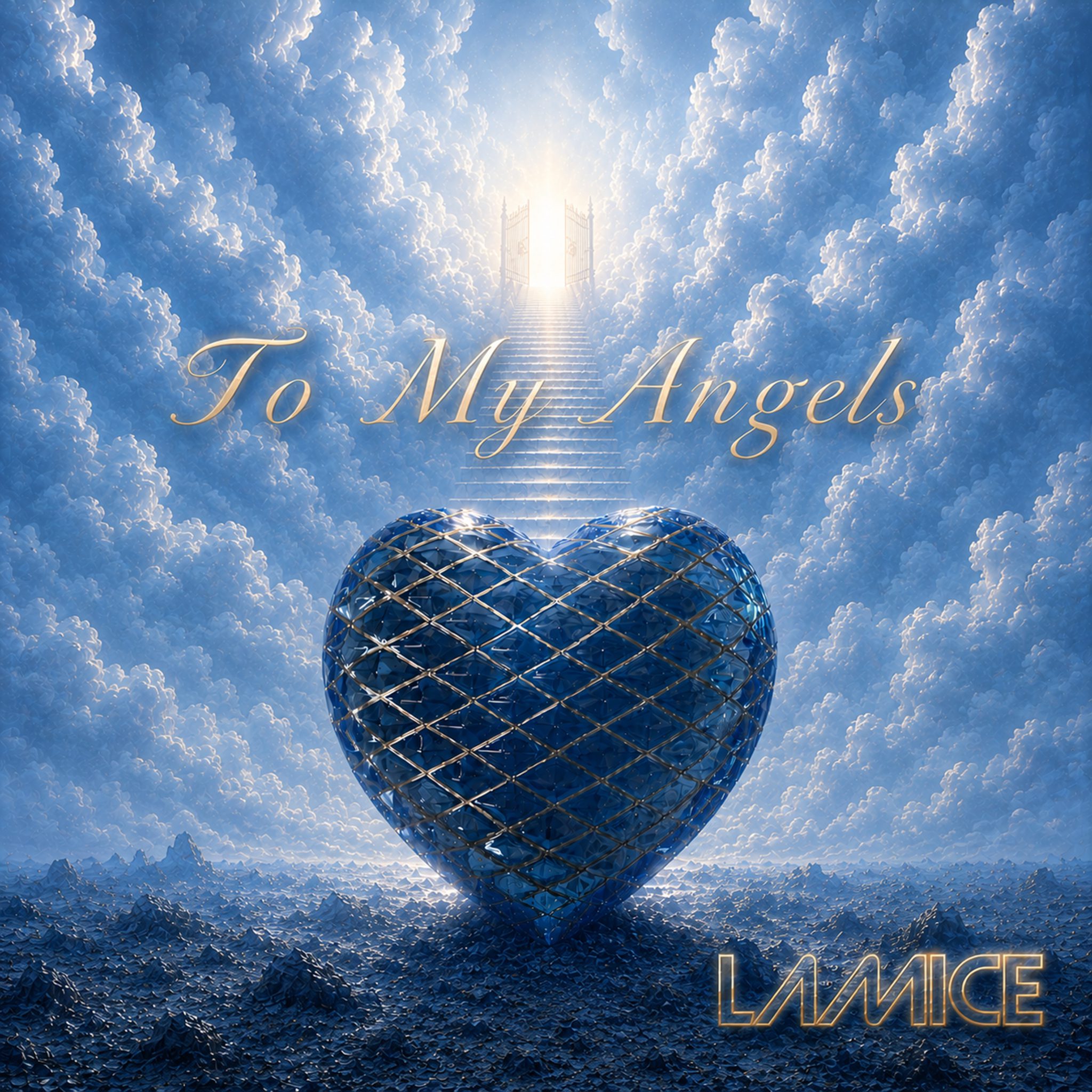
“To My Angels” began nearly eighteen years ago following the passing of your grandmother. What do you remember about the song when you first began writing it?
I remember feeling a very strong emotion but being unable to fully express it through words or melody. The pain was still too immediate and overwhelming. The song began as a personal and solitary attempt to pay tribute to someone I deeply loved and felt deeply grateful to. At that time, I was not thinking about an audience or a release.
Over the years, the passing of your father, mother and uncles also became part of the song’s story. How did those experiences influence the way “To My Angels” developed over time?
Each farewell added a new emotional layer to the song. I was also deeply moved by witnessing the different ways family members and friends lived through their own losses, sometimes in especially painful circumstances involving war, accidents, illness…
Through my own experience, and guided by my personal beliefs, I stopped expecting grief simply to disappear. I tried instead to live with absence while carrying forward the love, memories, lessons and values of those I had lost. That personal acceptance gradually shaped the song into a tribute to all our departed loved ones—and into a space where others might express their own emotions.
You describe “To My Angels” as moving from helplessness and sorrow towards hope, while expressing the belief that love does not end with a farewell. How did you approach translating those ideas into the song?
In my recent releases, songs and their music videos have become two parts of the same emotional and artistic journey—almost like short films. Together, they carry the complete message.
For “To My Angels,” the sadness is not denied. The song begins with the fragility and helplessness of a final farewell before gradually opening towards light. This transformation is expressed directly in my lyrics:
“Since you’ve gone, you light my way
Inspiring every step I make
You transcend my grief into Love
Could I be capturing your signs?”
The video extends that movement visually, from the final breath towards hope. Together, the music and images suggest that physical presence may end, but love can remain—and that our departed loved ones may still accompany and guide us.
You have described your creative philosophy as allowing songs the time to breathe, mature and reach the people they are meant to touch. How did that philosophy shape the eighteen year journey of “To My Angels”?
In my creative approach, a song is neither forced into a particular form nor released simply because the market expects constant new content. Some creations arrive quickly, while others need to grow alongside our lives. The process often begins with a personal experience that needs time to be understood and transformed before the reflections it inspires are ready to be shared.
“To My Angels” remained unfinished until its meaning, music, orchestration and visual world felt connected. Time was not an obstacle; it became part of the creation. My song “A Question of Time,” composed as a teenager and released nearly thirty years later, reflects the same philosophy.
The song ultimately found its final form in and around Ramatuelle in Southern France, where you say the surroundings awakened memories of Lebanon and your departed loved ones. What role did that setting play in the final stage of the song?
Ramatuelle’s Mediterranean light, pine trees, sea air and the warmth of its people reminded me deeply of Lebanon—the homeland of the family members honoured by the song.
From the opposite shore of the same Mediterranean Sea, bringing the song to life there felt right and true to their memory. The setting created a bridge between the French and Lebanese sides of my identity, while offering the space to recharge, step back and gain the perspective the song needed to find its final musical and visual identity.
That distance and perspective also allowed a deeply personal tribute to open towards a wider human experience—one that may touch other hearts and allow listeners to recognise something of their own within it.
While in Ramatuelle, you connected through jam sessions at a local bar with Joe, a British songwriter and producer, which led to your collaboration with Marin, a Belgian sound engineer. How did those encounters contribute to the final recording?
Joe and I first connected through improvised jam sessions at a bar in Ramatuelle. When I felt ready to finalise and release the song, I was inspired to share it with him. He immediately connected with its story and emotion, bringing his own British and rock sensibility to the production while respecting its intimate character.
The process then led me to Bloom Music Studios, which Marin had recently opened nearby. I felt relieved and reassured to find that he also connected deeply with the song’s meaning.
Joe and Marin each brought their own culture, musical background and sensitivity to the recording, helping preserve the song’s intimacy while giving the recording the strength it needed.
The blue crystal heart used in the visual identity of “To My Angels” is a cherished keepsake from your mother and represents your Angels. What does that object mean to you in connection with the song?
Remaining unseen has led me to use stones as characters in my self-produced music videos. These objects carry emotions that listeners can interpret in their own way; rose quartz, for example, represents love within these films.
The blue crystal heart connects the song directly to my mother and represents those who have left us. Its light and transparency echo the song’s emotional journey, making it a simple but powerful symbol of eternal love.
You created the “To My Angels” music video yourself, handling the concept, script, photography, filming and editing entirely on a smartphone. What led you to take on every part of the visual production yourself?
As a multidisciplinary DIY creator and 100% digital artist, I consider the song, video and digital storytelling to be parts of one complete artistic creation—not separate works or promotional assets. Handling the visual production myself allows me to channel my creativity and emotions through different forms, preserve the story’s intimacy and ensure that every image serves the song’s message.
The smartphone offers the freedom to capture spontaneous moments over several years and in different places. The aim is not technical perfection for its own sake, but professional and sincere visual storytelling that carries the meaning of each song.
The video was filmed across locations including Ramatuelle, Saint Tropez, the Valais region of Switzerland, the Esterel massif, the Ubaye valley, Oslo, Lavandou and La Croix Valmer. How did these different locations contribute to the visual story you wanted to tell?
Much of the footage was captured over several years and at different moments in my life. Videos and photographs are recorded whenever I feel inspired, then preserved in a digital archive until I find their place within a particular artistic work.
In the “To My Angels” music video, the variety of locations reflects the way memories travel with us wherever we go. The contrasts between coastlines and mountains also bring different emotional atmospheres to the story.
These images do not simply symbolise the passage of time—they document it. Changing landscapes, seasons, light, sunrises and sunsets carry traces of different periods of life, suggesting that grief does not follow a fixed timetable.
“To My Angels” is dedicated to people who carry the memory of a loved one in their heart. What would you like someone experiencing grief to take away from the song when they hear it?
Every loss and emotional journey is unique. The song began with my own story, but once released, it no longer belongs only to me.
Listeners may make it their own—as a memory, a tribute or a way to release emotions they cannot express in words, perhaps even by singing it loudly alone in their cars. If it helps someone feel less alone or offers a small sense of hope, then it has fulfilled its purpose.
