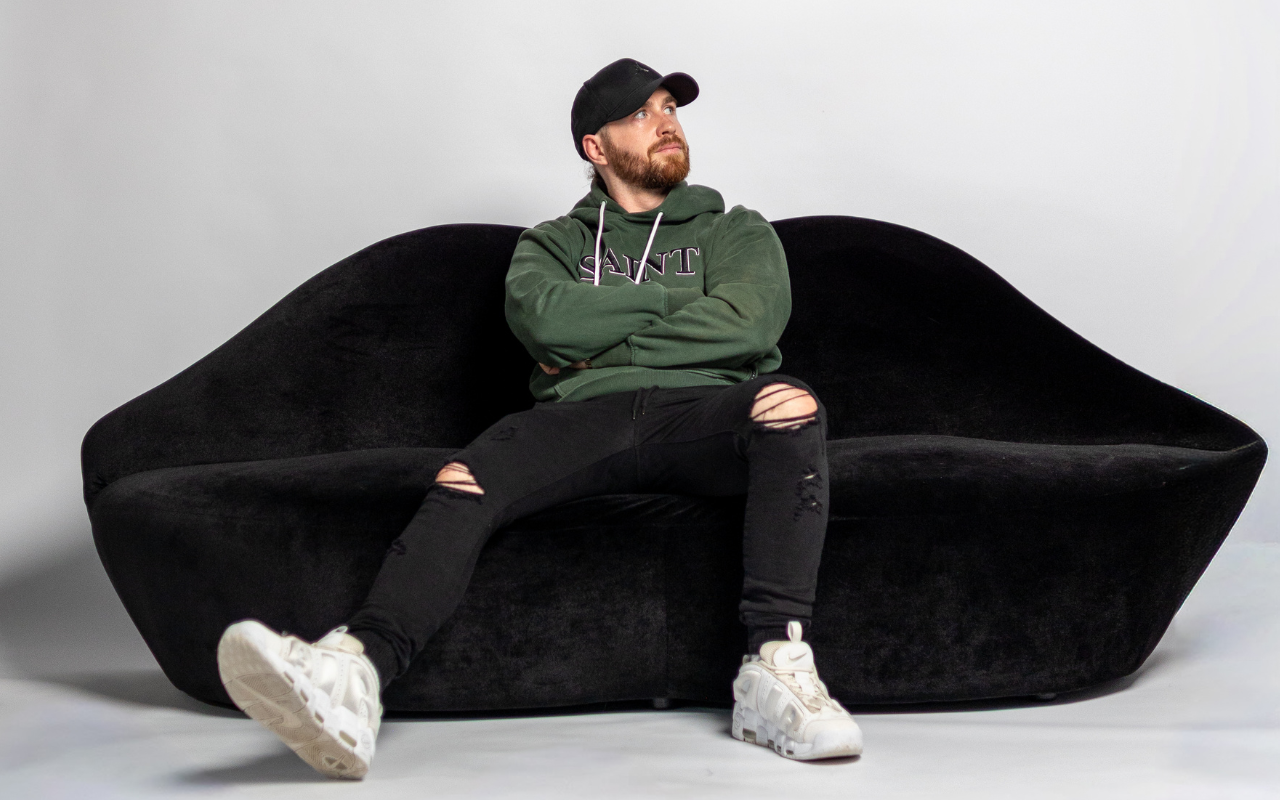
How much of your new track Medicinal Liquor came from lived experience versus character-driven storytelling, and where do you personally draw that line when writing?
For Medicinal Liquor, pretty much all of it was drawn from personal experiences and emotions. I’ve always been drawn to writing with imagery and metaphor because it helps communicate a feeling without having to spell out every detail.
As for where I draw the line, I don’t think I’ve reached it yet. There are definitely things I’ve chosen to disguise or soften through storytelling, but the emotions behind the music are real. Even when the details become more artistic, the feeling I’m trying to convey is always honest.
There is a tension in the track between emotional collapse and control. Was that contrast intentional from the beginning, or did it reveal itself naturally as the song developed?
A bit of both. At this stage in my life, I’ve become a very different person to the one who was experiencing a lot of the things talked about in the song. Medicinal Liquor is a showcase of both the struggle and the growth that came from it. The emotions are real, but so is the strength that was built by going through them.
The production feels immersive without becoming over polished. How important is it for you to leave imperfections in your music?
Funny enough, there’s actually a small audio glitch right at the start of the song that I decided to leave in. It almost sounds like a record player starting up, and at some point I stopped hearing it as a mistake and started hearing it as part of the atmosphere.
I record all of my vocals in my room rather than a studio because that’s where I can really immerse myself in a song emotionally instead of chasing perfect takes. For me, it’s about finding a balance. I want the music to sound polished, but not so polished that it loses its character.
When you are writing under the name Mr Elusive, do you feel like you are stepping further into yourself, or creating distance from who you are away from music?
It’s a bit of both. On one hand, writing as Mr Elusive allows me to go deeper and give a voice to thoughts and emotions that don’t always make it to the surface in everyday life. A lot of the music comes from places I probably wouldn’t express as openly in a normal conversation.
At the same time, Mr Elusive feels like the side of me that normally stays hidden. It’s not a character, but more a part of my personality that gets brought into the light through music. In a way, it’s the elusive side of me becoming visible, with each song acting as a piece of that picture.
A lot of independent artists talk about the pressure to release music constantly. Did Medicinal Liquor come together naturally, or was this one of those tracks you kept pulling apart and rebuilding?
Medicinal Liquor actually came together pretty naturally, which isn’t always the case. Some songs get pulled apart and rebuilt over and over again, but this one felt like it knew what it wanted to be from early on.
That said, I definitely feel the pressure that comes with being an independent artist in a world that moves so quickly. A big reason I stepped back from releasing for a while was to focus on improving the music and building a bit of a vault of songs. That way I could stay consistent with releases while still having time to work on new ideas. You’ll definitely be seeing a lot more of me moving forward.
The atmosphere of the track feels almost cinematic. Were you deep in any particular headspace while making this one?
I’m glad you felt that because it was slightly intentional. I wanted the song to feel almost like a movie trailer, where every scene is building tension and emotion towards something bigger.
The very first line actually came out raspier than I had planned, but the second I heard it back I knew it was right for the song. It felt like it captured the atmosphere perfectly and set the tone for everything that followed.
A lot of the headspace behind the track came from a particular chapter in my life. There was a lot of raw emotion that surfaced while writing it, and in a way the song became a trailer for that chapter of my story.
Do you think audiences are connecting more deeply with emotionally complicated music now because everything else online feels so curated and overstimulated?
I think once people find it, then yes. Some people are perfectly happy where the algorithms take them, while others are actively searching for something that feels a bit more raw, real and emotionally complicated.
Life naturally moves up and down, and when people hit those lower moments, music can give them a place to sit with what they’re feeling. Everyone experiences those moments at some point, and I think that’s why songs that come from a genuine place continue to connect with people regardless of trends.
What part of the song took the longest to get right, and was there a specific moment where you realised the track was finished?
The chorus definitely took the longest to get right. The verses came together pretty naturally, but I knew the song needed something stronger to tie everything together and I couldn’t quite figure out what it was.
Then my dad randomly mentioned “Copperhead Road” by Steve Earle during a phone call and it instantly unlocked the missing piece. I remember cutting the conversation short because I wanted to get back to recording before I lost the idea.
That was probably the moment I knew the song was finished. Once the chorus clicked, everything felt like it belonged together.
There is a real sense of restraint throughout Medicinal Liquor. Did you ever feel tempted to make the track bigger, louder, or more commercially direct?
I wasn’t really thinking about restraint consciously, but I was trying to serve the song. There were definitely things I could have added, but sometimes what you leave out is just as important as what you put in.
As an independent artist building momentum right now, what do you think people misunderstand most about the reality of making and releasing music in 2026?
I think people underestimate just how much goes into being an independent artist today. It’s a lot more than writing songs and jumping on stage. It genuinely feels like having two full-time jobs because there are so many different skills you need to develop if you want to turn it into a career.
There’s the creative side of writing, recording and releasing music, but then there’s also everything that comes with building an audience around it. Social media, content creation, marketing, networking and all the moving parts in between. The list never really ends, and all of those industries are constantly changing.
My friends and family have pretty much gotten used to the same answer whenever they ask what I’ve been up to: grinding.
