LOST PARADISE
28 DECEMBER 2026 – 1 JANUARY 2027
GLENWORTH VALLEY (DARKINJUNG COUNTRY), NSW
TICKET RESERVATIONS NOW OPEN
INFO HERE
LINEUP COMING SOON
|
LOST PARADISE
28 DECEMBER 2026 – 1 JANUARY 2027
GLENWORTH VALLEY (DARKINJUNG COUNTRY), NSW
TICKET RESERVATIONS NOW OPEN
INFO HERE
LINEUP COMING SOON
|
|
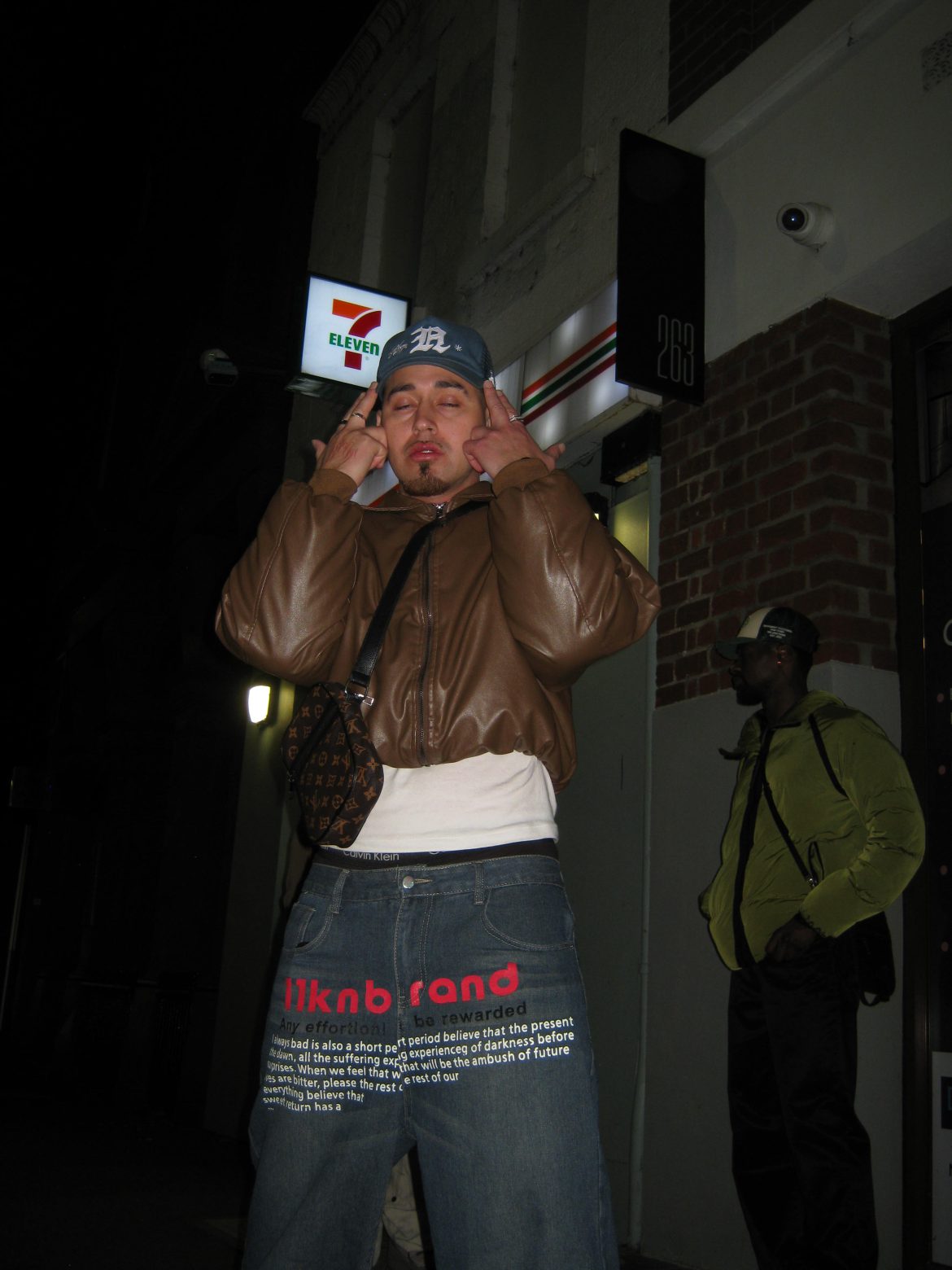
South Korean/Australian artist Munan returns this week with ‘Not A Loser’, the first single from an upcoming collection of new music that marks a significant creative evolution. Following the release of his acclaimed 2025 ep “Everything in Between”, the new track finds Munan turning inward, embracing a more personal songwriting approach while refining the warm, intimate sound that has become his signature.
After taking time away to reflect on the future of the project, Munan began asking himself fundamental questions: What do I want to write about? What does Munan actually sound like? Those questions became the foundation for a body of work rooted in his own experiences rather than the stories of those around him.
“After releasing my ep ‘Everything in Between’ last year, I took some time to think about the future of Munan,” he explains. “In the past, my songs felt like pieces of a puzzle. I was constantly searching for the missing pieces, trying different ideas and influences to find what fit and helped complete the bigger picture.”
While earlier releases often drew inspiration from friends, family, and shared experiences, Munan’s latest material is deliberately more cohesive and autobiographical.
“This time, I wanted to turn inward and write from my own experiences. Because of that, I wanted the songs to feel more cohesive, more personal, and a little simpler in their approach.”
That philosophy extends to the production. Designed to feel as though the listener is experiencing a small live performance from the comfort of their bedroom, ‘Not A Loser’ leans into warm textures, spacious reverbs, understated drum sounds, and natural room ambience. The result is an intimate indie-pop soundscape that feels both comforting and emotionally immediate.
Lyrically, ‘Not A Loser’ reflects on Munan’s younger years, when insecurity and self-doubt often prevented him from embracing opportunities.
“This song reflects on a period when I was younger and uncomfortable with who I was and how I looked. A lack of confidence often stopped me from taking opportunities that were right in front of me. Looking back now, I’ve become much more comfortable with myself. These days, I feel like I have a choice—I can choose to put myself out there and be seen, or I can be happy keeping parts of myself private. The important thing is that the choice finally feels like mine.”
Both vulnerable and quietly uplifting, ‘Not A Loser’ signals a confident new era for Munan, one built not on searching for an identity, but embracing the one he’s found.
Credits:
Written by Mun Hwan Lee, Sterling Silver
Produced by Munan
Mixed by Mun Hwan Lee
Mastered by Ohad Nissim
Artwork by Mun Hwan Lee
Visuals by RAW FIGURES
Directed by Snow Jung
Photos by Hyun Park
What was the defining moment when you realised HYPNOSIS THERAPY had become something far beyond a traditional music project?
Both of us had been making hip-hop and R&B for a long time, but we were looking for something more exciting. That led us to explore electronic music, a genre neither of us had really worked with before. Around that time, we became fascinated by the limitless possibilities that electronic music offered, and that’s where we decided to focus our creative energy.
Every HYPNOSIS THERAPY show seems to encourage complete freedom rather than passive watching. What do you hope people discover about themselves when they step into one of your live performances?
A lot of people discover us through our live shows. What we try to deliver on stage is pure energy and confidence. We perform with the hope that this energy will stay with people long after the show and become part of their everyday lives.
It’s almost like an unspoken message: we made it happen, so you can too.
You’ve built a reputation in Korea’s underground while increasingly connecting with audiences around the world. How has travelling and performing internationally changed your perspective on what makes your music unique?
From the very beginning, HYPNOSIS THERAPY was created with the international scene in mind. We felt the Korean market alone was too small for what we wanted to achieve. We wanted to reach a much bigger world.
That’s also one of the reasons we shifted toward electronic music. We see it as one of the most inclusive and universal genres. At the same time, we believed that by expressing it from our perspective as Korean artists, we could create something genuinely fresh and unique.
Returning to Australia, what stood out to you most about Australian crowds during your previous visit, and has that influenced what fans can expect from these upcoming shows?
Australia was the first country we visited through SXSW Sydney in 2023. It was also the festival’s inaugural year, so everything felt especially exciting and ambitious. As well as performing at SXSW Sydney, we played a show in Melbourne and even held a listening party there for our second album, which was about to be released.
That trip gave us real confidence that there was a future for us in the international market. Every show we played was incredible, and the response from Australian audiences left a lasting impression on us.
Your music balances chaos with precision. When you’re creating together, how do you know when a track has reached the perfect point between control and complete surrender?
We know a track is finished when it starts to feel primal. If you ask what “primal” means to us, it’s when all those instinctive, almost animalistic elements come together naturally, and the music simply feels alive.
That’s why finishing a song often takes much longer than people expect. Writing it is only one part of the process. We spend a huge amount of time listening back over and over, making tiny adjustments until every detail feels completely natural.
HYPNOSIS THERAPY often feels driven by instinct rather than trends. In an era where artists can easily chase algorithms, how do you protect your creative identity?
We simply make records inspired by the sounds and cultures we’re genuinely into at that moment. Whether that happens to align with current trends or not doesn’t really matter to us.
Our confidence in our own taste and our curiosity are the biggest driving forces behind our music. We release albums almost every year because we see each one as a document of where we are creatively and mentally at that point in our lives.
Both of you came from different musical backgrounds before forming HYPNOSIS THERAPY. What qualities do you each bring to the partnership that couldn’t exist if either of you were working alone?
We’ve both spent years working in different groups and different genres, so we’ve each built our own audiences. When we came together, that naturally created a strong synergy. It also expanded our musical range and made us much more open to different genres and ideas.
More importantly, we’ve been through a lot together, and that has built an incredible level of trust between us. We’ve never really fought. We trust each other completely and keep moving forward together. If one of us feels strongly about an idea, the other is willing to follow because we know there’s always a reason behind it.
HYPNOSIS THERAPY is both our individual expression and something we create together. At this point, it’s become more than just a project. It’s a part of our lives.
Korea’s underground electronic scene is receiving more international attention than ever before. What excites you most about the current movement, and which artists should global listeners be paying attention to?
Not just Korea, but Japan, China, and many other parts of Asia are seeing exciting new movements emerge right now. It feels like Asian artists are finding fresh ways to blend their own perspectives into established genres, and that’s creating something genuinely new.
As for an artist, the world should be paying attention to… honestly, we’d say us.
Looking back at where HYPNOSIS THERAPY began, what’s one lesson you’ve learned about taking creative risks that you wish you’d known from day one?
Honestly, we don’t have many regrets about the path we’ve taken.
But if we had to give our younger selves one piece of advice, it would simply be: be even bolder. Push harder, take bigger risks, and don’t hesitate.
As your audience continues to grow across different countries, what vision do you have for HYPNOSIS THERAPY over the next few years, and what would success look like beyond streams and sold-out shows?
We’ve already completed three European tours, and today we actually have more listeners overseas than we do in Korea. That’s exactly the future we imagined when we started this project.
We want those numbers to keep growing, but more importantly, we want to become the kind of artist who plays the main stages of the world’s biggest music festivals.
And we believe we’ll get there. We believe in ourselves, and we believe in everything we’ve built so far. We see it as a snowball; once it starts rolling, it only gets bigger.
We’ll keep moving forward. Keep an eye on what we’re doing.
Thank you so much for your support, and please keep listening to our music.
HYPNOSIS THERAPY, Alex Wilcox ‘UMJIGYEO! (MOVE!)
Tiny Minds Agency presents: HYPNOSIS THERAPY AUSTRALIAN TOUR DATES
Thursday 16 July – The Grace Darling Naarm, Melbourne
Doors: 7.30 pm
Porcelain Boy: 8.00 pm – 8.40 pm
HYPNOSIS THERAPY: 9.00 pm – 10.00 pm
Friday 17 July – The Lord Gladstone Eora, Sydney
With Blair Romance
Doors: 8.30 pm
Blair Romance: 9.00 pm – 9.40 pm
HYPNOSIS THERAPY: 10.00 pm – 11.00 pm
Saturday 18 July – The Tivoli Meanjin, Brisbane
Special guest performance at the Full Flower Moon Band after-party
Time: 10.45 pm
Tickets are available via linktr.ee/TinyMindsAgency
|
|
|
|
|
|
|
“LTMFG” started as a post-breakup idea but evolved into something much bigger. At what point did you realize this wasn’t just a song about letting go of someone else but about reclaiming yourself?
I think I realized that while writing it. What started as a breakup song slowly became a mirror for every area of my life where I was holding on too tightly. It wasn’t just about a relationship anymore, it was about letting go of old stories, fear, expectations, and the belief that my happiness depended on someone or something outside of me. That’s when I knew this song had become much bigger than heartbreak. It has become a reminder that sometimes the greatest thing we can reclaim is ourselves.
A lot of people know they should let go of what’s hurting them, yet they hold on anyway. What was the hardest thing you’ve personally had to release in order to find peace?
Honestly, the need to control the outcome. Whether it was relationships, my career or trying to fix situations that weren’t mine to fix, I spent a lot of energy believing that if I just tried a little harder, everything would work out. Finding peace came when I realized that letting go isn’t giving up, it’s trusting that what’s meant for you won’t require you to abandon yourself.
The video captures people smashing symbols of their past pain. Was there a moment during filming that felt surprisingly emotional or cathartic for you?
Absolutely! It was amazing to watch everyone write down things they were ready to let go of before smashing them. There was so much laughter, but there were also these quiet moments where you could tell people were releasing something real. I felt a huge release from my body when I took the first swing and smashed the vase. In the video you can almost see the energy rushing through my veins and instantly, I felt lighter.
It reminded me that healing doesn’t always have to be heavy, sometimes it looks like your friends cheering you on while you swing a gold baseball bat at an old story you’ve been carrying for way too long.
You’ve experienced the highs and lows of the music industry, from Nashville opportunities to building your career independently back home. What has that journey taught you about resilience?
It’s taught me that resilience isn’t about never feeling discouraged, it’s about continuing to show up anyway. There have been incredible highs and some really difficult seasons, but every chapter has taught me something valuable. Looking back, I wouldn’t change the journey because it’s shaped not only the artist I am today but the person I am too.
Looking back at your younger self chasing big dreams, what’s something you wish she understood that you only learned through experience?
I’d tell her that success isn’t something you arrive at one day, it’s who you become while you’re pursuing your dreams. I spent so many years believing I’d finally feel enough once I reached the next milestone. What I’ve learned is that confidence doesn’t come from accomplishments. It comes from learning to like the person looking back at you in the mirror.
There’s a strong message of self-worth running through this release. Was there a defining moment in your life when you stopped seeking validation from others and started trusting yourself?
I don’t think it was one defining moment, I think it was a compilation of many little ones. Every time I chose my intuition over someone else’s opinion, every boundary I set, every time I walked away from something that wasn’t aligned, I built more trust in myself.
Looking back, I realize self-worth isn’t something you suddenly find. It’s something you practice every single day.
You’ve described “LTMFG” as being about surrender. In a world where we’re constantly told to fight harder and push more, what does surrender actually mean to you?
To me, surrender isn’t quitting, it’s releasing the need to force what isn’t meant for you. It’s trusting that life sometimes has a better plan than the one we’ve been desperately trying to control. Ironically, the more I’ve surrendered, the more freedom I’ve found. That’s really what “LTMFG” is about.
Your upcoming book focuses on self-love. Was writing a book always part of the plan, or did you realize there were conversations you wanted to have that couldn’t fit into a three-minute song?
I’ve always loved storytelling, so writing a book felt like a natural extension of my music. Songs have this incredible ability to make people feel seen in just a few minutes, but there were conversations about healing, boundaries, wellness, relationships and self-worth that deserved more space.
The book lets me dive deeper while still carrying the same heart behind my music.
Country music has traditionally explored heartbreak from a place of sadness. Do you think we’re entering an era where artists are more interested in telling stories about healing and personal growth?
I do, and I think that’s a beautiful thing. Heartbreak will always be part of country music because it’s part of being human, but I think people are also craving hope.
We still want songs that acknowledge the pain, but we also want songs that remind us we can heal, grow and come out stronger on the other side. That’s definitely the message I wanted “LTMFG” to live in.
If someone is listening to “LTMFG” while going through one of the toughest periods of their life, what would you want them to hear between the lines of the lyrics?
I’d want them to know that letting go doesn’t mean you’ve failed, it means you’re making room for something better. Whatever you’re holding onto, you don’t have to carry it forever.
I hope the song reminds people that they’re stronger than they think, worthy exactly as they are and that sometimes the most courageous thing you can do is choose yourself and take one small step toward a new beginning.
As a matter of fact, I received a message from a beautiful friend of mine who was in the “LTMFG” music video. She let me know that a friend of hers had reached out to thank her for sharing the song, as she had a best friend going through a very trying time with an ex.
She passed along the song to her quiet, introverted friend who was dealing with heartache, and the next thing she knew this woman felt a weight lifted and had viewed her unfortunate connection in a different light. She’s now simply choosing to “Let the Motherf*cker Go” and has said that it’s brought her so much peace.
This is why I do what I do, and this is success for me: to help lift and inspire those around me who need it the most.
London based artist KARIXX has never been interested in following the expected path. With her latest single, 5 Lovely Seconds, she delivers a theatrical and thought provoking release that swaps commercial formulas for cinematic storytelling, vintage glamour and a surprisingly liberating message.
At its heart, 5 Lovely Seconds is about the exhausting weight of seeking approval and the moment of realising that most people spend only a few seconds thinking about us before returning to their own lives. That simple observation becomes the foundation for one of KARIXX’s most personal releases to date, transforming insecurity into creative freedom.
The song began life as something far darker, inspired by the philosophical themes of Fight Club and its exploration of identity, ego and social expectations. As the writing process evolved, so did the music. The original concept gradually gave way to a playful, Gatsby inspired atmosphere filled with vintage flair, theatrical production and tongue in cheek humour. The result is a track that feels both nostalgic and refreshingly original.
Recorded in London alongside a close producer collaborator, the city itself became part of the narrative. Surrounded by image conscious culture and the constant pressure to appear successful, KARIXX found the perfect backdrop for a song questioning why so many of us devote so much energy to worrying about how we are perceived.
Rather than chasing mainstream trends, KARIXX embraces individuality. 5 Lovely Seconds stands apart from the rest of her catalogue as her only release exploring this cinematic, vintage inspired world. It is intentionally unconventional, blending retro aesthetics with philosophical songwriting that encourages listeners to stop overthinking, take creative risks and embrace the possibility of looking foolish.
The song’s central lyric, “Five lovely seconds of their time spent thinking about you,” perfectly captures its message. It serves as a reminder that our greatest limitations often exist only in our own minds, and that creative freedom begins the moment we stop living for other people’s opinions.
With 5 Lovely Seconds, KARIXX continues to build an artistic identity that extends well beyond music alone. Every release contributes to a larger creative universe built around atmosphere, storytelling and visual identity, proving that authenticity remains far more compelling than conformity.
If this single is any indication, KARIXX is creating a world entirely on her own terms, and inviting listeners to find the confidence to do the same.
OVERMONO
Release new single ‘Knight In Shining Prada (feat. John Joseph Holt)’
Forthcoming new album Pure Devotion
Out 7th August via XL Recordings
|
|
|
Overmono – Knight in Shining Prada (feat. John Joseph Holt) (Official Video)
|
Celebrate the release of the brand new EP Without You is Hard with a special headline show at The Lower Third on August 20. With the EP arriving the very next day, this will be the first chance to hear the new songs live.
Joining the night is special guest Miss Darcey.
📍 The Lower Third, London
🗓 August 20
🎟 Tickets: https://dice.fm/event/q2…lng=en
Don’t miss this special night celebrating the start of a new chapter.
|
|
|
|
|
|
What first made you want to move away from writing purely autobiographical songs and start building a record around other people’s lives and stories?
It had been such an intense period of my life when I wrote the lovers. So much pain and change in a very short space of time, EVERYTHING was so fresh and visceral, writing whilst I was in the midst of it all. I think it’s just natural that after time and some healing (and some new pain lol) I was ready to be more reflective, more playful with my storytelling.
When you were travelling on the London tube, what was it about that environment that made it such a strong creative space for observation and songwriting?
It’s like an instant attack on the senses. Space, air, background city hum to BOOM 30 people crammed in a can and the deafening roar of the tracks. I hadn’t experienced anything like that in my life, so naturally I was overwhelmed with imagery, sound, smell the whole lot. Made it very easy to word vomit into my notes app and get the imagination and creative juices flowing.
Can you talk through the process of how a passing moment or stranger you notice in public becomes a fully formed song narrative?
It’s quite a natural process. I’m always watching people, I think I’m a bit nosey if I’m honest. You can create a backstory for anyone you see in the world, but again because I was in this new city with all these new people from all walks of life it became even easier to follow a thought. With Seaside Wishes I saw an old man stand up and tip his hat for a lady, and then she got off the train. I thought to myself how adorable, chivalry is not dead. I wondered what their story was… and that’s where the story of the song was born.
Was there a specific encounter or observation in London that really clarified the direction of the album for you?
Initially I was just writing and being as open and free as possible. I didn’t want to restrict myself too much in order to allow creative freedom. I think as the trip went on I really started to have an idea of what sessions/songs I was leaving feeling excited, and ones I was not. From the get go though I was intent on making songs that could be played, and feeling good, in the room on just a guitar or piano etc. The goal was always to make classic, good songs that translated when stripped down to the bare bones.
How do you decide which ideas or characters you have observed are strong enough to develop into a complete song?
They all deserve to become songs, but I guess the way they are determined strong enough is if the song gets finished haha.
Once you began collecting all these different perspectives, how did you shape them into a cohesive emotional arc across the full album?
They all ended up being snapshots or vignettes of moments. Seaside is a love story inspired by a couple, and then explored through the lens of my relationship at the time. Imagining what a healthy, long lasting classic love would look like. Bright Eyes is a story inspired by someone I saw on the tube, down on their luck but still with life and joy in their piercing blue eyes. I took that and applied it to my own story, could I carry on with joy if I lost everything? I think that’s how it all worked as one, little stories of love, loss, grief and hope… my human experience and how important it is to feel EVERYTHING at least once.
You have described this record as more reflective than reactive. What changed in your mindset or creative practice that allowed that shift to happen?
I went into the album knowing I wanted good songs, songs that can be sung around a campfire with one instrument. That was the first and only goal. I also knew as I started writing I was exploring past pain and trauma, from this new perspective. Instead of being beaten down by it I was rising up and doing something with it. So naturally all the songs held a lot more hope and joy. So I think that’s the main difference, time and perspective. ALSO I was in love, very much in love, so everything had a more romantic, golden hue to it.
How did writing in London, surrounded by constant movement and unfamiliar people, challenge or expand your usual songwriting habits in New Zealand?
Just being in a new space surrounded by unfamiliar people, things, spaces was enough to throw me out of my comfort zone. It’s like how people will travel to a cabin or Airbnb to lock in and write, somewhere quiet and expansive to throw distractions at the door. This was the same idea, but distractions multiplied x 100. It forces you to let go of the self critic and the inhibitions creatively, because you’re so stimulated… it creates a forced flow state in a way.
The singles Mona Lisa Money, Seaside Wishes, Clementine, and We Still Happened each sit in quite different emotional spaces. What connects them in your mind as part of one body of work?
Seaside Wishes is the hopeful joyous beginning, a new start, what if it all works out? By the end you have We Still Happened which does the opposite. What if it doesn’t work out? What if it all ends? It’s a more melodramatic study of love but still holds that hope. It’s the same with Mona Lisa Money, what if you followed the wrong love (money and power), Clementine what if you followed an obsession (drugs, love, lust). It’s like the middle questions different areas of connection and experience and breaks them down, until the very last song The Best where I’m saying goodbye to the love (my ex) that inspired so much of the record.
When you perform these songs live, how do you bring those observational, character-driven lyrics into something that still feels immediate and personal for the audience in the room?
I just sing to begin, usually opening with Seaside or Mona Lisa to set the tone. Then if and when it feels right I tell a quick anecdote about the songs, or make a joke about being sad/lonely. I talk to the audience and use myself as an example… I check in with how everyone is doing. I want the audience to feel like they’re in it with me, not like I’m some out of reach god character that doesn’t see them.
Seoul’s genre-defying electronic-punk innovators return to Australia following growing international acclaim.Australian audiences will have the chance to experience one of South Korea’s most uncompromising underground acts when HYPNOSIS THERAPY returns this week for a three-date Australian tour. Presented by Tiny Minds Agency, the tour will see the Seoul-based duo perform intimate headline shows in Naarm, Melbourne and Eora, Sydney, before joining acclaimed Australian act Full Flower Moon Band for a special Meanjin, Brisbane, appearance. Comprising of rapper JJANGYOU and producer Jflow, HYPNOSIS THERAPY has builtComprising rapper JJANGYOU and producer Jflow, HYPNOSIS THERAPY has earned a reputation as one of the most exciting names emerging from Korea’s alternative music scene. Blending breakbeats, techno, punk, rave and experimental electronic music, the duo has forged a sound that is as confrontational as it is danceable. Rolling Stone Australia described the pair as: “Composed of scene veterans vocalist Jjangyou and producer Jflow, the pair have impressed on solo endeavours but really come into their own together.” Since forming in Seoul in 2022, HYPNOSIS THERAPY has become known for high-intensity live performances that combine underground club culture with punk attitude and socially charged lyricism. Their music explores themes of conformity, identity and resistance, transforming frustration into immersive electronic soundscapes. The duo has steadily expanded its international profile through tours across Europe and Asia while collaborating with global brands including Converse, Nike and Maker’s Mark. In 2026, they will also perform at Spain’s renowned Primavera Sound festival, further cementing their growing global reputation. Their latest release, NO, created in collaboration with boundary-pushing electronic artist Alex Wilcox, represents the group’s boldest artistic statement to date. Released in late 2025, the EP fuses big beat, rave, techno, punk and breakbeat into a powerful collection centred on individuality and creative freedom. Rather than delivering political slogans, NO channels its message through explosive rhythms, irony and infectious energy. It is a celebration of refusing conformity and embracing difference, an approach that has resonated with audiences well beyond Korea’s underground scene. HYPNOSIS THERAPY’s visual identity is equally distinctive. Their mushroom emblem symbolises life emerging from decay and light growing through darkness, reflecting the duo’s philosophy of transforming chaos into creativity. With three acclaimed releases already behind them- HYPNOSIS THERAPY (2022), PSILOCYBIN (2023) and RAW SURVIVAL (2024) – the duo continues to push the boundaries between electronic music, punk and performance art. This is one live show NOT TO BE MISSED! Tiny Minds Agency presents: HYPNOSIS THERAPY AUSTRALIAN TOURThursday 16 July – The Grace Darling Naarm, Melbourne Friday 17 July – The Lord Gladstone Eora, Sydney Saturday 18 July – The Tivoli Meanjin, Brisbane Tickets are available via www.tinymindsagency.com
|
What was the first real image or moment that became “Shampoo” before it ever became a song?
Shampoo came from an emotion I’ve experienced a few times toward the end of a relationship. There is this inconceivable notion that you and your partner will inevitably be intimate with other people, and each time I’ve found that such a scary image. You know that it’s totally acceptable and that there is nothing you can do about it, the commitment that was made between two people is now broken and you just have to accept that. That feeling is where the initial idea for Shampoo was born.
What draws you to that grey area where nothing has fully collapsed yet?
I think the grey area is more interesting. I like to bask in the happy and sad of it all. I don’t think one truly views anything clearly at the beginning or the end. Clarity comes with time and time makes you neutral, so it is easier to admit fault and understand pain.
At what point does intuition tell you a relationship is already over, even when everything on the surface is still functioning?
Most of my breakups have been friendships, which I think are worse than romantic endings. So with that context, in my experience, no two endings of any human relationship are the same. Being blindsided, not wanting to admit it’s over, or being the one to pull the trigger, I think broadly they are all the same. Once it’s over, it’s over.
“Shampoo” turns something ordinary into a trigger for emotional recognition. Why do small details feel more honest to you than big dramatic moments?
The ordinary can be harder to come to terms with than the drama, because sometimes the ordinary operates within helplessness. I’ve been in situations where there is no fixing the fact that two people aren’t meant to exist in each other’s reality forever. Nothing big happens, it just fizzles. Big drama fueled blowouts can generally be fixed because usually someone is in the wrong, but the ordinary lives somewhere so much deeper. I’ve found it hurts much more.
Do you think people recognise endings in real time, or only ever in hindsight like the version described in “Shampoo”?
For me it’s always hindsight. When things end in real time, adrenaline takes over to help you survive. Hindsight gives clarity, and clarity is how you move on.
When you were building this EP, what emotional truth did you feel yourself returning to again and again without trying to?
When I was writing this body of work, I was in this very strange period of my life where my deep relationships were coming and going, and I found it very all consuming. The only way I knew how to deal with it was to write about it. The emotional core of the EP is the title Without You Is Hard. I truly realised how hard life is without friends, family, and love.
The Hospital exists as both a project and a place. How does “Shampoo” expand or change that place emotionally?
The intention with any music I make as The Hospital is for it to be relatable and enjoyable. The point of the name is how healing music is for me. I want it to be a companion for those who need it.
What is something about love or connection that you now understand in a more complicated way than when you started this project?
That love is never a guarantee and it’s not to be taken for granted. I honestly believe you have to love yourself to be loved. This is not to be confused with vanity or ego.
In “Shampoo,” familiarity becomes slightly unsettling rather than comforting. What do you think makes recognition turn that way?
If you get lazy in love, that fire dims. I’ve always found this unsettling because sometimes you don’t see it coming. Life has its own plan for you. I believe you just have to be the best version of yourself for you and others. The rest you can’t control.
If someone listens to “Shampoo” at the exact wrong moment in their life, what do you hope it quietly reveals to them about their own experience?
My music is an offering from me to the listener to share my experience in the hopes they recognise a part of their own story in mine, to feel less alone. I want you to be thinking about your loved ones when listening to my music, not mine.