How did your creative paths first come together, and how has your partnership evolved since 2014?
We began creating devotional music together in 2014, drawn by a shared belief in meaningful melody, fresh arrangements, and sincere devotion. Hargun brought a background spanning Punjabi folk, Sufi, ghazal, Bollywood, and contemporary music, while Kirti brought more than three decades of composing and producing devotional music for Maninagar Shree Swaminarayan Gadi Sansthan.
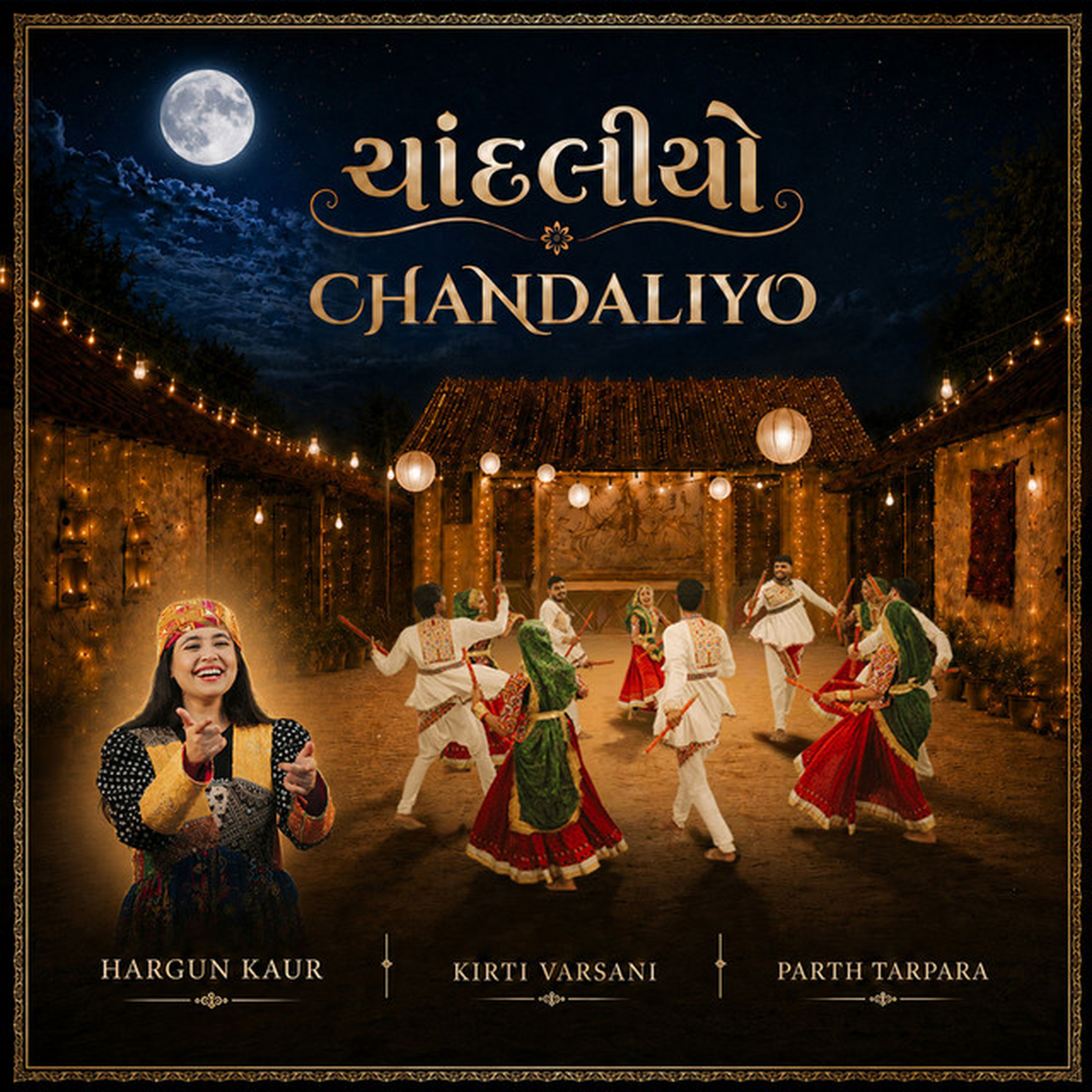
Our partnership has since grown across languages and styles through releases including Shubh Swaminarayan Naam, Bapashree Nu Naam, Jay Ghanshyam Jay Jay Karnara, Swaminarayan Dhun (Acoustic), Swamin Mera, Saiyaan and its acoustic release, Bhull Fikraan Tu, Hansla Halo Ne, Chandaliyo, and the six-song album Surrender.
With Surrender and Chandaliyo, we are exploring two complementary sides of that journey: one creates space for stillness and reflection, while the other celebrates folk energy through a contemporary sound.
How did you balance preserving tradition with creating something contemporary on Surrender?
The words and their spiritual meaning always came first. Because these are sacred compositions, we approached them with respect and humility, never with the intention of changing the essence of the shabads.
Our contemporary language comes through ambient textures, chant-based passages, layered vocals, subtle orchestration, and carefully shaped rhythms. These elements support the melody and meaning rather than compete with them.
We wanted the arrangements to feel timeless yet accessible, leaving enough space for the words to reach both listeners rooted in devotional music and those encountering these texts for the first time.
Did you conceive Surrender as a journey, and how important was the sequence?
Yes. We conceived Surrender – Echoes of the Eternal as a six-part devotional journey through “Ja Tu Mere Wal,” “So Satguru Pyaara,” “Saiyan,” “Kar Rehmatan,” “Guru Ramdas Rakho Sarnayi,” and “Ik Onkar / Mool Mantar.”
The sequence moves from invocation and reverence through grace and refuge toward oneness. Each composition has its own musical identity, but the pacing and arrangements allow the album to unfold as one cohesive emotional and spiritual experience.
Closing with “Ik Onkar / Mool Mantar” returns the listener to the fundamental idea of unity. We hope the journey leaves a lasting sense of peace, reflection, and connection.
Hargun, what were you looking for vocally, and how did you approach the emotional centre of the album?
My experience across Punjabi folk, Sufi, ghazal, Bollywood, and contemporary music has taught me to adapt my voice to the emotional world of each song. On Surrender, however, I wanted the voice to serve the sacred words rather than draw attention to itself.
Some passages called for a lyrical, melodic expression, while others needed the simplicity and repetition of a chant. I approached each piece by allowing its meaning to guide my phrasing, tone, and restraint.
The emotional centre of the album is letting go. For me, surrender is not giving up; it is an act of trust, humility, and connection with something beyond oneself.
Kirti, what sounds and production ideas were important in shaping Surrender?
The production is melody-led and rooted in Indian classical and devotional traditions, but expressed through a contemporary, cinematic palette. Ambient textures, layered vocals, chant-based passages, subtle orchestration, and carefully shaped rhythms give the compositions space to breathe while keeping the traditional material central.
I wanted each prayer to have its own sonic identity without breaking the cohesion of the album. The arrangements therefore build gradually, balancing intimacy with expansiveness and leaving room for Hargun’s voice and the spiritual meaning of the words.
The aim was never to overwhelm the listener, but to invite stillness, immersion, and inner reflection.
What inspired you to bring a 200-year-old traditional chhand into a modern rap rhythm in Chandaliyo?
What excited us about Chandaliyo was the chance to place a 200-year-old traditional chhand associated with Sadguru Shree Brahmanand Swami, renowned poet and lyricist of the Swaminarayan Sampraday (Faith), in an unexpected musical setting.
Its lyrical, memorable melody and Gujarati cultural warmth remain intact, while the modern rap rhythm gives a new pulse to the composition and opens another way of experiencing its devotional legacy.
The experiment reflects a principle that guides our work: heritage can find a fresh expression without losing its identity. Innovation becomes meaningful when it encourages new listeners to engage with the tradition behind the music.
How did you approach the contrast between the stillness of Surrender and the dance energy of Chandaliyo?
Both projects come from the same devotional foundation, but they reveal different emotional and cultural possibilities within it.
Surrender uses ambient space, chants, and gradual arrangements to invite introspection. Chandaliyo draws on the pulse of raas and garba, combining lyrical melody with contemporary rhythm to create movement and collective energy.
We value both experiences: music can guide someone into a quiet, personal space, or bring an entire community together through dance. Moving between those worlds allows our collaboration to remain rooted yet open to experimentation.
How do your different cultural and musical backgrounds come together as a duo?
Hargun grew up in Amritsar, Punjab, India, surrounded by Punjabi folk, Gurbani, Sufi music, literature, and poetry. Her work as a singer-songwriter, composer, performer, and researcher gives her a fluid approach to genre and a strong connection to words.
Kirti comes from the village of Madhapar, Bhuj-Kutch, Gujarat, India, and his musical outlook has been shaped by faith, His spiritual gurus, family, decades of devotional composition, and guidance from musical mentors including Kalyanji Shah and Viju Shah.
We do not try to make those backgrounds identical. Hargun’s Punjabi and vocal traditions and Kirti’s Gujarati, compositional, and production sensibilities complement one another, creating possibilities that would not emerge from a single musical tradition.
What does it mean to reinterpret traditional devotional material for new listeners?
For us, reinterpretation means creating an entry point without diluting the original meaning. Traditional devotional music carries generations of faith, culture, and lived experience, so every contemporary choice must serve the words and their spiritual purpose.
Modern production can make these compositions more accessible and relatable to listeners across generations, cultures, and the Indian diaspora, including people who may not otherwise encounter them.
That opportunity also brings responsibility. We are not using tradition merely as a musical aesthetic; we are engaging with material that holds deep significance for many people.
Our hope is that the music offers inner peace while also inspiring curiosity about the original texts, their meanings, and the traditions from which they come.
What do Surrender and Chandaliyo tell you about the future of your creative partnership?
Surrender and Chandaliyo confirm that the common thread in our partnership is connecting heritage with contemporary expression while keeping devotion at the centre.
We want to explore more regional traditions, languages, original compositions, instrumentation, visual storytelling, and collaborations that bring diverse sounds and cultures together. Through Tak Dhoom Music, we also hope to extend this work to wider international audiences across the world.
Individually, Hargun will continue developing as an independent artist, songwriter, performer, and researcher, including her PhD work on sustainable careers in the Indian music industry. Kirti will continue composing for his faith, performing internationally, and supporting nonprofit work through Kachchhiyat Foundation and Maninagar Shree Swaminarayan Gadi Sansthan.
Ultimately, we want to create sincere, distinctive music that can reach across generations and cultures while remaining grounded in the respect, curiosity, discipline, and spiritual purpose that brought us together.
Instagram: https://www.instagram.com/kirtivarsaniofficial/
YouTube: https://www.youtube.com/@kirtivarsani
LinkedIn: https://www.linkedin.com/in/kirtivarsani
Instagram: @iamhargunkaur
Facebook: Hargun Kaur on Facebook
Official website: hargunkaur.com
