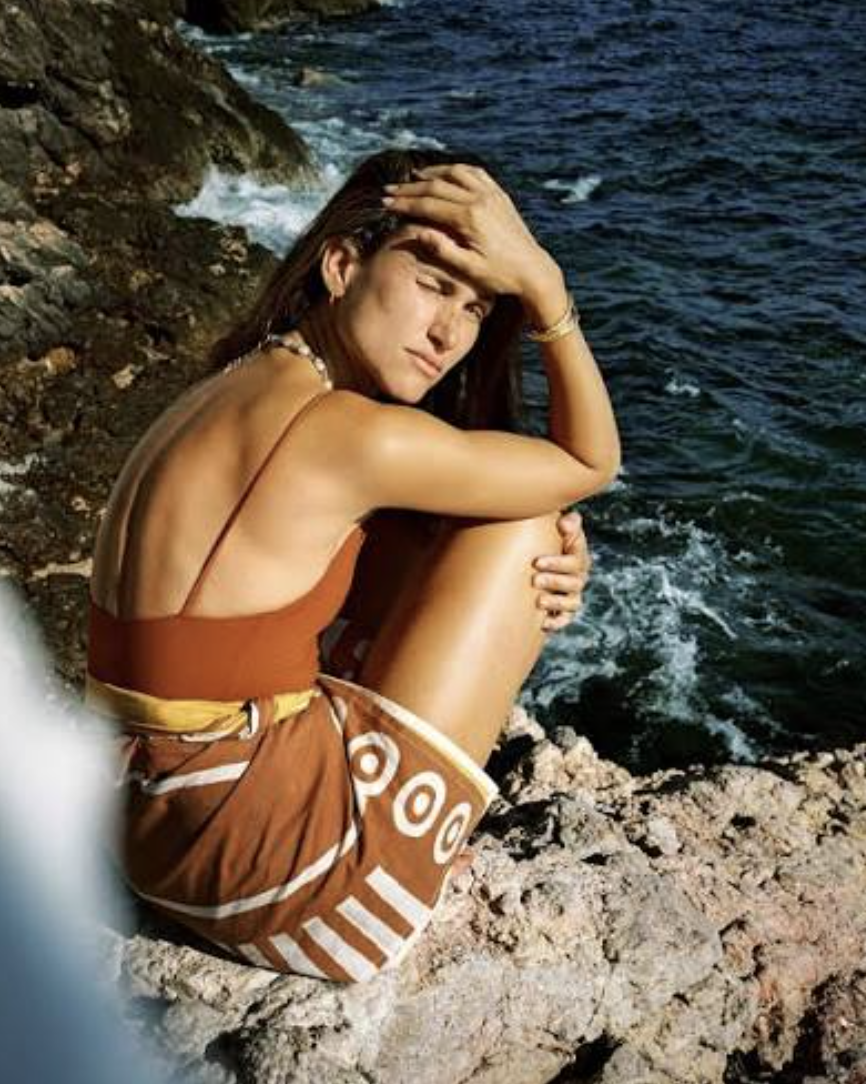
You grew up in Marseille and spent around a decade in Bali, where you built Fields of Yarrow. What was it about Bali that drew you in and ultimately gave you the environment to create the brand?
I arrived in Bali quite young, and I think what drew me in was the possibility of living much closer to nature. There was a different relationship to time, to plants, to the body, to ritual. Things that can feel separate elsewhere were simply part of everyday life there.
Fields of Yarrow really grew out of that environment. I had access to incredible botanicals, farmers, traditional plant knowledge and, eventually, the possibility of growing many of our own ingredients. Bali gave me the space to experiment and to build slowly. The brand was never created around a marketing concept; it came from years of touching, smelling, growing, extracting and formulating with plants.
In many ways, Bali taught me to pay attention.
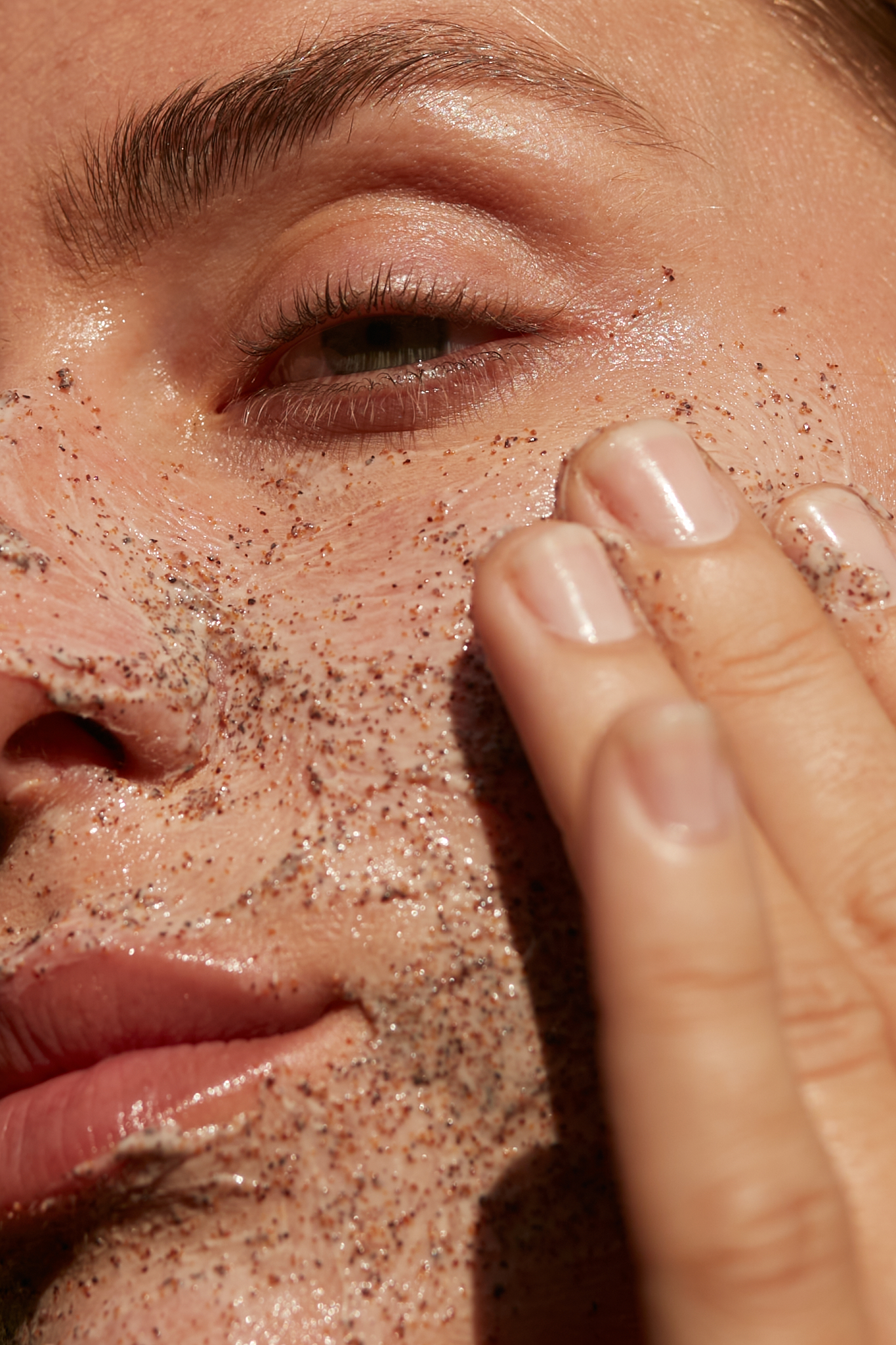
Fields of Yarrow has developed a seed to skin approach, including growing your own plants and flowers. What have you learned from working directly with the plants that has changed the way you think about skincare?
That plants cannot really be rushed.
When you grow an ingredient yourself, skincare suddenly becomes much less abstract. You understand that before something becomes an ingredient on an INCI list, it has had an entire life. There is soil, water, weather, harvest, timing, extraction.
It made me much more interested in the quality and integrity of an ingredient than simply the percentage written on a formula.
Working directly with plants has also taught me that nature is incredibly sophisticated. A flower or leaf contains hundreds of compounds working together. We try to respect that complexity rather than constantly isolating everything.
Our garden has changed the way I formulate, but also the way I think about beauty. Good skincare, like growing something, is often about consistency and patience rather than immediacy.
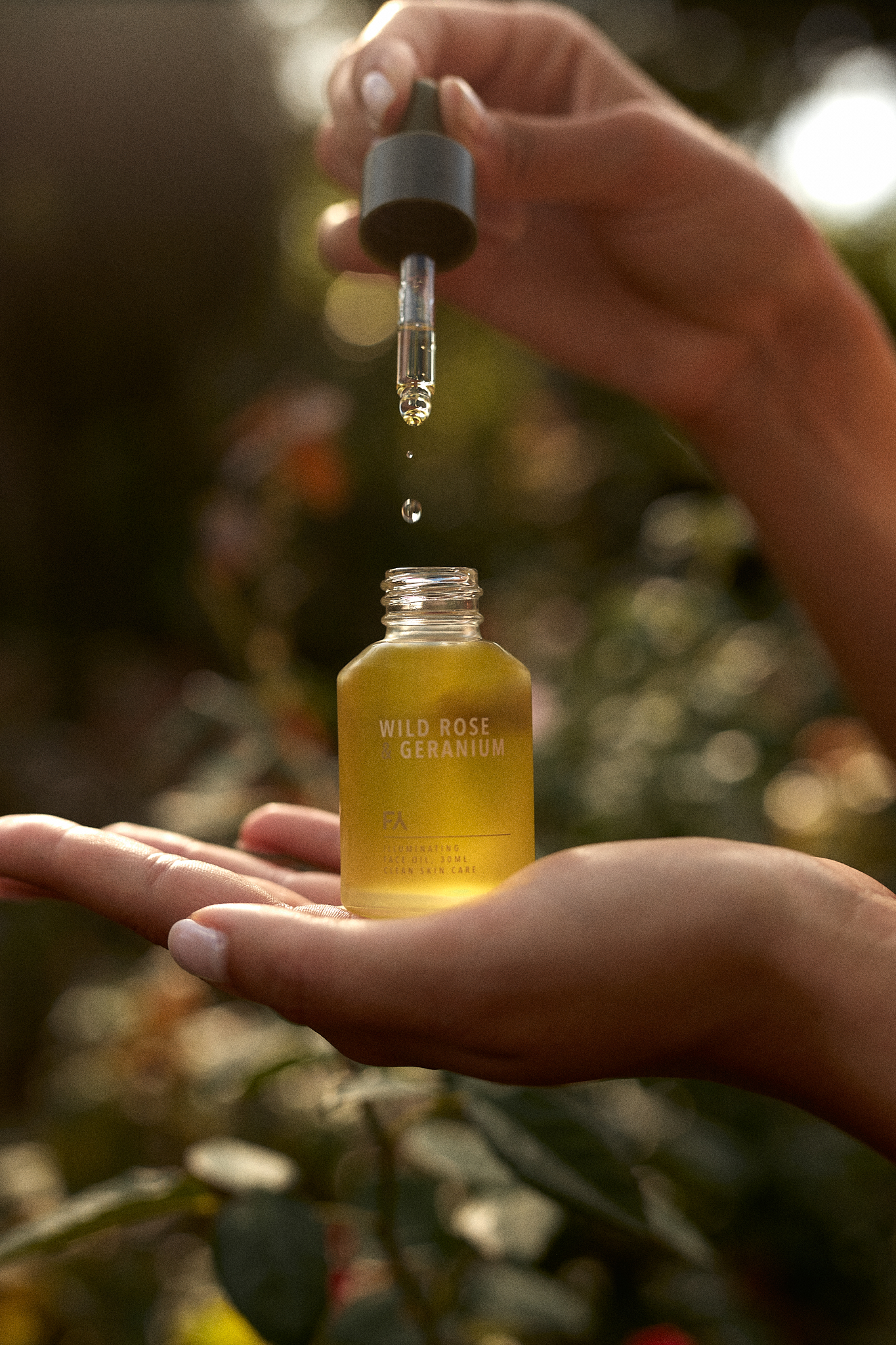
You’ve described Fields of Yarrow as skincare that is designed to be “experienced rather than applied.” What does that philosophy mean to you, and why is the ritual around skincare so important?
I never wanted skincare to feel clinical or transactional: apply this, fix that, move on.
For me, the few minutes you spend with your skin can become a small moment of reconnection. Texture matters. Temperature matters. Scent matters. The way an oil moves between your palms matters.
That is why we think about our formulas sensorially as much as functionally. A cleanser can change texture with water. An oil has a particular slip. A botanical aroma can change the atmosphere around you.
Of course, the product has to perform. But I don’t believe efficacy and pleasure have to exist separately.
Skincare is something most of us repeat every day. If you’re going to repeat something thousands of times in your life, I think it should feel beautiful.
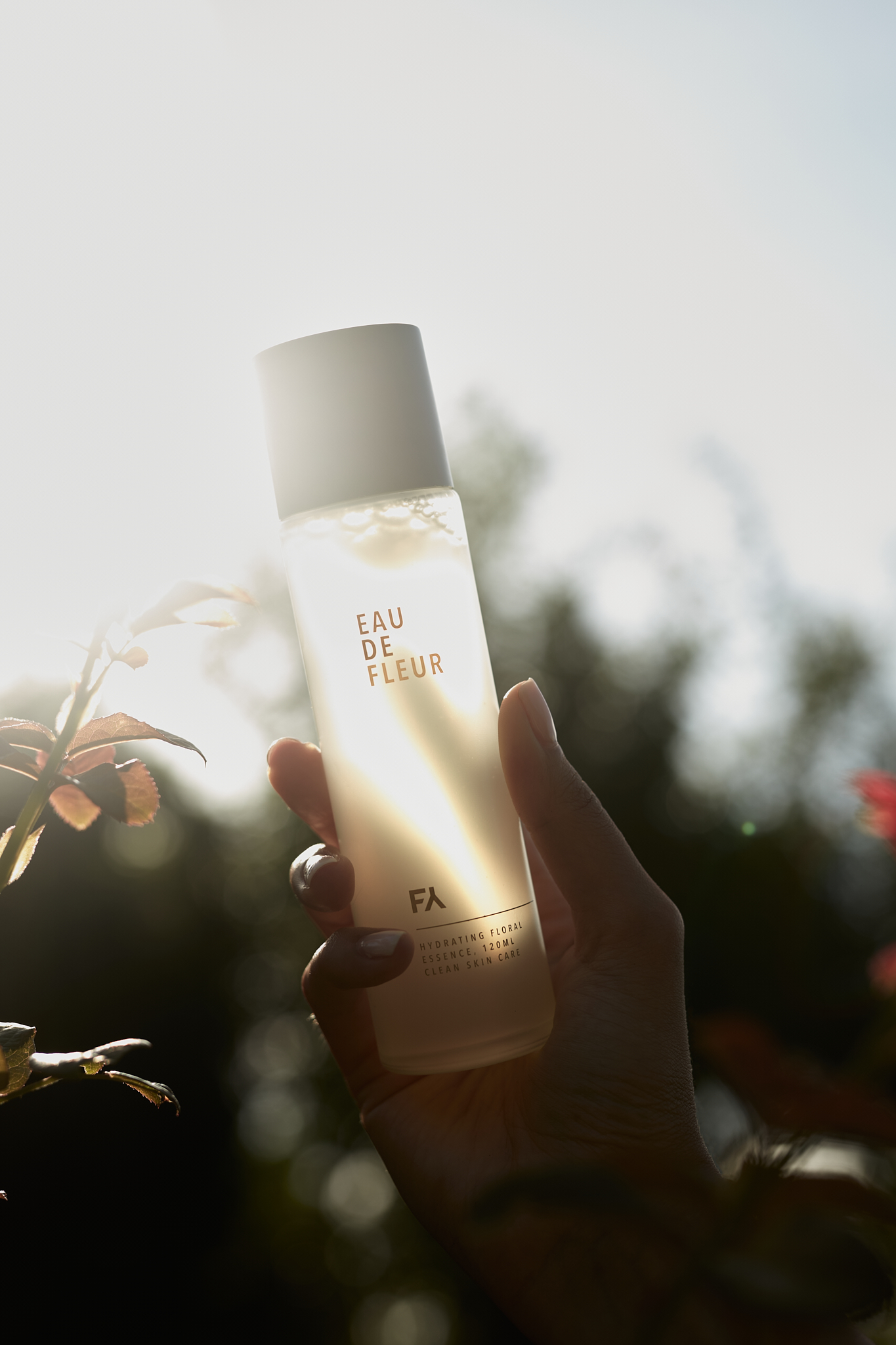
Your background brings together science, plants, aromatherapy and natural skincare. When you’re developing a new product, how do those different influences come together?
It usually starts with a feeling or a need rather than an ingredient.
I think about what I want the product to do for the skin, but also what I want that moment to feel like. From there, we work backwards: which botanicals make sense therapeutically, which extraction methods protect them best, what texture carries them properly, how the formula behaves on the skin, and what aromatic profile belongs to that experience.
Aromatherapy is important to me, but never as decoration. The scent should have a reason for being there.
And then there is a lot of testing. I am quite obsessive about texture. Sometimes the difference between an acceptable formula and a beautiful one is incredibly small.
It is really a conversation between instinct and science. I need both.
There is a real connection between Fields of Yarrow and the places you’ve called home, from Marseille to Bali and now your growing presence in Europe. How do those different places influence the brand today?
Bali gave Fields of Yarrow its relationship with plants. Marseille gives it another kind of energy.
Marseille is raw, Mediterranean, imperfect, creative. There is sea air, dry herbs, old pharmacies, markets, stone, strong light. It has a very particular character, and because I grew up here, returning has also brought me back to parts of myself that existed before Fields of Yarrow.
I don’t want the brand to become geographically literal, though. I am more interested in what you absorb from a place.
Bali taught us how to grow and work with botanicals. France brings another conversation around craftsmanship, design and pharmacy. Now those two worlds are beginning to meet. That feels very natural to me.
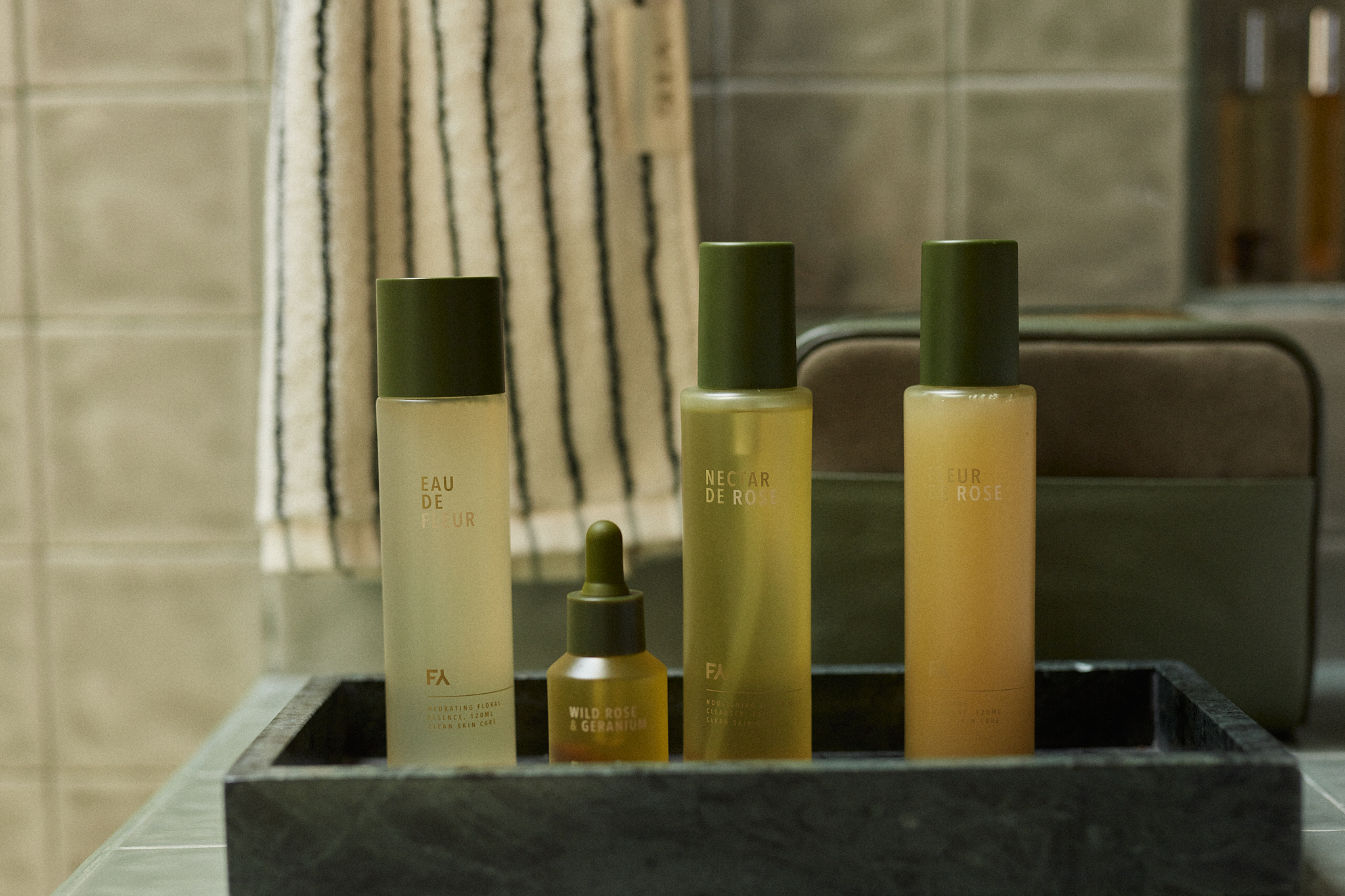
The Wild Rose & Geranium Illuminating Face Oil is currently featured among Fields of Yarrow’s best sellers. What do you think it is about that product that people connect with?
I think it has a simplicity that people understand immediately.
Wild rose and geranium are two botanicals I have loved for a very long time, particularly for skin that looks tired, stressed or depleted. The oil leaves the skin incredibly nourished and luminous without making the ritual complicated.
But I also think people connect emotionally with it. There is something very comforting about rose and geranium together. You open the bottle and immediately know you’re going to take care of yourself.
It represents Fields of Yarrow very well because it sits somewhere between treatment and ritual. It has a purpose, but it also gives pleasure.
Sustainability is built into the way Fields of Yarrow operates, from cultivation and composting to water conservation and packaging. As the business grows, how do you make sure those principles remain part of the everyday decisions you make?
I’m trying not to treat sustainability as a separate department or campaign.
It needs to exist inside very ordinary decisions: how much we produce, where something is sourced, how our garden is managed, what happens to plant material after extraction, what packaging we choose and whether something actually needs to exist in the first place.
Growing ingredients ourselves has made this very tangible. You see the resources involved before a product ever reaches a shelf.
As we grow, there will always be compromises and better solutions to find. I don’t think any beauty company should pretend to be perfect. For me, the responsibility is to remain curious, keep questioning our systems and improve them as we have access to better materials and technologies.
Growth shouldn’t mean forgetting how something started.
Fields of Yarrow now has stores and studios in Canggu and Uluwatu, while also expanding internationally. What have you learned from taking the brand from its original home in Bali into new markets?
I learned that you have to understand what is essential to the brand and what can evolve.
Bali is where Fields of Yarrow was born, so naturally there were things about the experience that felt very connected to that place. As we began working internationally, I had to ask myself: if you remove Bali, what remains?
The answer was actually very clear. Plants. Skin. Time. Touch. Ritual. Generosity. Those things travel.
What changes is the expression around them.
It has also taught me not to expand for the sake of expanding. We recently made the decision to simplify our Bali retail presence and concentrate on Uluwatu while putting more energy into Europe. Sometimes growth means adding things, and sometimes it means knowing what to let go of.
Fields of Yarrow now has a growing presence in Europe. What does this new chapter look like for you and for the brand?
It feels like the beginning of a second life for Fields of Yarrow.
After almost ten years of building the brand in Bali, bringing it back to France and particularly to Marseille feels very emotional. We are opening our first French home here, which will be part boutique, part facial studio and part space for consultation and discovery.
I want it to feel less like entering a conventional beauty store and more like entering the world of Fields of Yarrow.
Europe will also allow us to develop the brand creatively in a different way: through collaborations, objects, print, treatments, hospitality and relationships with other makers.
The ambition is certainly to grow, but I want to do it carefully. I don’t want Fields of Yarrow everywhere. I want it in the right places, with people who understand what we’re trying to build.
Your collaboration with Marseille based ceramic atelier Franca is Fields of Yarrow’s first French collaboration, bringing together skincare, ceramics and ritual. What attracted you to Franca, and what would you like to explore creatively next?
I was attracted to Franca because the work feels very human. You see the hand in it.
There is texture, imperfection and warmth, which is something I always respond to. Our products are very tactile, so ceramics felt like a natural first conversation in France. It transforms skincare from simply being something contained in a bottle into something that can occupy a space and become part of a ritual.
I’m very interested in continuing to work with people outside of traditional beauty.
Ceramicists, florists, photographers, chefs, textile makers, perfumers, writers… people who can introduce a completely different language into the Fields of Yarrow universe.
I think the most interesting collaborations happen when neither side is simply decorating the other’s product. You create a third thing that couldn’t really have existed without both of you.
Photography: Annyck Benth
