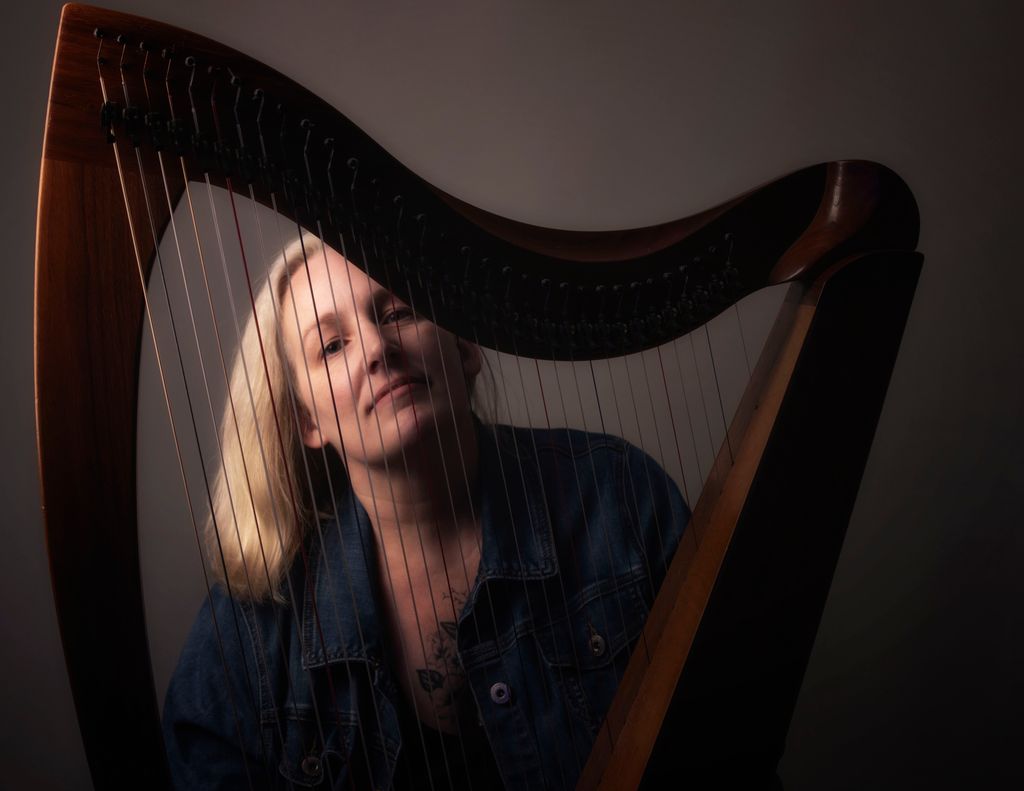
For April Stace, the harp is a way to explore questions that extend beyond music. A harpist, composer, writer, Episcopal priest and theology professor, Stace brings these interests together on Aphelion, her album released on October 10, 2026, shaped by a period of personal transition and a changing understanding of solitude.
The album emerged during a time that included divorce, an empty nest and a solo journey through New Mexico. These experiences prompted Stace to reconsider what it means to begin again when the structures that once defined everyday life have changed. Rather than presenting renewal as a simple resolution, Aphelion explores the space between letting go of the familiar and finding a way forward.
The title refers to the point in an orbit when an object is farthest from the sun. Stace uses this idea as a metaphor for the distance that can emerge when familiar structures fall away, creating room for a different perspective. It provides a framework for an album concerned with grief, uncertainty and the possibility of change.
Musically, Aphelion moves beyond the harp’s traditional register. Solo passages sit alongside layered arrangements drawing on contemporary classical, ambient, jazz and world music influences. The harp remains at the centre of the compositions, its resonance providing continuity as the arrangements explore a broader sonic landscape.
The 14-track album opens with Intuition, followed by Holding onto Winter, Train Song and Writing Again. Later titles include Little Steps, Garden, Darkness A Gift and Wild Patience, before the record closes with Aphelion / Trisagion. The sequence of titles reflects the project’s wider concerns with reflection, patience and change without reducing the album to a single narrative.
Stace wrote and performed all the songs on Aphelion. The album was recorded and mixed by Will Russell at Electric Wilburland Studios, with artwork by Alan Pollack.
Her background offers another perspective on the project. Stace began playing the harp at seven and holds a degree in harp performance and composition from the University of Maryland. She is an Associate Professor of Practical Theology at The General Theological Seminary and has spent more than two decades working across ministry, teaching and the arts. She has also released multiple albums as a solo artist and with her band, Harp 46, and written and edited books on spirituality, culture and religious life.
These different strands of her work come together in Aphelion, which extends beyond a collection of instrumental compositions. The project is conceived as an immersive musical memoir incorporating original harp music, poetry, storytelling and visual art. Its approach reflects Stace’s interest in the connections between music, spirituality, loss and transformation.
Living and creating in New York’s Finger Lakes, Stace continues to work across music and writing. With Aphelion, she brings that multidisciplinary perspective to an album shaped by personal change and an expanded approach to the harp.
Rather than offering easy answers, Aphelion centres on the experience of finding oneself somewhere unfamiliar. Its exploration of distance, solitude and renewal gives the album a clear conceptual foundation, while the harp remains the defining voice throughout.
