The Partae
  • Music
    • News
    • Interviews
    • Festivals & Events
  • Fashion / Culture
  • Stay & Play
  • About Us
  • Contact Us / Advertise
  • Submit Event

Linkin Park Deliver an Emotional and Electric Night Two in Sydney

March 18, 2026

Riley Green – Hordern Pavilion- 16 March 2026

March 18, 2026

Peach PRC At Hordern Pavilion – 15 March 2026

March 16, 2026

A Perfect Circle Return to Australia in 2026 With Special Guest Puscifer

March 16, 2026

ICONIC MELBOURNE DJ MARK PELLEGRINI – CELEBRATES 40 YEARS BEHIND THE DECKS

March 16, 2026

Interview: LAMOUR on KARMA, Crooner Energy and Life After Touring with Peter...

March 16, 2026

Interview: Julia Sound Explores Emotion, Politics and Hope on New Album midlife

March 16, 2026

The Lemon Twigs (USA) announce new album Look For Your Mind! out...

March 16, 2026

INTERVIEW: Nautical Mile Return With ‘Daydreamer’ After Four Years Away

March 16, 2026

Clay Hazey Finds Hope in the Frost on ‘Tulips’

March 14, 2026
Category:

Music Interviews

Music InterviewsMusic News

“Exploring Depths of Sorrow and Redemption: An Interview with Mark Howard on ‘Scarlette'”

by the partae February 18, 2024
written by the partae

Can you share more about the inspiration behind the single “Scarlette” and how it reflects your personal experiences?

I’ve carried the weight of a lost love for a long time. She once told me she wanted to take her own life. Years later she did and I was left with sorrow and guilt. Processing the experience has now manifested itself into this piece of music. 

The opening lyric, “She breaks,” sets the tone for the song. Can you discuss how this lyric emerged and influenced the overall direction of the track?

I was workshopping the song with an old band and that lyric just burst out. That whole experience I had years ago bubbled up and I felt the story had to be told.

How did the creative process for “Scarlette” unfold, especially considering the unique sonic atmosphere you were aiming to achieve?

There’s been a few versions over the years. It started out as a pretty swampy rock track that was always fun to play live but the arrangement didn’t feel like it matched the lyrics. I took into the studio and we put down a bluesy version with some Rhodes keys but it felt generic. The next morning, producer Dave Prideaux suggested this delayed piano sound. That was the moment the doors flung open and we based the feel and arrangement around that sound. It was smooth and enjoyable process from there.

“Scarlette” explores themes of regret, longing, and the search for meaning. How did you navigate these emotions while crafting the song, and what message do you hope listeners take away from it? When performing songs I have deep emotional connection with I visualise the emotion as a separate entity. I can step into it and sit with it during the performance then step out of it as the final chord rings out.

The single was mixed by Dave Prideaux and mastered by Andy Stewart. How did their collaboration contribute to the final sonic landscape of “Scarlette“? Yes, absolutely. As I mentioned, Dave was the key that unlocked the door to where this song needed to go. It took a lot of hard work, persistence and the will to let go of certain ideas to really find the path.

Phillip Island serves as the backdrop for the creation of “Scarlette.” How did the natural elements of the island, such as the ocean whispers and coastal vegetation, influence the overall sound and mood of the song?  I’m not sure if the landscape had an influence on Scarlette. The rain certainly did.

Your debut album, “Passing Strangers,” is set to follow the release of three singles. How does “Scarlette” fit into the broader narrative of the album, and what can listeners expect from the upcoming releases? That’s incorrect. My debut album Passing Strangers was released in June 2022. Scarlette is the first single lifted from my next album, Deep Dark Blue, set for release later in 2024


Having shared your musical tales in 45 countries, how has your global journey influenced the diverse musical elements present in your work, particularly in “Scarlette”? 
You learn as you travel that the audience connects with the truth in a song. Sometimes you have to dig deep and that’s what I to do to find the truth in Scarlette.

Can you elaborate on how your experiences with folk, rock, blues, and alt-country music informed the fusion of new melodic twists and swampy grooves in “Scarlette”? Each song is just a collection of ideas and personal experience that you build on until you collect more and build again. I try to be open to as many different ideas and experiences available to me.

You mention finding inspiration in the vast ocean, the wild outdoors, and the universal language of music. How do these sources of inspiration shape the thematic elements in “Scarlette” and your overall creative process? I’m in the habit of starting most of my days with some sort of outdoor experience. It sets me up for the day and certainly helps kick start the creative process.

“Scarlette” invites listeners to enter its melody and experience reverberating love and grief. How do you hope the song resonates with your audience, and what journey do you want them to embark on as they engage with the music? It’s ok to sit with grief and sorrow. It’s all part of the human experience. If you can, turn it into something amazing you can share with the world and inspire others around you.
INSTAGRAM

February 18, 2024 0 comments
0 FacebookTwitterPinterestEmail
Music InterviewsMusic News

“Empowerment Through Music: Kasia’s Journey and the Making of ‘Heartstrings'”

by the partae February 15, 2024
written by the partae

Can you walk us through the process of creating the music video for “Heartstrings”? What were some of the key concepts or themes you wanted to convey visually?

For the “Heartstrings” music video, I wanted to convey feelings of empowerment, fun, urgency and excitement while showcasing the vibrant energy of Vancouver. I incorporated elements of goofiness and spontaneity to highlight the joy of being a music artist and performer. The key concepts were to capture moments of tension and excitement while running around the city, ultimately creating a visual representation of the song’s themes of empowerment and enjoyment.

How did your personal experiences, particularly in navigating the aftermath of an abusive relationship, influence the creation of “Heartstrings” both musically and visually?

My personal experiences, particularly in navigating the aftermath of an abusive relationship, deeply influenced both the musical and visual creation of “Heartstrings.” Through the song, I aimed to show the journey of going through a difficult time and emerging stronger and more empowered than ever before. Visually, I wanted to showcase my thriving and well-being, emphasizing that despite past struggles, I am now in a positive place.

A significant aspect of the music video was the inclusion of my ex-partner, who portrayed a role in the video (not who the lyrics were written about). This choice was intentional and held personal significance. It aimed to illustrate that not all relationships end in dramatic confrontations; sometimes, people can transition from romantic partners to friends amicably. By featuring my ex in the video, I wanted to challenge the misconception that individuals are to blame for being in abusive relationships and highlight that the responsibility lies solely with the abuser. It was a statement about the possibility of ending a relationship and still maintaining a healthy, supportive connection.

 You mentioned that songwriting became your sanctuary during difficult times. How do you feel music, and specifically your own creations, can aid in healing and empowerment?

Music, especially my own creations, has been instrumental in aiding my healing and empowerment during difficult times. Song writing has served as a form of therapy, allowing me to express and process my emotions in a safe and constructive manner. For me, singing has always been a way of connecting with something greater than myself; whether it’s a divine energy or a source of inner strength.

When we put words to music it has the ability to turn into something of a mantra. My hope is to create something catchy and empowering to act as a mantra that listeners can internalize for a positive benefit. This ability to instill empowerment and positivity through the power of song is truly remarkable and highlights the transformative potential of music in healing and empowering individuals.

“Heartstrings” combines elements of house, bass house, and pop. Can you talk about your creative process in blending these genres to create a unique sound?

“Heartstrings” represents a fusion of house, bass house, and pop, which are all integral parts of my musical identity. These genres resonate with me on a personal level, as they reflect the diverse range of music that has influenced and shaped my musical journey. Growing up, I was exposed to various genres, from house to pop, and each has left its imprint on me.

In blending these genres, my creative process is driven by a desire to infuse the best elements of each into a sound that is uniquely my own. It’s about capturing the essence of what resonates with me from each genre and weaving them together to create something fresh and distinctive. Ultimately, “Heartstrings” embodies the culmination of my musical influences and experiences, resulting in a sound that is authentic and true to myself.

How does “Heartstrings” connect thematically to the rest of your upcoming album?

“Heartstrings” serves as the starting point for my upcoming album, both thematically and musically. It sets the tone for the depth and exploration that I aim to achieve throughout the album. With “Heartstrings,” I’ve begun to explore themes of empowerment, resilience, and personal growth, laying the foundation for the overarching narrative of the album.

As the first glimpse into the album, “Heartstrings” hints at the emotional depth and complexity that will be further explored in subsequent tracks. It’s a starting point—a catalyst for the deeper journey I intend to really get into with this album.

What can listeners expect from the album in terms of sound and message?

Listeners can expect a sonic experience with the album, characterized by healing frequencies and a diverse range of sounds. Each track will feature powerful lyrics that delve into meaningful themes of personal growth, empowerment, and resilience. Through metaphors and a touch of humor, I aim to create music that resonates with listeners on a deeply relatable level.

Overall, the album will deliver music with a message—one that uplifts, inspires, and encourages self-reflection.

As a former synth pop artist and international model, how has your past experience influenced your approach to electronic music production?

My past as a synth pop artist and international model has greatly influenced how I approach electronic music production. I’ve always been inclined to jot down my thoughts and experiences in journals, often finding inspiration for songwriting and poetry in them.

Even during my modeling days in Miami, I made time to work on music. Whether it was scribbling lyrics during breaks from model events or setting up a makeshift recording booth in a closet, I was determined to pursue my passion. I even had some fun recording sessions documented for a reality show and filmed the music video for Bad Karma in one of the model houses we lived in.

Being part of Fan Death, the synth pop band, was pivotal for me. It was my first taste of professional recording and production, teaching me the basics of what I would need to know to produce my own music. Collaborating with fellow models-turned-bandmates added to the excitement and creativity of the experience, shaping my journey in music production.

What drew you to the EDM genre, and how do you see your sound evolving within it?

What drew me to the EDM genre is its vastness and versatility. It offers ample room for experimentation and growth. Typically, I start by making an acapella song and then transform it into an EDM track. This approach allows me to explore various sonic landscapes within the EDM genre, constantly evolving and pushing the boundaries of my sound. With EDM, the possibilities are endless, and I’m excited to continue exploring and evolving within this dynamic genre.

Could you share some highlights or memorable experiences from performing at the Rifflandia Music Festival in 2023?

Performing at the Rifflandia Music Festival in 2023 was truly unforgettable. Playing alongside a live band was a highlight, and the reception from the audience was incredible. One review even described our performance as “a breath of fresh air,” which was incredibly rewarding to hear. It was also really cool to have fans approach us after the show, asking for photos. Overall, the entire experience was amazing and left a lasting impression on me.

You’ve formed creative partnerships with various individuals and labels. How have these collaborations shaped your artistic journey?

Collaborating with various individuals and labels has been an enriching experience that has greatly influenced my artistic journey. One notable collaboration was my role as the lead producer for the first all-women’s label, Powher Sound. I had the opportunity to produce for several talented artists. I’ve also worked on collaborations with a diverse range of artists throughout my career.

These partnerships have not only been enjoyable but also valuable learning experiences. They’ve provided me with new perspectives, techniques, and insights into different styles of music. However, as I continue to evolve as an artist, I’m now at a point where I feel compelled to focus more on my individual style and explore my identity as a solo artist. While collaborations have been instrumental in shaping my journey, I’m eager to delve deeper into my own creative expression and establish my unique musical voice.

In what ways do you hope your music resonates with listeners, especially in terms of offering healing and empowerment?

I aspire for my music to have a positive impact on listeners’ lives, whether by offering solace, empowerment, or simply brightening their day. By sharing my own vulnerabilities through my music, I aim to create a space where others feel comfortable to open up and share their own experiences. As Paul McCartney once said, “For you know that it’s a fool who plays it cool, by making his world a little colder.” I believe that by being authentic and vulnerable, we can foster connection and understanding.

I also have been really enjoying infusing healing frequencies into my music. Beyond serving as a stress reliever and spiritual experience, music has the potential to heal our physical ailments as well. It’s fascinating to explore how music can have tangible healing qualities, and I hope that my music can contribute to this process of healing and rejuvenation for listeners.

How do you balance vulnerability and strength in your songwriting and performance?

Balancing vulnerability and strength in my songwriting and performance is an ongoing journey for me. I find that I often lean more towards vulnerability, as I believe authenticity is key to creating meaningful connections with my audience. While it can be daunting to expose my innermost thoughts and emotions, I’ve come to realize that being true to myself is more important than trying to please everyone.

At the end of the day, if my music doesn’t resonate with someone, that’s okay. I’ve learned to accept that I can’t please everyone. I focus instead on connecting with those who appreciate and understand my artistic expression. It’s about staying true to myself and my vision, trusting that the right audience will find and appreciate my work.

Can you discuss any specific symbolism or imagery used in the “Heartstrings” music video, and how it ties into the overall message of the song and your artistic vision?

Running down the street in the video represents a sense of urgency or escape, reflecting the emotional turmoil conveyed in the lyrics. Having an ex as my co-star adds a layer of complexity, symbolizing past relationships and how not every ex ends because of toxicity or drama. The backdrop of Vancouver serves as both a setting and a symbol of personal history and growth.

The use of my name, KASIA, in lights and the camera angles zooming in and out around my face create a sense of prominence and scrutiny, highlighting the intensity of emotions portrayed in the song. Putting my name in lights is also a symbol of my refusal to be intimidated by others in the music industry. The serious expressions on my face and my direct gaze add raw emotion and vulnerability.

In the lyrics, the act of writing in my journal with my left hand symbolizes finding light in the darkness and embracing the unconventional path. The phrase “pulling on my heartstrings” signifies emotional manipulation and vulnerability, echoing the themes of pain and hurt explored in the song.

Overall, these symbolic elements and imagery enrich the storytelling in the music video, deepening the viewer’s understanding of the song’s themes and enhancing the overall artistic experience.

Social Links
Instagram: @KASIASMusic
Facebook: @KASIA.OFC
X: @KASIAMusic_
TikTok: @kasiamusic_

February 15, 2024 0 comments
0 FacebookTwitterPinterestEmail
Music InterviewsMusic News

Unveiling the Soulful Rhythms: An Exclusive Interview with Slim Jimz

by the partae February 15, 2024
written by the partae

Your debut single ‘Now You’re Gone’ seems to encapsulate a sense of maturity in your sound. Can you walk us through the evolution of Slim Jimz’s music leading up to this release?

We were always influenced by bands like Ocean Alley from the beginning so at the start we were trying to write songs like that but over time our different influences have become pivotal in the evolution of our sound as we have begun to experiment with different music styles. 

The song explores themes of closure after a relationship ends. What inspired you to delve into this emotional territory for ‘Now You’re Gone’?

At the time I was dealing with the closure of a relationship. It’s the feeling of wanting to say something to someone but knowing you can’t. It all started with the intro chords and the melody.

Could you elaborate on the creative process behind ‘Now You’re Gone’, particularly in terms of how you navigated through different musical genres and elements to create a cohesive piece?

This track took a long time to shape because there was so many different genres and elements and I think it all comes down to the fact we were all individually were listening to a lot of different genres of music. 

Working with Jack Nigro and Darren Ziesing on mixing and mastering, how did their contributions shape the final version of ‘Now You’re Gone’?

Jack Nigro is the main reason Now You’re Gone was turned from an idea into a song. We couldnt seem to figure out the structure of it ourselves, it wasnt till we were in the studio with him that the structure became solid. Darren Ziesing always does a solid job of mastering, the best in the biz.

Sonically, ‘Now You’re Gone’ combines elements of funk, indie-rock, and punk vocals. How do each of your individual musical tastes contribute to the overall sound of Slim Jimz?

We’re a band that loves to jam out ideas in a room so I think when we’re jamming a lot of our influences come out to play. This is defs one of those songs we jammed for a while to try and figure out. I think the fact that we have different individual tastes in music means you can’t put us in any box.  

‘Now You’re Gone’ has been described as a song that builds slowly to a powerful second half. Can you discuss the intentional structuring of the song and how it enhances the emotional impact?

As the song progresses, each section builds on the previous section adding intensity with new layers, funky guitar leads, overdrive on the bass, more in your face vocals and drums. The end of relationships are often highly emotional, sometimes chaotic and messy, even when things ‘end well’ and there’s no bad blood between the two parties. The words ‘feel the impact’ at the end, combined with the more aggressive guitar strumming is a reminder to equally embrace the highs and lows of life and hopefully both people can come out from this sad situation stronger.

Your previous track ‘Enjoy The View’ received significant attention from various radio stations. How do you think ‘Now You’re Gone’ builds upon the momentum of your previous releases?

I think Enjoy The View was great rock tune with feel good energy. I think Now You’re Gone will be received differently as we were showcasing a different side to our songwriting. Our individual influences in this one demonstrate that we have a lot of variety in what we like to write as a band. 

Throughout your career, you’ve had the opportunity to support several notable indie rock bands. How have these experiences influenced your approach to music-making and performing?

We have been honored to share a stage with bands like South Summit and The Vanns in the past because we are big fans of their music which makes it an amazing experience. We learn a lot and get inspired from watching these artists and local bands. Music is about community and theres so much gold out there if you look for it.

With ‘Now You’re Gone’ marking the beginning of an extended rollout of material, what can fans expect from Slim Jimz in 2024 in terms of sound and thematic exploration?

Sonically there is a lot of variety in all the songs we have recorded for our upcoming EP release. Some of the songs are about relationships and others are about realizing what you really want out of life. 

The Australian music community has shown immense support for Slim Jimz. How does this support fuel your creative process and aspirations for the future?

We love doing this because we know there are people out there that are into our music. We write music because we love doing it but the fact that there are people want to hear more is a great inspiration to want to write as much as we can.

Comparisons have been drawn between Slim Jimz and bands like Ocean Alley. How do you navigate these comparisons while maintaining your unique identity as a band?

I’m not surprised at all as a few of us in the band were big OA fans in our early 20s. Still are today. Big compared to OA is a good thing I think but after this latest release I think we’ve showed that we cant just be put in a box and we’re not just a band that plays music in one certain genre. 

Looking ahead, what are your goals and aspirations for Slim Jimz both musically and in terms of reaching new audiences?

We want to keep writing songs that get stuck in peoples brains and we want to keep exploring different styles of writing music. We would love to start doing more and more shows outside of Sydney and build our fanbase in different cities.

PLAY/LISTEN

Facebook | Instagram | YouTube | TikTok |  Triple J Unearthed

February 15, 2024 0 comments
0 FacebookTwitterPinterestEmail
Music InterviewsMusic News

Bad Party Interview

by the partae February 14, 2024
written by the partae

Can you tell us about the inspiration behind your new single “Pray” and how it differs from your previous releases?

Pray was always intended to be a fresh take for listeners of Bad Party and something to turn the heads of anyone who has never heard us before. Instrumentally, we went faster and heavier with more bells and whistles than our previous tracks, and vocally we wanted to be strong, aggressive and showcase Dale as our new vocalist with his performance and lyrical content that steered away from our usual subject matter.

How did the collaboration with Dale Dudeson of Revoid come about for this single, and how has his addition influenced the band’s dynamic?

Dale was referred to us by our friend Monica from The Last Martyr, after we mentioned we were in need of a new vocalist after Henry had left. Having Revoid’s catalogue to listen through we knew that he would play the part we were looking for in our evolution as a band. Dale’s vocal ability has allowed for us to extend further than we could in the past, for this release and what we have planned in the future.

The music video for “Pray” has a dark and provocative atmosphere. What was the concept behind it, and how does it complement the themes of the song?

I’ll go into a little more detail on the lyrics later on, but we presented the song to Colin Jeffs from Ten of Swords Media with an idea of how we wanted the video to look based on the concept of the song. We’ve always wanted to work with Colin, but waited for the right song that we knew would match the quality of his output. The video itself really just brings the track to life, setting the dark and euphoric club-scene, playing out the inner-monologue of Dale’s disturbed and insolent character, while allowing the band to tear-up the scene with maximum energy. Ultimately the video visually represents the songs controversial content perfectly, while simultaneously allowing the band and all our friends who were involved to bring as much energy to the room as we could.

What was your experience like working with Callan Orr at Avalanche Studios on the production, mixing, and mastering of “Pray”?

We’ve been fans of Callan’s work for a while now and so we wanted to take the leap getting him on this release. We actually flew him up to Brisbane and worked together in Dale’s living-room, setting up a pseudo-studio for the week. Watching Callan work was pretty inspiring from a workflow perspective, his super fast-paced style kept us moving on all cylinders but worked perfectly for us. We (mainly I) have a tendency to be pretty specific with what the end result of a song should look like, and Callan worked with us to get there until the end – we’re stoked on how the song turned out and will be working with him again.

In “Pray,” you explore the power of human connection. Can you delve deeper into the message behind the lyrics and what you hope listeners take away from the song?

The title ‘Pray’ is a bit of a play on words, as it is a homophone of ‘Prey’. The song’s lyrical content paints a picture of what might go on inside the mind of an incel-type individual, which unfortunately is all too common in the music scene, let alone the nightlife in general in Australia or anywhere else in the world. The fictional character’s perspective in ‘Pray’ is so catastrophically narcissistic that in the setting of a nightclub or party, they think that their obsessive and objectifying nature is what will attract another person – then turn to resentment and anger as that object of obsession rejects or ignores them. It’s sad that I, and the other band members, have met a lot of people who are so out of touch like this, but are also oblivious to why their pattern of thought is wrong, and in this case entirely misogynistic as they prey on women and expect them to find their intimidation or sense of dominance, attractive. TLDR; we’re calling out these people, we’re making you aware of them, and we will always stand against them. 

“Pray” touches on the theme of unrequited infatuation. How did you balance the seductive tone of the song with addressing the more serious issue it presents?

I guess from the perspective of someone who truly does not understand that what they’re doing is inherently wrong, whether that be due to a chemical imbalance or from the way they’ve been raised and influenced etc. the obsession of a person or ‘object’ is sexualised and kind of taboo in a way that turns them on. Glorifying that behaviour would be making the song more sensual and attractive, but instead we went for an aggressive and relentless barrage of sections that create a sense of chaos. It’s not okay to be thinking, feeling, and acting on these desires; doing so should at the very least raise an internal conflict within that type of person and prompt the questioning of their motives. If the song provokes the thought “yeah but who is really out at the club thinking like that”, the reality is that in this day and age it’s all too common and people, especially women, shouldn’t have to come face-to-face with these people and call them out. It’s our job as a community to protect each other.

Your previous EP, ‘Beyond Repair,’ received significant attention. How does “Pray” represent the band’s growth since then, both musically and thematically?

When Beyond Repair was written we were still finding ourselves as a band and exploring the music we wanted to create. There has been chatter amongst the group that it might not be there for much longer as we’ve grown and don’t believe that it’s the best representation of where we’re headed, particularly now that we’ve made significant lineup changes that have opened us up to further growth and development beyond what we thought was our best work at the time. Listening to that EP compared to Pray, it’s a stark difference in quality of songwriting and mix. We’re very focused on quality and refinement as we move forward, so for now our catalogue tells a story of growth.

“Want It” was a successful single for Bad Party. How do you feel “Pray” compares, and what new elements do you bring to the table with this release?

‘Want It’ was our transition from the EP era to now, in the way that it was allllmost what we were aiming for but we had a few setbacks during its’ conception and release. Our previous vocalist Henry was considering leaving the band around that time and there was a lot of uncertainty surrounding our next moves. The fact it was our most successful release to date was definitely a key motivator for us to just keep pushing on. Henry played a big part in the songwriting of our music until his departure, so continuing meant I really had to step up my game to fill the space he left, and encouraged us to be more collaborative as a group. We poured all we had into ‘Pray’ to make sure we would return to the scene stronger than before, and combined with Dale’s diversity and strength as a vocalist, we’ve come out super proud of this track, and that makes all the difference to us.

What role do you think Bad Party plays in the Australian alternative community, and how do you aim to further solidify your presence with “Pray” and future releases?

We’ve always wanted Bad Party’s presence to be edgy, dark but at the same time casual and able to have fun if that makes sense? There are plenty of people out there that listen to music which doesn’t necessarily match their energy or personality as a person, they listen to it because they enjoy it. While we can write heavy, sad, angry, and everything in between, we’re also just friends that have big aspirations in the scene and are keen to meet a tonne of new friends along the way. We want our music to be unique, but true to us, and we want the people we meet to know we’re all out here trying to do the same thing, have fun and hit new highs – so lets all enjoy the journey. We hope that Pray shows the Australian alt community that we’re serious about our music, and they should be as excited as we are for what comes next. 

Can you share any insights into the creative process behind “Pray”? How do you typically approach writing and composing new music as a band?

The songwriting process starts instrumentally with me at home just putting together riffs, tones and sounds that I like altogether, without too much consideration for the ‘rules’ of songwriting. My foundations are as a drummer who picked up guitar when I wanted to be able to write full songs, so I tend to come at writing with a rhythm first, and fill in the notes as I go. Pray actually started as a chorus and all the other sections were built around it, but vocals always tend to come last in the ‘production’ phase, so that the music can further be built around them.

I used to be very in to my EDM and so have always loved the power and grit that comes with the heavy drops, sub bass, and pulsing kicks – I want to integrate those influences in to metalcore but continue to push the boundaries a little and make something that anyone can enjoy regardless of musical preferences. Bad Party doesn’t intend on sticking to one ‘vibe’ either; the music we’ve been writing for future releases are looking to be quite a spread, but building on the ‘Bad Party’ brand rather than fitting into a sub-category of metal.

What can fans expect from Bad Party in terms of future releases and upcoming projects following the launch of “Pray”?

Following Pray we plan on a few more single releases this year, building the ‘scope’ of our sound and what to expect from us as we’ve rebranded. We have a bunch of new material to play at shows to further build that new atmosphere, while still keeping our biggest hits from the past.

As a band with diverse influences, how do you navigate blending different genres in your music, and are there any particular genres or artists that have had a significant impact on your sound for “Pray”?

The four of us have a pretty unique spread of music that we like and listen to, but when the framework of a song is finished I’ll put it to the boys for their thoughts and influences. Based on what they like and don’t like about a first draft, that then sets the direction for the rest of the process, but we don’t tend to reference other bands or songs specifically. There is definitely music that I’ll listen to which births the idea for something else, but those initial ideas generally end up in the bin or sound too similar to something else, and naturally parts get recycled into something more unique over time. If we had to honourably mention 1 influential artist each, I’d say: Periphery, Bring Me the Horizon, Whitechapel, and Mick Gordon.

Facebook: https://www.facebook.com/badpartyau/
Instagram: https://www.instagram.com/badpartyau/?hl=en


February 14, 2024 0 comments
0 FacebookTwitterPinterestEmail
Music InterviewsMusic News

Oshua Interview

by the partae February 10, 2024
written by the partae

Your musical journey has taken you from Canada to South Africa and now to Australia. How has each location influenced your sound, and what elements from these diverse backgrounds can be found in your debut EP, “Everything Can Levitate”?

Being able to experience different cultures influenced my music taste, whats popular in each country is different – I’m grateful to be able to appreciate all types of music. I think Hip-Hop has a strong following in most countries, the underground/sub-genres from North America are really present on the EP, new-wave drums, ambient leads and deep 808s.

“Everything Can Levitate” is described as the product of online discovery and collaborations during COVID lockdowns, originating from a Discord Server. How did this online collaboration shape your creative process, and how do you think it contributed to the unique sound of your EP?

A lot of the people I work with daily are producers, being able to watch a song progress from a single lead or vocal melody to a fully mastered version means that there is potential for me to change anything at any point of the process – its made my creative process precise as I can go back in the mixing stage and change/add what I want.

You’ve mentioned that the Discord Server played a crucial role in finding your sound as an artist. Could you elaborate on how the collaborative process in this virtual space contributed to the sonic identity of your music?

People on Discord are making everything, you can go in and listen to someone putting vocals on a indie-pop track or watch someone mix techno drums – being able to experience a lot of different musical backgrounds helps me pick and figure out what fits me the most.

Your debut EP spans three years of sonic self-discovery. Can you take us through the evolution of your sound during this period and how you arrived at the distinctive blend of new-wave hip hop that we hear in “Everything Can Levitate”?

I’ve always been a big Hip-Hop/Rap fan, especially of artists from the U.S/NA.

I started making lofi hip-hop with vocals before figuring out how to sing, then it was all about experimentation – I tried recording on anything and everything and quickly realised that I love the underground sound from the U.S, theres a lot of talented creatives in that space that have influenced me, you can definitely hear this on the project.

Born in Canada, raised in South Africa, and based in Australia, your music is described as grounded in the concept of not being grounded at all – of levitating. How does this idea of levitation play into your creative process, and how does it manifest in the themes of your EP?

I believe its really important to record/write the to whatever resonates with you, even if you don’t release it, its grounded in me that if I like something I should create around it – songs/demos can be as deep or casual as I want it to be, if what I’m creating resonates with me at the time then I shouldn’t hold back, I don’t have to release it I’m just happy I made it. Thats what I mean by levitation, its whatever is in the moment, between up or down.

The EP has received attention and co-signs from notable figures like Young Thug and Denzel Curry. How has this recognition impacted your approach to music, and do you feel any pressure following such endorsements?

So the Thug co-sign is still crazy to go back and watch, thats an artist I’ve been a big fan of since before I started music – the encouragement he gave me was pretty unreal.

Denzel I’ve been listening to since highschool and I love his live performances, think I’ve gone to every one of his sets in Perth, shoutout to Casshan for showing him my music – he’s the whole reason I did an EP in 2023, he said to keep dropping singles and then put together a small project, I got so much out of listening to his advice.

On the question about pressure, yes and no, yes because they are who they are and I respect their artistry and no because there has to be a reason that they said what they said.

Your debut has garnered significant international streaming success with over 3 million streams and a growing fanbase. What do you attribute this rapid rise to, and how do you connect with your audience on a global scale?

I started music because of internet culture, it was only right for me to learn how to market/promote my music in internet culture and thats what I attribute 100% of my streaming success to. Theres over 5 billion internet users, I’m confident I can reach the right people.

“Everything Can Levitate” has been praised for breaking down barriers and delivering a sound that is wholly unique. How do you navigate the balance between embracing diverse influences and maintaining a distinct, individual style in your music?

Back to that previous point of going with whatever resonates with me at the time, I think what makes a lot of artists music “unique” is their vocals, the different way they use it and beat/instrumental selection. Knowing what works for my voice or could work (experimentation) is the most important skill for navigating what I want my sound to be but I think it all goes back to experimenting.

The EP has received editorial attention from Spotify, Apple Music, and radio tastemakers like triple J. How do you think this exposure will shape the trajectory of your career, and what doors do you hope it opens for you in the music industry?

I think Triple J paid a lot more attention to my music in 2023 which I’m really grateful for, the Js and major DSPs have opened a lot of doors for me in terms of awareness and more than ever it just means to keep pushing.

Your single “Veins” won the prestigious Triple J x NIDA music video competition. How did the visual aspect of the music contribute to the overall narrative of the EP, and how important is visual storytelling to your artistic vision?

Visuals have become extremely important to me in the past year, sometimes I feel like its even more important than the song because it can end up being the livelihood of the song. The visual aspect of making music has started to heavily influence my creative process, I’ve started recording and writing with images/video loops on my monitor so that way what I’m making is visually making sense with what I overall want to achieve – you can hear the ups and downs of levitating in the EP because of this.

With the 2023 version of Soundcloud rap being mentioned in relation to your music, how do you see your work fitting into the current music scene, and what do you believe sets your sound apart in today’s musical landscape?

I’m coming to terms with what other creatives have told me, in that my music sounds like a bridge between modern pop and underground hip-hop – I didn’t want to put a label on things at first but overtime I’ve come to love it, it makes a lot of sense with everything that I’m trying to achieve.

Different enough to love and not too different to not give it a chance.

“Everything Can Levitate” is described as delivering the energetic culture of the scene on a silver platter. What can we expect next in terms of your musical evolution, and how do you plan to build on the success of your debut EP?

If I’m being honest, ideally I drop 2 or more projects in 2024 if I’m able. I want to be able to describe my music as “float” music, I think a debut EP around levitation was a good start but theres a lot that I’ve learned that I now want to apply to future bodies of work, I now fully know what I want to do.

SPOTIFY | INSTAGRAM | FACEBOOK | SOUNDCLOUD | YOUTUBE


February 10, 2024 0 comments
0 FacebookTwitterPinterestEmail
Music InterviewsMusic News

Fifth Dawn Interview

by the partae January 23, 2024
written by the partae

Can you tell us about the inspiration behind your upcoming ‘Closer’ February 2024 East Coast Tour and what fans can expect from your live performances?


Our main motivation behind this tour is to bring a live show to our interstate fans, particularly those in Brisbane and Melbourne. Fans can expect an intense, emotionally charged performance, embodying an atmosphere of dreamscape. We want people to remember these shows.


Your latest single, ‘The Day Brings,’ has received significant attention on various streaming platforms. How has the response been, and how does it fit into the overall theme of your upcoming album?


We’re so pleased at the response so far. Our fans are generally supportive but have exceeded our expectations for this single which continues to motivate us. Having Jack Fontes on board in the music video process truly helped capture the mystery and emotion behind the song. This song is a singular piece in a moving-parts concept which our upcoming album channels. The song represents a cry for help in a place of torment and anxiety. The all-inspired hope that a new day will bring ever desired change.  The album culminates to a place of triumph in a journey of self-discovery. We’re excited to share more of this concept moving forward.

With the diverse lineup for the tour, including support from Aurateque, Noctica, Bridge Left To Burn, Torizon, In Eyes, New Million, and 50Fifty, how did you go about selecting these bands, and what do you appreciate most about sharing the stage with such a variety of musical styles?


We had Aurateque in mind as we believed their presence on this tour would make the experience really wonderful. I truly admire Lauren as a vocalist and am beyond grateful to share a stage with her. Our other supports are also so talented. I believe the diversity of musical styles in this line-up will only serve to compliment the tour. I’ll go on to say, there’s a wealth of talent currently in this music scene that deserves to be represented and celebrated.


Fifth Dawn has a distinctive sound with vibrant synths, cinematic orchestral arrangements, and groove-oriented rhythms. How has your musical style evolved since your debut album 
‘Duality’ in 2018, and what can listeners expect from your upcoming 2024 album?


Duality was a milestone record for us. What we achieved with that release inspires us in our continued efforts to put out music in the world that people adore. With our next album listeners can expect darker themes, heavier arrangements and more ambitious vocal sections. It’s important for us to maintain our sound but in the same breath, test the boundaries of our current inspiration and creative pursuits.


‘The Day Brings’ has been featured in prominent editorial playlists across various platforms. How do you approach the creation of a single, and what do you believe sets this particular track apart?


Mark (lead guitarist) and I share the role of song writing within the band. In our catalogue of songs, we usually focus on developing a song into a single that has the strongest musical components. The Day Brings features an emotional and moving bridge section which offers a delicate contrast to the heavier parts and build-up in the song. We believe this stands out in comparison to our previous releases.

The tour includes stops in Sydney, Brisbane, and Melbourne. How does performing in different cities influence your live shows, and do you have any specific memories or expectations for each venue?


We’re so determined to make our mark in these cities. We’re aware we have fans in Brisbane and Melbourne but have not yet cut through the noise. We’re excited to play to newer audiences and hopefully accumulate more fans in the process. Our expectations for these shows are for fans new and old to truly immerse themselves in the experience and have a joyful night.

As a melodic metal quartet, how do you balance the technicality of your music with creating emotionally charged compositions that resonate with a broad audience?


We usually aim to achieve contrast in every song to allow for this e.g., softer verses paving the way for heavier chorus’. As each song is written, it normally becomes obvious to us what adjustments need to be made to make it more captivating. Emotion for me is equally a combination of the lyrics and vocal expression. The sweet spot lies somewhere in the middle.

The Oxford Art Factory and Thrashville Festival are notable recent appearances for Fifth Dawn. How have these experiences shaped your approach to live performances and the overall direction of the band?


We need to consistently perform to identify areas for improvement and general advancement. These shows were important to us for this reason after been inactive for a while. We are so determined to move forward in our band’s career and feel we have a positive trajectory if we continue to work hard at this. We’re so excited and prepared for this tour.

Can you share any insights into the collaborative process within the band when creating new music, especially for your upcoming album?


As stated earlier, Mark and I work together in the collaborative process to write the songs. It’s important for us to maintain communication in this process as we’re relying on harmony and understanding to achieve this. I truly believe people will feel inspired with this release. It’s extremely relatable in discussing the ugliness and challenging nature of the human condition.

The Australian music scene is known for its diversity and talent. How do you feel your music contributes to and stands out in this vibrant landscape?


I agree that there is so much competitive talent in this industry. As a vocalist I’ve always been very ambitious, which is exactly the reason Amy Lee of Evanescence has impressed me all these years. Her vocals are immersing and powerful in a way that’s memorable. I endeavour to achieve this in my own vocal style as an Australian artist. Further to this, our music is progressive and heavy which is exhilarating to combine these elements with soaring vocals. I feel confident in saying our music stand outs on its merit for these reasons.


What role does Qona Creative play in supporting local talent, and how has their involvement impacted the planning and execution of your upcoming tour?


Our experience with Qona Creative so far has been so positive and commendable. They are efficient and exceptional in identifying talent and potential. I am confident with their continued efforts, that their career will propel in the near future.


Looking beyond the February 2024 tour, what are your long-term goals for Fifth Dawn, and how do you envision the band’s evolution in the coming years?


Our focus and attention this year is directed in developing our next album and expanding touring opportunities. We’re working hard to deliver an album we’re absolutely proud of. I believe with the right strategy, promotion and execution, that this album perform well.

Social Media Icon
Social Media Icon
Social Media Icon
Social Media Icon
Social Media Icon
Social Media Icon
January 23, 2024 0 comments
0 FacebookTwitterPinterestEmail
Music InterviewsMusic News

Nocturnal Interview

by the partae January 21, 2024
written by the partae

Can you share the inspiration behind your upcoming single, “Funhouse,” set to be released on January 26, 2024? How did the creative process differ from your debut album in 2022?

The inspiration for this came to me while I was lining up for a kebab at a fair that my daughter’s school was running. There were a lot of kids and children’s entertainment. The atmosphere just had a really upbeat positive energy. It was while lining up for a kebab (chicken in case you were wondering), that the idea for the sing came into my head. I don’t think I’ve ever had an idea develop so quickly. I grabbed my phone and started recording the idea in my phone, careful not to look like a complete weirdo singing into my phone, I held the phone like I was speaking to someone. I think this is something all musicians can relate to lol. By time we got home I pretty much had the bones of the song down. I recorded it that night and woke up early and recorded the vocals. The song has a very strong 80’s influence so I naturally tried to d my impression of one of my favourite 70s/80s artist Michael McDonald (Doobie Brothers). A lot of these demo vocals made the final cut. 

The creative process of this compared to my first album is chalk and cheese. The ideas for the first album all came to me while I was playing around on guitar/keyboard or just on FL studio. This just popped into my head out of the universe. As I mentioned I don’t think I’ve had a song come together so quickly and naturally.

“Funhouse” is entirely self-produced from your house in Perth, Western Australia. Can you elaborate on the challenges and advantages of self-producing a single, and how it contributed to the unique sound of the track?

Number one would be the money side of things. Studio time with a producer isn’t cheap, so having the equipment and ability to do it yourself really helps with being able to sit with ideas and experiment. It allows you to take your time with ideas and enjoy the process more. If I have a day booked for tracking vocals and my voice isn’t the best, there is pressure to still push through. If this happens at home, I just come back the next day. I absolutely believe there is still a place for studio’s especially for someone that doesn’t have the space or know how to record themselves, but today’s technological age has a lot of benefits.

As a follow-up to your debut album, how does “Funhouse” fit into the evolution of your musical style? Are there specific elements or influences that played a significant role in shaping this new sound?

I suppose it is different in a lot of ways. I wrote my first album as a way of dealing with the loss of my father so naturally a lot of the songs had a darker feel to them. Some of the music I have written for my previous band (The Arsonist) was very upbeat and poppy and probably more in line with Funhouse. I think where Funhouse differs is it definitely follows more of a pop/mainstream formula as far as song writing goes for example there are 3 choruses, and it comes in at just over 3 minutes. With the first album I made a point of writing whatever came out and let the song go where it felt it needed to go naturally regardless of time/pop sensitivities. I have certainly done that this time around but because Funhouse feels more poppy and upbeat, naturally I wanted it to be straight to the point and not mess around. Maybe I’m just a little more impatient this time around, who knows lol.  

I feel like the energy of Funhouse was something that needed to be expressed in my song writing. I felt like I needed to leaver the theme of the first album behind and turn a page. Maybe that’s why it came out so naturally. 

What can listeners expect from “Funhouse” in terms of musical elements, themes, or emotions? How does it reflect your growth as an artist since your debut album?

Dance, 80s nostalgia and happy. Honestly when I hear this song I want to dance like they use to in the 80s. I know the reason for this is because I have used a lot of classic sounds that were huge in the 80s like the CS-80 synth and LinnDrum. If you’ve heard Phil Collins music, then you’ve heard these sounds. 

I think most of all it reflects the current space I’m in as my music always does. I think that’s the beautiful thing about music. It is such a strong tool to express oneself. I’m in a happier place than I was after my father passed away, so naturally the music sounds happier.

Could you share some insights into the writing process of “Funhouse”? Were there any specific experiences or events that inspired the lyrics or overall vibe of the single?

As I mentioned above it was largely written in line for a kebab at a fair. The lyrics were largely inspired by the music itself. A lot of the time when writing lyrics or vocal melody’s, I will just say random words that come to my head and if they fit then will write around those. Funhouse made me feel happy, so I wanted to sing about having a good time or “having a ten outa ten”. I try not to complicate things too much and get in my own way.

Given that “Funhouse” is your first single since the debut album, did you intentionally set out to explore new musical territory, or was it a natural progression in your artistic journey?

I am always trying to tap into different genres in my writing. I think what has always been a strength of mine as a song writer is my ability to write across different genres. I grew up playing in nu-metal bands so there was a lot of distortion, but I also always had a love for ballads so would also try and write in that style. I think the less you get in your own way as a song writer and try and control what’s coming out the better the song ends up being. So often I will try and write a certain type of song and in my experience, it always ends not being very good. When I just go with the idea that’s come out regardless of it’s feel or genre, that is when I write my best. I really feel that songwriting is magical in that these ideas seemingly come out of thin air like they are floating around and the more you practice channelling the ideas and getting the idea to sound as close as to what you hear in your head, the better you get at writing. So to answer your question, I usually try and just write what comes to me and not resist, so it will always be a natural progression for me. 

How does the music scene in Perth influence your sound and creativity, especially when working on a project like “Funhouse” from your home studio?

Great question. I don’t get to go to gigs as much as I use to just based on time and other commitments (family etc.). Speaking form my younger days, There were so many bands that had a great influence on me as a song writer especially in my early 20s when I was super focussed on being the best songwriter possible. Obviously Karnivool had a big impact. I lived with the drummer at the time so my friends and I would always go to the shows to hang out. Before Karnivool I don’t think I really understood how good a band could sound like. They are a band that I would recommend everyone to see live at least once as it’s really a world class product (quick shout out to their sound guy Luke Willott who doesn’t get enough kudos). 

Can you discuss the role of experimentation in the production of “Funhouse”? Were there any unconventional techniques or instruments used that added a unique flavor to the single?

One thing that springs to mind is my vocals. As I mentioned I tried to do my best impersonation of Michael McDonal. Some of the vocals from the original demo would eventually make the final cut however someone of it just felt a little over the top. I still wanted that Michael McDonald vibe but wanted to make it more modern. What I did was sing the song like I usually would, then Dave (Dave Parkin @ Blackbird Studios) applied a Soundtoys plugin called Little Alter Boy. This makes my voice sound a little deeper and gives it that 80s flavour but with more of a modern twist. Highly recommend this plugin. 

Since the single is set to release in January 2024, what are your expectations and hopes for its reception? Are there specific messages or feelings you aim to convey to your audience with this release?

Honestly, just want people to be able to listen to it and enjoy what their listening to. Hopefully it puts a smile on people’s faces and they feel like singing and dancing. 

“Funhouse” is your first self-produced single. How did the experience of being the sole producer impact your creative freedom and decision-making throughout the production process?

It is my first release where I’ve recorded everything however, I still had a lot of help from my friend Dave Parkin. He did the mix and made the song what it is today. He has a wealth of experience and a super ear for things. I recorded keys, guitar, bass and some backing vocals for my album at home and learned a lot. The main thing I learned was the idea and the execution is the most important thing. As long as you have a clear signal, there is so much you can do in the box after the fact to make something sound good. I learned this with the chorus of a track called ‘Falling’ from my debut album. When I recorded it in the studio, I wasn’t quite getting the same vibe I did in the demo. I recorded the versus on Dave’s $11k studio mic, then he did an EQ match on my demo chorus where his EQ listened to the verse vocal then applied the differences to my demo vocal. My demo vocal was recorded on a $100 mic at home in nan untreated room with no pop filter and the final product sounds great. So, I was a lot more relaxed around this.

Are there any collaborations or featured artists on “Funhouse,” or is it a solo venture? How did the absence or inclusion of collaborations shape the overall sonic landscape of the single?

The only person I collaborated with was Dave which was in the mixing phase. Otherwise, it’s completely solo. I am used to writing stuff solo so is a space I’m familiar with.

Looking ahead, what are your plans for the future? Do you have a roadmap for upcoming releases, and can you provide any hints about the direction your music might take in subsequent projects after “Funhouse”?

I am looking to release a series of singles throughout the year and follow up with another album but no date one that yet. Quite like the idea of taking my time with things as this is something I didn’t do on my debut album. I can say that the new stuff is much more upbeat and easier to digest which I’m excited about.

FB – https://www.facebook.com/nocturnal_nocturnal/?ref=page_internal

Insta – https://www.instagram.com/nocturnal_nocturnal/

Youtube – https://www.youtube.com/channel/UC-n4RcWjdYVjtx5Kugr95fQ

Bandcamp – https://nocturnal6.bandcamp.com/follow_me

Soundcloud- https://soundcloud.com/user-695581088


January 21, 2024 0 comments
0 FacebookTwitterPinterestEmail
Music InterviewsMusic News

Lottie Interview

by the partae January 16, 2024
written by the partae

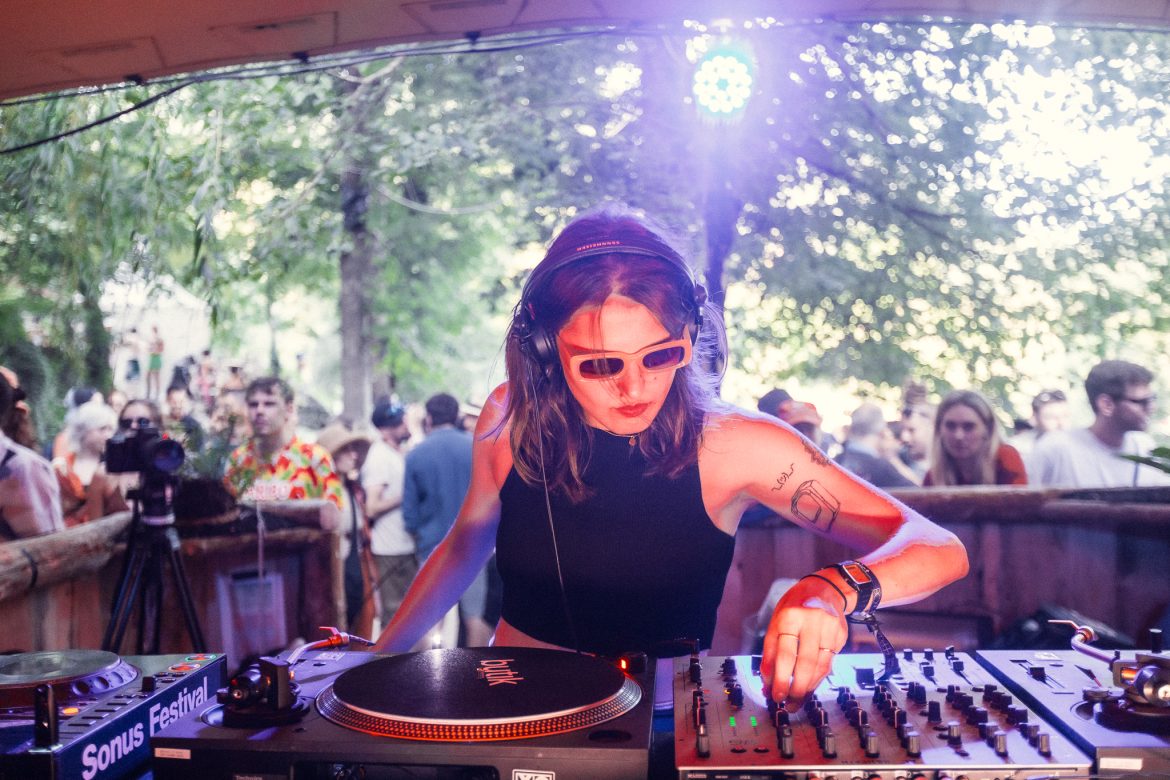
Photo by Tjasa Nardin


Interviewer: Domenico Frascino

Lottie is an up-and-coming DJ based in Ljubljana, Slovenia who is quickly making a name for herself in the electronic music scene. With her unique blend of experimental, downtempo, ambient, and trip-hop, Lottie’s sets are sure to transport you to another world. On the stage, she has a unique ability to connect with the crowd on a deep level to deliver energetic sets of dark-ish and breaky techno. With a passion for vinyl and a dedication to quality, Lottie is one to watch in the years to come.

The Partae: Lottie! It’s a pleasure to have you here with us after your Butik set, it was absolutely mind-blowing! Please, introduce yourself to our readers.

Lottie: Thank you for having me! My name is Loti, I am living in Ljubljana, Slovenia and my love for music has been with me for my whole life.

The Partae: Let’s start with your DJ name, how did you decide on it?

Lottie: As I already said my real name is Loti and a lot of people have always told me “Oh, what an interesting name!” It already sounded great as an artist name, but I decided to make it international: Lottie. It’s nice, not too complicated. I’ve never brainstormed too much about my artist name because my artist career really started suddenly. So I had to decide quickly and I was like, okay, let’s go with this.

The Partae: Tell us a bit about your musical journey. How did you start? And what did inspire you early on?

Lottie: I was inspired by my sister Simona. She’s 15 years older and she started partying when she was 14 years old. So she experienced the golden era of the Slovenian scene, with clubs like Ambasada Gavioli, Africa and others that have been closed for years now. When I was growing up, she told me her rave stories, showed me some sets on dancetrippin.tv, and gave me a love for this music. She was dating Blaž, as a DJ he goes by El Fabiiani, for seven years and he was showing me a lot of things, gave me my first knowledge about deejaying and he was always telling me “Hey, little Lottie, you will be a DJ one day!” I didn’t believe him back then but look at me now. So since I was little, I have had a passion for music. I was singing in a chorus when I was young. Later I realized that I can do a lot with deejaying and expressing myself through selecting different music genres. You can connect with it on a much deeper level, so that’s why I really started to love it. Now that I know how fun it is to mix and share this with the people, I realized I needed to do it more!

The Partae: You mentioned a few genres before, if you could put three labels on your music or three types of genres or three adjectives, What would you like to be described?

Lottie: Usually, I play two different types of sets. One is more experimental, downtempo, ambient, and trip-hop, while the other one is more club type like techno, electro-break, progressive house. It’s really hard to describe which type of music you play or produce now. You have so many different elements that are taken from the past and added something new. So sometimes I can label music with many different genres.

The Partae: Who were the artists that inspired you?

Lottie: Dojaja is the main DJ who pushed the electronic scene in Slovenia. He mostly played techno, but now he plays many different genres and he has a label called Chili Space, which is more of ambient dub type of music. He’s the main guy who inspired me the most and also gave me a lot of support. Another inspiration is Eliaz, he’s a special gem in the Slovenian scene. He makes music that you can’t describe. Eliaz is his own type of music.

The Partae: Are you listening also to international artists?

Lottie: There are many artists that I like to listen to, one of them is Super Venus. She is from France but at the moment she’s based in Berlin. Her type of music is what I really like and also play. Her main style is breaky, trip-hop or downtempo, but the way she builds up really amazes me! She starts with slower music and then she makes a transition into club type and all that kind of stuff. Right now she’s a big inspiration to me, also for putting it out: “I don’t want to be booked just because I’m a female DJ. I want people to book me because of my music”. Lately it became popular to have female artists in line up but it loses its meaning and becomes disturbing to book someone just for the gender.

The Partae: So we talked about your origin. How do you keep yourself busy with DJing? Are you a resident at some club?

Lottie: Now I’m not a resident in any club but I am booked on different events. In August, I’m playing at Drops Festival, a psytrance festival in Slovenia. I’m going to play a morning set from 9 till 11 a.m. and I will play techno music which for them is like a chill set [laughs]. At the moment, what keeps me busy most is the organization of some events called Sončna Muzičarna (Sunshine Music), which is a music event and is fully powered by solar panels connected to the DJ booth and sound system. It takes place in the forest near Ljubljana’s castle or parks. We have a mailing list and old-school flyers for promotion. Next year’s plan is to create our own label and make more events like this. This is the next step since I am not part of any label yet.

The Partae: A big part of DJing is to search and scout for new music. Since you work with both vinyl and digital tracks, how do you prepare your musical selection?

Lottie: If it was for me, I would only play vinyl, but sometimes it’s just impossible and then I go with the digital tracks. To search for digital tracks, I mostly go on Bandcamp and obviously, look for specific labels that I’m following and artists who I like. Regarding my vinyl selection, it really depends on what I can get my hands on! Lately, the prices have gone up too much, especially since shipping costs have become really expensive. Sometimes you pay €3 for the vinyl and €20 for shipping! Also, records that became rarer went incredibly up in price. A lot of records I bought for €3 and now are like €60+. I would really love to go on some trips around Europe just to go vinyl digging: leaving with an empty suitcase, visiting local record stores and coming back with a full bag of new records!

The Partae: As an emerging DJ is always difficult to go to the next level. Do you use social media to create a community of fans or do you keep it mostly just personal connection? And if you do, what is your approach to social media and your public image?

Lottie: My favorite is obviously through personal connections. But I need to level up my social media presence sometime soon, especially on SoundCloud. On my to-do list is to record some podcasts for a bunch of different organizations that have already asked me. I already have like 2 or 3 planned, just missing the finishing touches. So in the upcoming future, I will definitely post more. Stay updated!

The Partae: Have you identified any blockers to your DJ career so far?

Lottie: My biggest problem is that I am quite a perfectionist about my music and I’m never 100% satisfied with the music I am putting out. I have an almost maniacal approach to quality and I will always find something that is not good enough or that I no longer feel. However, I understand that this works only as a break in my mind and slows down my development process. It’s just so much better to produce as many podcasts as you can and then show the improvements from one another. In the end, even if I make mistakes, it’s still my work that I like and I need to put it out also to learn from mistakes.

The Partae: How do you see your DJ career evolving? Do you want to become a full time or is it just like your passion and whatever it comes?

Lottie: I do have aspirations to take my DJ career to new heights by playing in different countries. I’m intrigued by the idea of experiencing diverse crowds and how they connect with the music. For instance, the Slovenian crowd is very energetic, wooing and hyping up, while in other places like Romania, people seem to immerse themselves in the music on a deeper level: dancing with eyes closed and just feeling the music. I’ve heard stories from fellow DJ who played in England, where the audience appreciated the music in a more laid-back way but was much more interested in personally interacting with the DJ after the set. These unique interactions with different crowds are what I’m mostly interested in exploring further. Travelling would be also a way to meet and collaborate with artists from various backgrounds, sharing music and art.

The Partae: Which set would you use as your musical ID to introduce you to someone who doesn’t know you?

Lottie: The set that resembles me most is called “Lottie on SW:IDR”. I recorded this podcast for Eliaz’s SW:IDR label during the Covid lockdown, a very tough time when nothing was happening. We were closed inside, the police were patrolling the streets and we couldn’t go out, so I wanted to express this feeling.

It resulted in an ambient, downtempo, hip-hop, more chill kind of podcast building its power from beginning to end. This is surely the podcast where I show what kind of music I feel most.

Follow Lottie on social media:

Soundcloud

Resident Advisor

Instagram
January 16, 2024 0 comments
0 FacebookTwitterPinterestEmail
Festival NewsMusic InterviewsMusic News

Maša Interview

by the partae January 12, 2024
written by the partae

Maša at Butik Festival. Photo by Jaka Rogelij

Interviewer: Domenico Frascino

In our quest to discover talented emerging artists around the world, we sat for a talk with Maša, the vibrant 26-year-old resident of the legendary Klub K4 in Ljubljana, Slovenia. Maša’s style defies genre boundaries, blending old-school beats infused with electro, garage, funk, and RnB elements. Let’s dive together into her DJ journey in this interview and listen to her mind-blowing afternoon set at Butik Festival!

The Partae: Maša, thanks for taking the time for this interview. Briefly describe yourself to an audience that is not familiar with you.

Maša: I’m Maša (pronounced Masha), from Slovenia and I just turned 26. Originally, I’m from a small town called Sevnica, but since moving to the capital Ljubljana 7 years ago, my influences and interests shaped me into a graphic designer, music event organiser and DJ.

The Partae: Can tell us a bit about your DJ journey, how did it start? How did you get inspired?

Maša: In the beginning, I didn’t listen to electronic music at all. I didn’t even like it, or better, I didn’t give it a proper chance. Then I started working in a bar where the owners were producers and DJs (Pritličje in Ljubljana). The owners had this random event where all the bartenders would be DJing and they said, “You’re really good. You should maybe try doing it”. And I was like: “No, I haven’t listened to enough music yet”. And then they kind of pushed me into this “You should do it, you should do it”. I really started enjoying it. So then I started learning more about the culture, found my own sound, and went on a different journey from there. This was the beginning.

The Partae: What type of style? What were your influences before you switched to electronic music?

Maša: Before, I would listen to just about anything, but indie rock had a special place in my playlist. When I started to listen to electronic music, I started to like funky, tropical and electro-like sounds. Then I went more and more towards the house.

The Partae: Do you have any other artists who played a relevant influence in your journey?

Maša: It’s hard to pinpoint a name right now. In the beginning, I was mostly inspired by the local crews, such as Kvalitat, Just Us, LuckIsOn. I always felt it was not just about the music, but also their parties and the whole experience. How somebody prepares a club for the night and stuff like that.

The Partae: These days, I find that electronic music is evolving into a genreless type of music and it becomes very difficult to explain. However, I still think it’s important to describe it somehow. What are three labels you would categorize your music with?

Maša: We’re now in the era where people are taking so many influences from the past and mixing them together. And that’s why you can’t belong to a genre. I especially enjoy some of the old-school sounds, when putting that into a housey perspective. When I say “housey” I usually describe the beat. Then I would use other adjectives which describe my sound. I get influences from electro, garage, funk and RnB sounds.

The Partae: Switching to a more personal question. Besides deejaying, you mentioned that you’re a designer. How do you bring these two passions together? And how do you feel those two worlds influence each other?

Maša: I currently work as a graphic designer and I consider myself a designer, so I see my career developing into that path. Of course, I translate these skills into the music world. For example, when we organize parties, I like to think about how every aspect of the event will be perceived. From designing the visuals, decorating the venue, and overall making sure the vibe is alright and everything works as a whole.
On the other side, I feel that doing music matches well with design: at their core, it’s all about the layers! Both are about how you build and layer different elements visually or in sound.

For now, I would not want DJing to be like my full-time occupation. I just enjoy the privilege of having it as my main hobby and I get the opportunities to play in front of more people, to travel to new places I’ve never been, and to meet a lot of like-minded individuals. I feel that if this would become my full-time gig, it would bring a lot of stress and other negative aspects to it. At the moment, I want to keep it at this level, keep the quality high and build bit after bit, and we’ll see what happens. I want to give some more time to production in the future.

The Partae: Do you take care of your DJ image outside of the club, are you present on any social media?

Maša: My Instagram was private until six months ago. Before I have a gig, I always make a post to promote the venue or when I have a good experience after the party. I always enjoy showing places to other people and giving shout-outs to people who deserve it. Lately, it’s been public, I don’t do so much with it, I feel like with social media these days, it’s also your mental health and you cannot always handle it at 100%. There are times when you just don’t feel like doing it. However, I realized that social media presence is sadly important in 2023.

The Partae:  Do you like when people add you after you do a set and when they compliment you for your selection?

Maša: It does make me happy. My goal is always to help people have a good time, so it’s rewarding when someone reaches out and it makes you feel good. It’s quite an ego boost. Gotta admit, every now and then anyone needs some validation

The Partae: Let’s explore your future. Do you have like any specific dream location, venue or festivals or places where you would like to play?

Maša: There’s no specific festival or club that I want to go to, but I just enjoy going to new places and meeting new people. So everywhere I haven’t been yet. Also love to cross the borders of Europe one day.

The Partae: Where do you usually play as a resident and what were your favourite gigs last summer?

Maša: I’m a resident at Klub K4 in Ljubljana, so you can usually find me playing there, while in summer we’re very active with outdoor parties. Past summer was a very hectic time for my DJ career, as I played in many gigs. Obviously, it started with our home festival Butik in the Slovenian Alps. I also played in Munich for the crew Cyclic Existence. It was my first time in Munich and my first time playing for them. It’s a cute independent club, where you can feel the passion of the team behind it, both execution and vibe-wise. I had a blast! At the end of September, I played at the festival L’Ode Mere, located at a stunning chateau on the Western coast of France. It’s a new festival at its first edition and I like the ideas behind it. They’re very aware of the minorities and they’re very transparent. Before the festival, they posted on Instagram a breakdown of the costs to show how much money goes into fees for the artists, how much into the venues, etc. I like their incorporation of social awareness into the party culture. It doesn’t need to be political, but it’s nice that we’re aware of some stuff.

The Partae: Since you mentioned social awareness, let’s talk about equal opportunities. Do you feel that female DJs get the same recognition and opportunities as their male counterparts?

Maša: Just in the past few years. When I started deejaying, there were fewer girls. People told me that before, it was even more challenging for women. I don’t feel like it’s because people would not be accepting of it. It was just a boy’s world, and girls just didn’t enter that. Nowadays, every girl that I know from our scene, gets opportunities. Sometimes it seems like positive discrimination. More and more organisers are actually being inclusive, but some just want to fill the quotas. It has happened to me that I got a gig just because “they needed a girl”. I feel like we sometimes get even more opportunities just because there’s less female DJs in the industry. It’s kinda problematic if inclusivity is prioritised before quality, but if you show up and prove your worth, when given the chance, it’s okay. So fellow girlies, go for it!

The Partae:  Would you like to inspire other girls to start a career in DJing?

Maša: I would love to inspire more girls, but even better, I would like to inspire more people! I don’t feel like it’s a gender battle. Just go for it, whoever you are!

Maša’s set at Butik Festival

Follow Maša on Social media:

SoundCloud

Instagram

January 12, 2024 0 comments
0 FacebookTwitterPinterestEmail
Music InterviewsMusic News

Brainheart Interview

by the partae January 11, 2024
written by the partae

How did you first start playing music?
My first exposure to music was at the age of four, it was classical music because my mom used to listen to classical and orchestral music. I fell in love with all the instruments, especially the piano, violin, and cello. What is fascinating about music is that it’s a universal language and connects people from all over the world. I taught myself how to play piano at the age of 15, and honestly, it was one of the best decisions I have ever made. Over the years, I fell in love with more genres, especially EDM.

What’s been happening recently?
I have to be honest, the last few months were extremely difficult mentally. I am working on new music but also working on myself. The music industry is very tough and most people don’t know that. A lot of people reference that 10,000-hour rule to be good at something. Nobody mentions how those hours can be boring, repetitive, and exhausting waiting to see signs of progress, so I am proud of myself that I didn’t give up on my dreams and kept going even though this year was challenging mentally and emotionally.  I always remind myself that every day I get out of bed excited to do those things I’m passionate about, and I have all the time in the world for them.

Your first single ‘Explore The World’ that you created with your sister, has hit over 525,000 reels, what influenced the sound and songwriting?
How did you go about writing Explore The World? Yes, crazy results! 3 years ago my sister traveled to the Philippines, I told her that I want to create a travel song and release it when she gets back home. She wrote the verse and sent it to me, I fell in love with it and wrote the chorus. When she came back home we finished the vocals literally in 30 minutes. I produced, mixed, and mastered the track and we released it at the end of 2019. It was a pleasure working with her; the process was fun and happened naturally. I can’t wait to work with my sister on more songs in the future.

What does this single mean to you?
This song holds such a special place in my heart. It means the world to me, especially because I wrote it with my amazing and talented sister. This is the first song I have ever released, and I never expected it to be huge.
The song started to take off only a year after I released it. People started using it on their Instagram videos, and it went viral. I never thought that my debut song would go viral! This song touches so many people, and I am extremely grateful for that. It’s been a cool thing to see the message in the song have such a profound impact on people. I was in such a strange place in life when this song came out. The success of this song gave me confidence. It made me believe I am good enough and that I must continue no matter what.

Being an independent artist, where did you record/produce/master and who did you work with?
I record, produce, mix and master everything in my parent’s house. I can’t wait to move to my own place but it’s better for me to stay with my parents and save money for the future. Eventually, the goal is to move to the United States, it’s an expensive process but it’s a must for me. I worked with singers from the United States and am going to work with more singers from all over the world…

How did you approach the recording/production process?
I remember the first time I watched the Tomorrowland festival on Youtube, and I was hooked. There is something contagious about electronic music. A couple of years later, I started creating music and knew I had found my purpose.
I learned and still learning everything from Youtube. I still have a lot to learn, and I am getting better every day. Consistency is the key!

Please tell us about your EP and any new music on the way:
I created this EP with Dorel, an amazing singer/songwriter and one of my best friends! He is the best singer I know.
First, we decided to create just one song together. The process was so fun, and we were so happy with the result, so we decided to create a full EP together. This EP means a lot to us; we created these songs from the depth of our souls.
So much love, fear, excitement, frustration, confusion, and happiness shaped this EP. The whole process sort of guided me in a healthier direction mentally when I really needed it. I’ve learned a lot about myself and about growth while making these songs. I can’t really explain how much this project means to me. I allowed myself to be very vulnerable in the process and show different sides of my soul. I am working on new music and can’t wait to share these songs with the world. I am working on Electronic, Acoustic, Pop, and Pop rock projects with extremely talented singers.

Who are you listening to at the moment?
ILLENIUM, Avicii, Martin Garrix, Coldplay, Bring Me The Horizon, Bad Omens, Hans Zimmer, Demi Lovato, Onerepublic, and Adele. I listen to so many genres and get inspiration literally from everything. Versatility is so important.

What’s planned for 2023?
Keep making music and touching people’s hearts and souls. I want to keep growing my socials and fanbase and of course, evolve and become a better version of myself – as a musician and as a person. My main goal is to get an artist visa and move to the U.S. I believe that I will be able to develop my music career in the U.S. much faster and I will have plenty of opportunities.

Favorite food and place to hang out?
BBQ, a good steak can fill my heart with happiness. Nature, because it gives me peace of mind and a huge boost of inspiration.

* Music + Socials:

 https://linktr.ee/brainheart

*Website:
https://www.brainheartofficial.com/

January 11, 2024 0 comments
0 FacebookTwitterPinterestEmail
Music InterviewsMusic News

CUT_ Interview

by the partae January 3, 2024
written by the partae

The title of your new single, ‘The w*r,’ involves self-censorship. Can you share more about the decision behind this and its significance in today’s world?

On the social media platforms, which are our most important outlet, we find we need to use caution in our choice of words. The w*r is censored to avoid being shadow banned. To make it the official title outside of the socials is a sign of the times. We wanted to express the despair that comes with the times in which we now live.

How did the Russian invasion in Ukraine inspire the creation of ‘The w*r’? Could you elaborate on the emotions and experiences that influenced the song?

We had a part of the song laying around for years on end but found it hard to finish it. In February 2022 we isolated ourselves to write music, we normally work this way so we don’t get distracted by the city. We were in a house in the woods and writing on the new work when Russia invaded Ukraine. We couldn’t believe it, it felt so close by. I think we felt the fear of war for the first time. The song is a direct outcome of this happening. We have great respect for the Ukrainian people standing up to this giant and we feel the people are so strong. We wrote the song almost to give them a light to follow. The chorus starts with “I am mine” and ends with “I’ve lost a battle but I’ve won the war”. We wanted to visualize the end of the war, to give hope.

The lyrics of ‘The w*r’ convey both pain and resilience. How do you hope listeners will connect with the message of strength and overcoming difficult times?

I think music has a unique and magical way of helping people go through the motions. If we can give just some people who need it a moment of solace, hope or even strength we have accomplished our goal. The chorus “I am mine, I lost some of my mind but what is left is so much stronger than before” is a description of overcoming trauma and coming out stronger and wiser. We hope our song will reach people who need to hear this. People all over the world who are facing hardships every day and can find strength through the music.

The song was originally conceived in the hope that the war in Ukraine would become history. How does it feel to see the relevance persist, especially in light of recent events in Gaza?

It is heartbreaking that now, two years later, we could’ve written the exact same words inspired by current events. We are appalled by what has been happening in Gaza and the hopeless situation there. We hoped so much things would’ve been better by now but instead it all got worse.

The accompanying video for ‘The w*r’ is the fourth installment of a planned eight. Could you explain the concept behind the series and its connection to the themes in your music?

We wanted to write music especially for a live situation. We went for a more danceable sound (The w*r obviously being the ballad of the 8) to make for a wild live show. Every video, like the music, is inspired by club culture. There are elements that we find in clubs that we use in each video. Club culture is very important to us because we find it’s where people can be themselves, express themselves freely and in safety. The most exciting things that come to surface in society started in clubs and we want to honor that and underline the importance of it.

The video features shots captured by you two and glitch artistry by Cyborg Jungle. How does the visual aspect enhance the overall message of resilience and power in the face of adversity?

The songs are more gritty and raw. It is not about sleekness and the typical way society portrays beauty. The sound is more gritty so the visuals and music go together perfectly. We find beauty in imperfection. Like in the art of Kintsugi, in which one treats breakage and repair as part of the history of an object. A crack his highlighted with gold, it has become part of the beauty of the object. We use the colors and glitches that arise in the images to highlight the beauty and create an exciting video.

Each video in the series showcases a strong young woman adorned in armor-like attire. What does this symbolism represent, and how does it tie into the broader themes of your music?

The look in the video for ‘The w*r’ is based on queer club wear and also represents a young woman who is ready and strong to endure everything that will come at her. We have always stood for the power of women obviously. We want to implement this message in our work as much as we can.

CUT_ draws inspiration from the liberating spirit of club culture. How does this influence your approach to creating music, and how do you express these themes in your videos and performances?

We have written the new work especially for the dance floor. We want to play more during club nights and we found we needed more material to make this happen. We have a great love for the club culture and freedom of expression we find there. In each video we make use of elements that we know from this culture.

In ‘The w*r,’ you mention being ready to fight and overcoming trauma. How do you see music as a tool for channeling emotions, healing wounds, and inspiring hope, particularly in times of adversity?

Belle: I have struggled with depression and addiction in the past. Music has given me an outlet to work through these things. When life gets dark, I feel music has the power to channel emotions and work through dark times. I know it has for me. Also, music deters loneliness, I believe. These are hard times with social media so dominant in young people’s lives. I do find a silver lining in there that people can connect with each other online and find communities where one can find likeminded people.  Often music is a strong connector in these subcultures. I truly believe music can save lives.

The song speaks to the power of emerging stronger on the other side. How does CUT_ stand as a beacon for listeners, offering a sonic journey through pain and triumph?

As a band, you’ve been experimenting with pop and electronic music since 2014. How has your sound evolved over the years, and what drives your exploration of these genres?

We have always been obsessed with sound. We don’t find much satisfaction in sounding like other artists. We truly get excited when we hear something new and unheard of. A lot of artists try to sound like the “it sound” of the moment. We find it extremely boring and it feels like a search for commercial success more than making art. In the past we have worked with teams that wanted us to do the same. Needless to say, we are proudly independent and stubbornly keep making what we love at this moment. These 8 songs are a testament to that.

After the success of your debut album in 2019, what can fans expect from CUT_ in terms of future releases and the continuation of your unique musical and visual journey?

The next releases upcoming in 2024 will be in the gritty and raw style we released in 2023, we are ready to do club nights and see how they work in this live setting. After that we truly don’t know yet. Maybe we’ll make an ambient album, maybe we’ll make a techno album, maybe we do an acapella album, who knows what’s next! But rest assure it will be electronic it will be what we want to make and it will be us written all over it.

Links:

https://www.cutunderscore.com

https://www.instagram.com/cutunderscore/?hl=nl

January 3, 2024 0 comments
0 FacebookTwitterPinterestEmail
Music InterviewsMusic News

AR: TE Interview

by the partae December 28, 2023
written by the partae
Let’s meet Alex Ranerro and Teo, alias AR:TE. This is not just another DJ duo; they are two pillars of the underground electronic music scene in Slovenia and the architects of an inclusive, forward-thinking movement. Get ready to groove as we unravel the tales behind the beats and explore their vision for the present and future of AR:TE, their label/events SOLVD and the Butik Festival!

The Partae: I’m really glad that you guys are here on behalf of AR:TE as a DJ duo, but also as a representative of the party and festival scene in Ljubljana and Slovenia with your label SOLVD and with the Butik festival.
Let’s start with your DJ careers. Can you summarize your journey as a duo? How did you get together? Where did you come from as solo careers?

Alex: We both had solo careers before. I started playing and making music in 2012. I was drawn into producing as something to clear my head, to be with myself, to put out things that I was not able to do on a personal level, and simply to enjoy the creation process. At some point, I realized that if I started deejaying, that could also progress into something more in the future. In 2016, I started with a couple of friends, the SOLVD project: a series of events in Ljubljana that quickly evolved into an actual label.

Teo: I started making events and playing drum and bass when I was 18. In the beginning, I was playing mostly abroad. I used to be a windsurfer and I travelled the world for it. Wherever I went, I played house music in exotic clubs. Because I was a foreigner, I could say “Trust me, I’m a good DJ! Let me try just for one night.” Then I was given the opportunity to show my skills and they booked me more often. I was a resident DJ in clubs in Brazil, Vietnam and Egypt. When I returned home to Slovenia, I became a huge fan of SOLVD parties from the beginning. I was the number one fan of Alex.

Alex: Actually, there’s a video from our first party and he’s dancing like crazy!
In 2019 we changed our SOLVD team a little bit as we were looking for new residents to join us. A common friend mentioned Teo, we knew each other but we never played together. During the first party of the year, we spontaneously tried to play together and the energy clicked and that’s how AR:TE started.

Teo: Since then we have been playing (mostly) together.

The Partae:  What are your influences? Are there specific people you got inspiration from?

Alex: I grew up with hip-hop. In high school, the Viva channel was broadcasting some electronic music videos and that caught my attention. From that point on, electronic music took my heart. I always liked Kerri Chandler, Karizma and DJ Spen, those old house heads. I was also influenced by the UK sound because it has this edginess, groove and dub-deep vibe surrounded with lots of energy. Right now I don’t have a favorite artist because it’s so many influences drawing from.

Teo: When I was younger, I was really into jazz, funk, soul and blues. Since I used to play piano as I kid, I take music inspiration from this organic sound. Then, as I mentioned before, I got into drum and bass. My love for drum and bass came from liquid and jungle, nothing too aggressive or punchy. Especially, I was a huge fan of Brazilian artists like DJ Marky, DJ Patife, and other main artists like Calibre. But in the back of my soul, there was always house music. In the following years, the drum and bass scene became a bit more aggressive, going towards Neurofunk and liquid was falling down. I felt betrayed. I just couldn’t be there with this kind of sound. And I said, “Fuck it!” and I focused on house music. During all these years I have been developing my sound non-stop. I don’t play a specific sound but I play a lot of different genres. When we play as AR:TE, we play a bit differently than solo. Alex is a good deejay and producer with his own sound. I am Teo with my own sound. When we come together as AR:TE, we push each other to explore deeper, to be more curious and explorative. This is AR:TE’s vision.

The Partae: You guys are representing the Ljubljana and Slovenian scene with organizations like SOLVD and also Butik (which is located in Tolmin). Can you describe what makes it special and what challenges are you facing?

Alex: In the late 90s, Slovenia was quite on top of Eastern European electronic music scene because we had one of the best clubs in probably Europe: Ambasada Gavioli. It was built in 1995. It was running for 27 years, until 2021. Even international stars like Richie Hawtin said a couple of years back that if this club were in a place with better infrastructure like Ibiza, it would be top 3 in the world! In addition, you had a couple of cities in Slovenia known as “rave cities”. So the following and interest from the public was massive. Unfortunately, at the beginning of the 2000s, the regulations started to be tighter and it slowly became more difficult to run a club and make a profit.

Currently, the Slovenian scene is at a good level regarding the quality of individual DJs, producers and collectives in several different genres. However, we are lacking the infrastructure and support at a national level in both acceptance from the mainstream public and government institutions. We have a shortage of clubs. There’s only one serious club for underground music: Klub K4 in Ljubljana, where we do our SOLVD parties. Other than that, there are only minor locations in the rest of Slovenia. Also among underground festivals, it’s basically only Butik on a larger scale. There are other projects but they’re smaller in scope, just aimed at a couple of hundred people and organized by local enthusiasts.

Other genres such as Balkan music for example do not face the same challenges because they are more widely accepted by the general public, so they can organize events in every place.

Teo: Another big problem is the commercial events. The tickets are not too expensive so they attract more people, especially young ones who are not yet musically educated. Those types of events are the entry gate to the festival and party culture for most people due to their availability and accessibility, but they book always the same artists. People end up listening to this kind of music and thinking “Ok, this is it, I’ll enjoy this.” They don’t proactively search for new sounds. That’s what we try to do with our events: to provide new music to people and welcome them to our community. At every party new people are coming and they’re like: “Whoa, what is this? Is this house music? Whoa, I didn’t know, I love it!”. As the Slovenian music community, we need to be more adventurous and braver in booking and promoting underground sound.

The Partae: Let’s talk more about Butik Festival. What factors have made it such a big success?

Alex: Our initial idea when we created Butik was to have a place for the community where everybody feels welcome. Music is the perfect tool for inclusivity because you cannot have competition. This is our advantage: We welcome everybody, we are inclusive.

Teo: What makes Butik special is also our team, not just DJs, but everyone else who works here, who represents the real soul of the festival. At the party, everybody comes, everybody is happy, everybody is dancing! Sharing this positive energy is highly contagious for everyone else around.

Alex: Another important goal for us is to provide a way for people to always discover new artists. We don’t want to be a festival where the lineup stays the same over the years. We have a rule that we repeat a single international artist maximum of two years, but not more than 20% of the lineup. This way we can push local talent first. International acts are a nice complementary aspect, to draw attention. When guests come here, they start enjoying the sets from the DJs that they didn’t know. And when those are Slovenian DJs, that is the best that can happen! For local artists there are not so many options, so we try to provide them with opportunities to play.

The Partae: Do you think that an international project like Butik works also as a way to teach the Slovenian people about the international underground scene?

Teo: Yes, absolutely! Butik is quite a young festival and it is getting recognized not only abroad, but also in Slovenia. People are talking about this festival and the underground scene with enthusiasm. It spreads organically with word of mouth, which is the best way to promote it. And it’s slowly gaining traction. We are really proud of it. This is one of the main goals of the festival. Groups of underground DJs and insider crews start getting recognized, and collaboratively building a strong community.

Alex: At the moment in Ljubljana, there is a healthy relationship between the crews. The majority of us work really well together. Even if often we don’t necessarily like each other’s music, we respect each other and understand that everybody has space in this community. Right now we are in a good position and hopefully, we can build something together. Here in Slovenia, there’s a major festival called Ment Festival. Originally, it was a festival for bands, but now they are expanding to electronic music as well. This year it was the first time they organized a panel to bring all the Slovenian crews together and discuss the problems we are facing and how we could solve them together. This kind of initiative gives me more positive thoughts that we can make it together.

The Partae: Do you see any collaborations to promote the underground scene outside of Slovenia, also in the Balkans?

Alex: One of the main goals for the future, is to create a sort of organization where we would all work together: artists, organizers and promoters from Balkans, from Serbia, Croatia, Bosnia, etc. To the Western world, we are perceived as a sort of minor area and they don’t see us as an important market. Artists from these countries don’t have the same chance as somebody from the Netherlands or the UK for example. We see it as a challenge, but also as a huge opportunity: if we all work together, then it’s not only the Slovenian market of 2 million people, but it can translate into a market of roughly 20 million people including all the people from ex-Jugoslavia countries.
The same applies to event organizers. We could join forces and share flights and costs to bring international DJs to play here in a sort of tour: on Friday certain artists could play in Ljubljana, on Saturday in Zagreb, the week after in Belgrade, in Skopje, and then all of a sudden we can become interesting for them. Of course, this is just a vision. Right now we have connections with a couple of groups that we are working closely with.

The Partae: Let’s look towards the future. What are future expectations and plans for SOLVD, AR:TE and for Butik?

Alex: Butik is working on a super interesting project in collaboration with the Lighthouse Festival, an Austrian festival in Croatia that has a similar vision. We’ll jointly organize a musical holiday experience in Zanzibar next February. It will be a mix of partying and relaxing for an entire week. It’s a super cool project because I haven’t or I didn’t see many times that the two festivals joined together to make a project. We’re also working on other projects such as a club tour, however, we want to keep it a secret for now.

Alex: For our SOLVD label, we started our 8th club season at Klub K4 just recently with Gene On Earth. We plan to do approximately 4-6 events in one year, and we also plan to focus on other markets to host showcases. We’ll also work on our second label release however, we don’t want to rush ourselves. Regarding our AR:TE project, we had quite a nice summer with gigs in Slovenia, Italy (After Caposile), Croatia, etc. We did our first “release” an edit of classic track “Presence – Work On Me” which was released digitally via SOLVD. It got really nice support. We have some other edits in the pipeline as well as the first EP so we should have plenty of exciting projects in the future.

Teo: Regarding the SOLVD events, we will definitely continue to make parties in Ljubljana, in Slovenia. But the next step is to grow internationally and play in different countries with our whole crew. Since we are five DJs in SOLVD, bringing all of us to a place in Europe it’s difficult and expensive. Every one of us is developing very fast in just a couple of years and we need to keep promoting ourselves as a solo to consequently bring the crew along. Together we can achieve this!


Listen to Ar:Te’s latest release

SoundCloud: https://soundcloud.com/trommelmusic/premiere-1-elisa-fiorillo-ooh-this-i-need-arte-edit-slvd000?in=alex-ranerro/sets/elisa-fiorillo-ooh-this-i-need

Bandcamp: https://solvdmusic.bandcamp.com/track/elisa-fiorillo-ooh-this-i-need-ar-te-edit


YouTube: 
https://www.youtube.com/watch?v=Axm7DoEXCYg


 Follow Ar:Te and SOLVD on Social media

Instagram:

https://www.instagram.com/alexranerro/

https://www.instagram.com/matejucakar/

https://www.instagram.com/solvd.music/


SoundCloud:
https://soundcloud.com/alex-ranerro


https://soundcloud.com/teothedj


https://soundcloud.com/solvdmusic

December 28, 2023 0 comments
0 FacebookTwitterPinterestEmail
Music InterviewsMusic News

Archer Interview

by the partae December 22, 2023
written by the partae

Can you share a bit about yourself and your journey into the music industry?

I’m Archer, I make pop-electronic music! I started making music back in 2018, sending Garageband demos I produced on my phone to my friends (they were notably terrible). That’s kind of where I discovered a style of writing lyrics that I really enjoyed. From there, I found a producer to work with to create my first track ‘Malibu’ and the rest is history!

Congratulations on the release of your debut EP, ’23’! What inspired the title, and how does it reflect the theme of the EP?

Thank you so much! ‘23’ is one of those numbers that appears everywhere for me – for instance seats on flights, hotel room numbers, my graduation number etc (it’s all a little spooky) It also felt right to name the EP ‘23’ in 2023, when I was 23 years old. I think there are definitely themes of reflection in the EP. Considering I started making music when I was 18 and I’ve always pondered the release of my future EP, ‘23’ really made me reflect on the last 5-6 years and where I’ve come and where I’m going sonically and in my music.

Could you walk us through your creative process when working on the songs for ’23’? How do you approach songwriting and music production?

Each song had a different process. For example, Whispers was a demo I originally wrote and produced that I then sent across to Tristan at Studio Ninety1 to produce properly. Then with tracks like Bittersweet and Star, they were both tracks entirely written and produced in studio sessions – so really developing and tweaking sounds and lyrics as I went!

Who are your musical influences, and did any specific artists or genres inspire the sound of your debut EP?

I pulled a lot of different influences. I’ve always been a big fan of Billie Eilish and Mallrat, both of which operate in the pop space but are very different sonically. I do love pulling inspiration from lo-fi and hiphop!

If you had to pick one track from ’23’ as your favorite or the most personally significant, which one would it be, and why?

I love all the tracks but I think Whispers has to be my favourite. Since writing it, I’ve spent many a car ride listening to it and shamelessly screaming the lyrics. I don’t want to toot my own horn but there’s something about the bridge that just hits different.

Are there any collaborations on ’23,’ and how did those partnerships come about? What do you think each collaborator brought to the project?

I worked with two amazing artists on the production and lyricism for the EP. The whole EP is produced by Drest who is an amazing artist in his own right but also helped work on production and lyrics for ‘23’.Obviously, the EP wouldn’t exist without him. I also worked with Riverine – who is an incredible producer – on Bittersweet. He definitely brought a whole new level of depth into the track and really elevated the production in the chorus especially.

How do you feel you’ve evolved as an artist from your earlier work to the creation of ’23’? Are there any significant changes or growth you’ve experienced in your musical journey? 

I think that ‘23’ is a whole lot more considered than my earlier releases. I think in the beginning I would create a track and then release it, create a track and then release it. With ‘23’ it required a lot more consideration and planning which I think allowed me to evolve, as it forced me to step back and really think about what I wanted the work to be.

The visual aspect of music is increasingly important. Can you discuss the visual elements accompanying ’23,’ such as album artwork or music videos, and their significance to the overall project?

Absolutely, in all my writing there has always been organic/nature references. In the beginning it was references to the ocean and the waves and then when I moved up to the Gold Coast and was really exposed to those elements – I think it more came out in the feeling of EP. It was really important to me to keep some element of nature in the EP, so if it wasnt with explicit references then it was going to be in the visuals. The EP art was shot in Tallebudgera Valley in the Gold Coast hinterland. It’s a very beautiful place! My photographer, Evie, and I, really played with themes of reflection using a mirror in the majority of the shots. A lot of the Spotify canvas’ play with this idea as well as they were shot on the same day.

What were some of the challenges you faced while working on your debut EP, and how did you overcome them?

I think one of the challenges I faced came from being in the studio and creating songs from scratch on the day. It was something I’ve never really done before as usually I have all the lyrics planned out before standing in front of the mic. I think it really forced me to try and get as vulnerable as possible when it came to writing so I had to put my nerves and my anxiety aside and just try and open up for the music. 

How do you hope your audience will connect with ’23,’ and what emotions or messages do you aim to convey through your music?

Any way someone finds a connection with my music is good enough for me. I just hope people can relate to some of the tracks and maybe apply their own meanings and connect in a deeper, more personal way. 

With the EP released, do you have plans for live performances or a tour? What can fans expect from your live shows?

Yes! I’m back home playing my first show in 2024 on February 17th at the Leadbeater in Richmond! I can’t wait to play all these new tracks live for the first time. Fans can expect a party where we laugh, dance and cry together. 

Looking ahead, what can we expect from Archer in terms of future projects? Are there any upcoming releases, collaborations, or new directions you’re excited about?

I’m taking a quick break until the new year and then I’ll hopefully be back in the studio writing some new music that people can boogie to!

Triple J Unearthed | Facebook | Instagram | Youtube

December 22, 2023 0 comments
0 FacebookTwitterPinterestEmail
Music InterviewsMusic News

Stefan West Interview

by the partae December 17, 2023
written by the partae

‘Happily Ever After’ is described as a love-fuelled indie adventure. Can you share the inspiration behind the song and the story you wanted to convey through its lyrics?

Yes absolutely! It was inspired by a relationship I was in at the time, we had moved in together in a little place on the corner or Orrong road/cambridge street in Caulfield north, Melbourne. We taught pilates at the same yoga and pilates studio, and to be honest, it was the most safe and secure I had ever felt in a relationship before. She really did accept me for me, and love me for me and I had never felt that before. I used to spend Sunday afternoons writing all day while she was in the studio, id write clean, run around the house, while a chicken curry slow cooked in the kitchen. I had been playing around with this idea of a song, and she came home that afternoon and it all just clicked for me, I was in this position where my home felt like a kingdom, like no one else was allowed in but us, I was better than I had ever been (mentally/physically/emotionally/spiritually) I was grounded and I was safe. And I was like I could do this for the rest of my life, like happily. And I realised in that moment how young I felt, this like giddy feeling with no restraints, and that forever young line made sense, I had always thought it mean something completely different, I seen people get older and keep partying, and continually ride themselves off, almost like screaming we’re never growing up, and that always confused me because I didn’t feel like that was true for me. And In that moment of clarity it was like ahhhh thats not being young forever, staying curious, staying playful and continuing to learn is how I stay young forever, and if we do that together, in our own way, that I think is how we make it a lifetime.

“Cambridge” is your upcoming album, and ‘Happily Ever After’ is its second single. How does this track fit into the overall theme or narrative of the album?

I always wanted to create something that has the full scope of the human experience within it, with this album I think it has a very wide representation of that over a 3 year period. Obviously there is endless subtleties of the world within and around us , but I think this album represents/touches base on almost all of my experience over that timeframe, I say this because that’s what the theme is, exploration and curiosity of life, and this song fits in as an idea and a feeling of what love is and what it might mean to build .

The song touches on the experience of growing old together. Can you delve deeper into this theme and how it influenced the writing and production of ‘Happily Ever After’?

It really was something I not only never thought I would experience, but just couldn’t see how it would be possible for me. Now I still haven’t grown old with someone and the relationship that I wrote the song about has been ended for a few years now,
but this song represents a moment in which I understood how it could happen, in that moment I understood what it might take for myself to meet someone in a position where we could grow old together. To stay curious, to be playful and to continue to learn with someone for a life time or like how the lyric goes, to stay young forever. And that moment of realisation was one of the most memorable moments of my life.

In addition to being a musician, you’re also a meditation teacher. How has your personal journey of resilience and redemption, overcoming addiction through meditation and yoga, influenced your music, particularly in the creation of ‘Happily Ever After’?

For a long time I felt like it was all just the same, the actions in which I choose to participate in directly effect my life, its like the old saying you reap what you sow. So for me, Having a practise in Meditation and yoga helps me feel centred, it helps me stay grounded and it helps me make decisions in alignment with whatever my truth may be. I think the world gets a little fuzzy for us all, and it becomes really hard to hear that truth if we’re not paying attention. Yoga and meditation help me pay attention, therefor allowing me tune in and experience my life fully, and then express it through my music.

Could you share some insights into the themes and messages you aim to convey through the upcoming album ‘Cambridge,’ especially focusing on the elements of resilience and redemption?

I think the main message within resilience and redemption would be to learn how to listen to your truth. Those words aren’t said specifically in the album anywhere but really what are we all searching for? I think for most people that answer would lead back to certainty or security, it definitely seems to be a common theme in my life. we want to be certain of our choices, we want to be certain of our success, we want to be certain that everything is going to work out and be ok. we can never know the answer to those questions in the way that we would like it to be told, but as cliche as it does sound we already do have the answer, our own truth, the one thing that is always available to us. now the world might get a little (or very) noisy, and the static in our mind might get a little to loud for us to hear or feel that truth sometimes, but regardless it is always there. My constant question has been, How can we find it? Or how do we cultivate enough awareness to strengthen it like a muscle within our body?

For me, its been exploration, exploring what it means to be right, to be wrong, to succeed, to fail, to feel my emotions, to ignore my emotions, to find peace through action, to find peace through inaction, to express ourselves, to suppress our expression, and it seems that all of this is done either with a conscious awareness or without a conscious awareness, regardless we move on and we live and get up and try and we book mark the things that we learn and along the way, and hopefully we can accept ourselves even just a little in the process.

I think true resilience comes from the exploration and acceptance of ourselves. And learning when to be hard on ourselves and get up and get on with it, and when to sit and allow ourselves to rest.

In a world where the moral compass of a human being seems to be measured so precisely with no flexibility to account for any outside factors, I think its very important to explore your own inner workings and find your own truth for yourself, and within that cultivate resilience to be you.

‘Happily Ever After’ seems to embrace a positive and hopeful tone. How do you use your music as a platform to spread positivity and inspire others, especially those going through challenging times?

This does have a positive tone! I cried a week ago when I realised I was putting out something that was just like pure joy and bliss, I think id been so close to this song for such a long time that I had separated myself from its essence a little.

This question really stumped me if I’m honest. But I think I spread positivity by always looking on the lighter side whenever I can, that’s something I have always done in my personal life, not like ignoring the hard times or pretending evil doesn’t exist, but by understanding that there is always a positive, it might not show up immediately but if your patient and open enough to see it, it does always works out in the end. I also think it shines through me just being myself, I love what I do, I wouldn’t want to be doing anything else, and I am genuinely stoked to get out of bed in the morning and go to work. I have days that are really hard too, we all do. But I think that enthusiasm and that love shines through the content I make, the music I make, the lyrics I write and just in the way I show up.

Mental health awareness and addiction recovery are causes you’re passionate about. How do these themes weave into your music, and what messages do you hope to convey to your audience regarding these important issues?

The message I want to convey to my audience is that mental heal is in everything we do, we cant separate it from our whole being, which I think is something we have gotten wrong for a long time. Getting to understand ourselves as a whole being is the only step forward. Our society seems to be obsessed with the mind. It seems to be the part of our experience that we give the most clout to. But I think that the only way we can move forward in a way thats free from addiction and chronic mental health conditions is to look at the human as a whole being. These things weave into my music because they are apart of me, every song I have written is from the perspective of a guy exploring what it means to be him, with absolutely no idea what he’s doing, all he knows Is what has and has not worked up until this point and he is trying his best to understand and accept himself. There are a few songs on the album that are very clearly about mental health and addiction struggles, and you can hear it lyrically and you can also feel it musically, but I think in some way they are all about me trying to understand the fluctuations in my mental health and trying to understand why I can be so easily roped into things that distract me and really take me away from my life.

Can you discuss the creative process behind ‘Happily Ever After’? How did you approach the musical arrangement and production to capture the emotions you wanted to convey?

Alsolutely! So I wrote the chord progression and lyrics back in 2019 In my home studio just off Cambridge street, my partner at the time had just gotten home from teaching pilates at the yoga and pilates studio we both taught at, and I remember I had been playing around with a few ideas that afternoon, but when she walked in and I looked at her, the idea really came to life.

I think demo’d the song and sent it across to my best friend Aaron Schembri in 2020, it was the middle of a lockdown. He then wrote those guitar melodies, and bass and keys you can hear and we go it all down at the end of 2021/start of 2022. Its been a long time coming.

As you embark on this love-fuelled indie adventure with your music, what do you hope listeners take away from ‘Happily Ever After’ and the upcoming album ‘Cambridge’?

I hope they can feel a little bit of themselves in the songs, we are all so different but we are also the same, and I think music really highlights that. I hope it provokes more exploration within themselves and also in the seriousness of what life can be, I hope it also adds a little lightness to their steps. Its all ok, and it always will be.

How do you balance your roles as a musician and a meditation teacher? Do these two aspects of your life inform each other in any way?

These two aspects absolutely inform one another, I have always looked at it like this. Meditation and yoga are the tools that help me experience my life to the fullest, they also allow me to reflect on my life more honestly and thoroughly than I otherwise would, which in turn helps me turn those experiences and reflections into the art that I see. For a long time I just said yoga and music are the same to me, and I never quite understood why, and then one day I realised this dance that they were flowing in and out of and I realised.

‘Happily Ever After’ seems to celebrate the positive aspects of life. How do you use your art to bring joy and reflection to your audience, especially in the context of the challenges you’ve faced and overcome?

I think bringing a lightheartedness otherwise serious situations is one way, I mean don’t get me wrong, there are songs on this album that are serious as well. But I think for the most part approaching those more heavy handed subjects with a little more lightness is one way that I bring a light side to my audience, and another way is that within my lyrics and I incredibly reflective. I mean I am in my life and I think that its represented in my lyrics, the dedication to bring the best possible product to the people who listen to my music

In terms of your advocacy for mental health awareness and addiction recovery, are there specific messages or resources you would like to share with your fans, encouraging them to prioritize their mental well-being?

This is a really great question, there aren’t really any direct messages or resources. What I would say is, try a bunch of different avenues. No one avenue works best for everyone and for me personally its been the exploration of all these different tools, practises and practitioners over a very long time that have lead me into being the most grounded person I have every been I am still a maniac, don’t get me wrong hahaha, but I understand and accept that life is ups and life is downs and we do the best we can at each moment we arrive. So yeh, id say try all the different things that are out there and find what works best for you. Flexibility > rigidness.

Also, Don’t ever underestimate the power of moving your body, eating good whole foods, and creating support systems around you. I know these things are easier said than done when your in the pits of hell, but there is always a way out and that way out is always available to you even if it doesn’t look or feel like it.


Website | Instagram | Facebook | Spotify | Apple Music

December 17, 2023 0 comments
0 FacebookTwitterPinterestEmail
Music InterviewsMusic News

Hetticee Interview

by the partae December 12, 2023
written by the partae

Congratulations on the upcoming release of “all the same”! Can you tell us a bit about the inspiration behind the song and what listeners can expect from it?

Thank you! This song definitely came from a place of frustration for me – I think I got into the studio and just started venting and then all of a sudden had some lyrics stuck in my head. I was bored of these fast trends coming in and out and this copy and paste lifestyle that I was seeing everywhere. So it is a bit of a more serious topic for me, but still very self-aware and silly and light hearted I think.

Your music has been described as self-aware, lush, and gutsy. How do these qualities manifest in “all the same, ” and how does it contribute to your unique voice in the music scene?

I think my music is self-aware and gutsy in the sense that it addresses the fact that its being a judgmental and one sided and comes from a subjective bias – so to counteract that selfishness it plays with genre a little bit, in this case it leans on disco elements to keep the song lighthearted and silly and take away from the seriousness of what is being said – because day to day I don’t really care that much, but at the time of writing the song I did. 
 

The single touches on themes like boredom with fast trends and herd mentality. What motivated you to explore these topics, and how do you hope listeners will connect with the message?

Honestly it just came up in the studio – I remember it being on my mind at the time of writing but it wasn’t a conscious decision to write a song about it. I think I was just craving change in my personal life and projected that a little too, which I think lots of people can relate to – when things start to feel a bit mundane or stale and you’re craving something new.
 

“All the same” is labeled as a classic disco bop. How did you approach blending the classic disco sound with contemporary elements, and what can fans anticipate in terms of the musical style?

I love to incorporate disco elements in my music – but I usually start with the basic more acoustic elements and then garnish with some disco strings, funky bass lines and fun percussion. It just makes it so much more fun and in this case I think strikes the balance of being authentic to me whilst keeping the song lighthearted which felt imperative to it. 
 

Your previous singles have garnered attention from other artists, and international airwaves. How has this early recognition influenced your approach to creating and releasing music?

It’s been great to know that others appreciate the music I’m making but it doesn’t really influence my approach to creating and releasing music. I’ve tried really hard to focus on doing things my way and to just keep travelling at my own pace and to stay true to what I like and why I’m making the music in the first place. So it’s been so awesome to see – but I try to keep it in my blind spots when actually making music. 
 

With a rapidly growing fanbase, how do you navigate the balance between staying true to your artistic vision and meeting the expectations of your audience?

Similar to the previous question, I try hard to not focus too much on what the audience wants. It’s so amazing to know other people enjoy my music but I think a reason for that is because I’m making music that I feels very genuine and true and that’s what actually allows people to relate to it. It’s a lot easier said than done though – I definitely get caught up in trying to people please and have had to pull myself out of the overwhelming anxiety that comes with worrying about other’s opinions. 

The single is set to be released on December 14, 2023. Can you take us through the creative process behind “all the same, ” from the initial concept to the final recording?

Yeah so originally Matt Sampson (who produced the track) showed me the riff from the chorus and pretty quickly I came up with the melody and lyrics. Then I think we had one session where we co-produced the rest of the track and wrote the rest of the verses and then spent another session tracking vocals. It came together pretty quickly – which is always a good sign in my opinion. 
 

As an artist, you’ve been featured on multiple curated playlists. How do you curate your own playlists, and what role does music discovery play in your creative process?

I love curating playlists – I actually find it super challenging but that’s why I think I like it. Trying to find songs that fit together can be such a fun puzzle and at the end of the day is super subjective so whatever I feel works, works. But it really gets me thinking about and dissect music in different ways which I can then take into the studio and experiment with later. So it plays a massive part in my creative process.
 

Having had airtime on both local and international airwaves, what has been the most surprising or memorable moment in your musical journey so far?

The first time I heard my song on the radio ever will always be such a special moment for me – I cried! Music was something that Ive always loved and wanted to keep doing in my life since I was little so it was just very overwhelming and felt very grateful to be able to work with and be supported by those that helped make it happen. 

You’re gearing up for multiple single releases leading to an album in April 2024. How do these singles contribute to the overall narrative or theme of the upcoming album, and what can fans expect from the album as a whole?

Yeah! The next few singles are all quite similar in style to All The Same but comment on very different things that tie back into the narrative of the album which centres around finding my voice and learning to take up space. The album definitely plays with genre and tone, there’s bangers and there’s ballads so there’ll be something for everyone. 

Your music spans from heartfelt ballads to pure disco-pop bops. How do you approach balancing different musical styles, and do you have a favorite type of song to create?

It’s quite hard balancing different styles, but I think once you work out how they complement one another and how to have both still sound like you it becomes easier. I think for me the disco upbeat anthems are my favourite because they leave you feeling so joyous and happy and that feels really special.
 

Looking ahead, what are your goals and aspirations for the coming year, both in terms of your music career and personal growth as an artist?

This album is my main priority so that’s a big one, but I’d also love to gig some more in the next year. I really miss playing with other musicians and sharing the stage with friends – it’s such a special feeling.

Unearthed:https://www.abc.net.au/triplejunearthed/artist/hetticee/

Spotify: https://open.spotify.com/artist/6vegCOXuseGvQRCMch31BM?si=bxXgTydXTcGYe9ZOuslLZw

Tik Tok:https://www.tiktok.com/@hetticeemp3

Instagram: https://www.instagram.com/hetticee.mp3/

Facebook: https://www.facebook.com/profile.php?id=61553299961233

Twitter: https://twitter.com/i/flow/login?redirect_after_login=%2Fhetticee_mp3

December 12, 2023 0 comments
0 FacebookTwitterPinterestEmail
Newer Posts
Older Posts

Recent Posts

  • Linkin Park Deliver an Emotional and Electric Night Two in Sydney
  • Riley Green – Hordern Pavilion- 16 March 2026
  • Peach PRC At Hordern Pavilion – 15 March 2026
  • A Perfect Circle Return to Australia in 2026 With Special Guest Puscifer
  • ICONIC MELBOURNE DJ MARK PELLEGRINI – CELEBRATES 40 YEARS BEHIND THE DECKS

Recent Comments

  • Shannon Austbo on RUNYAMOUTH hits the scene with explosive debut single HEAD ON A STICK
  • Anna on Interview: LUX – ‘Mirage’ A Dreamy Exploration of Love’s Illusions and Realities
  • Claire P on Interview: LUX – ‘Mirage’ A Dreamy Exploration of Love’s Illusions and Realities
  • Joe Travers on Trevor Kidd Teams Up with INXS and The Tea Party Legends for Explosive New Track “Sunshine”
  • Will s on Exploring Ego: Inside Pallas Haze’s Groovy Musical Odyssey Interview

Archives

  • March 2026
  • February 2026
  • January 2026
  • December 2025
  • November 2025
  • October 2025
  • September 2025
  • August 2025
  • July 2025
  • June 2025
  • May 2025
  • April 2025
  • March 2025
  • February 2025
  • January 2025
  • December 2024
  • November 2024
  • October 2024
  • September 2024
  • August 2024
  • July 2024
  • June 2024
  • May 2024
  • April 2024
  • March 2024
  • February 2024
  • January 2024
  • December 2023
  • November 2023
  • October 2023
  • September 2023
  • August 2023
  • July 2023
  • June 2023
  • May 2023
  • December 2022
  • November 2022
  • October 2022
  • September 2022
  • August 2022
  • July 2022
  • June 2022
  • May 2022
  • April 2022
  • March 2022
  • February 2022
  • January 2022
  • September 2021
  • August 2021
  • July 2021
  • June 2021
  • May 2021
  • April 2021
  • March 2021
  • February 2021
  • January 2021
  • December 2020
  • November 2020
  • October 2020
  • September 2020
  • August 2020
  • July 2020
  • June 2020
  • May 2020
  • April 2020
  • March 2020
  • February 2020
  • January 2020
  • December 2018
  • April 2018
  • February 2018

Categories

  • Eats & Drinks
  • Fashion & Culture
  • Festival News
  • Music Interviews
  • Music News
  • Others

Meta

  • Log in
  • Entries feed
  • Comments feed
  • WordPress.org

MyListing is the most advanced directory theme made for WordPress. MyListing 2.0 improves and refines all aspects of the theme


  • Upload Event
  • Upload Listing
  • More Pages
  • [27-icon icon=”icon-box-2″] More
  • Categories
  • More Categories
  • More Categories #2
  • Locations
  • More Locations
  • Place
  • Event
  • Jobs
  • Real Estate
  • Cars
  • Create your own!
  • More demos
  • Facebook
  • Instagram

The Partae © 2025


Back To Top
  • Music
    • News
    • Interviews
    • Festivals & Events
  • Fashion / Culture
  • Stay & Play
  • About Us
  • Contact Us / Advertise
  • Submit Event