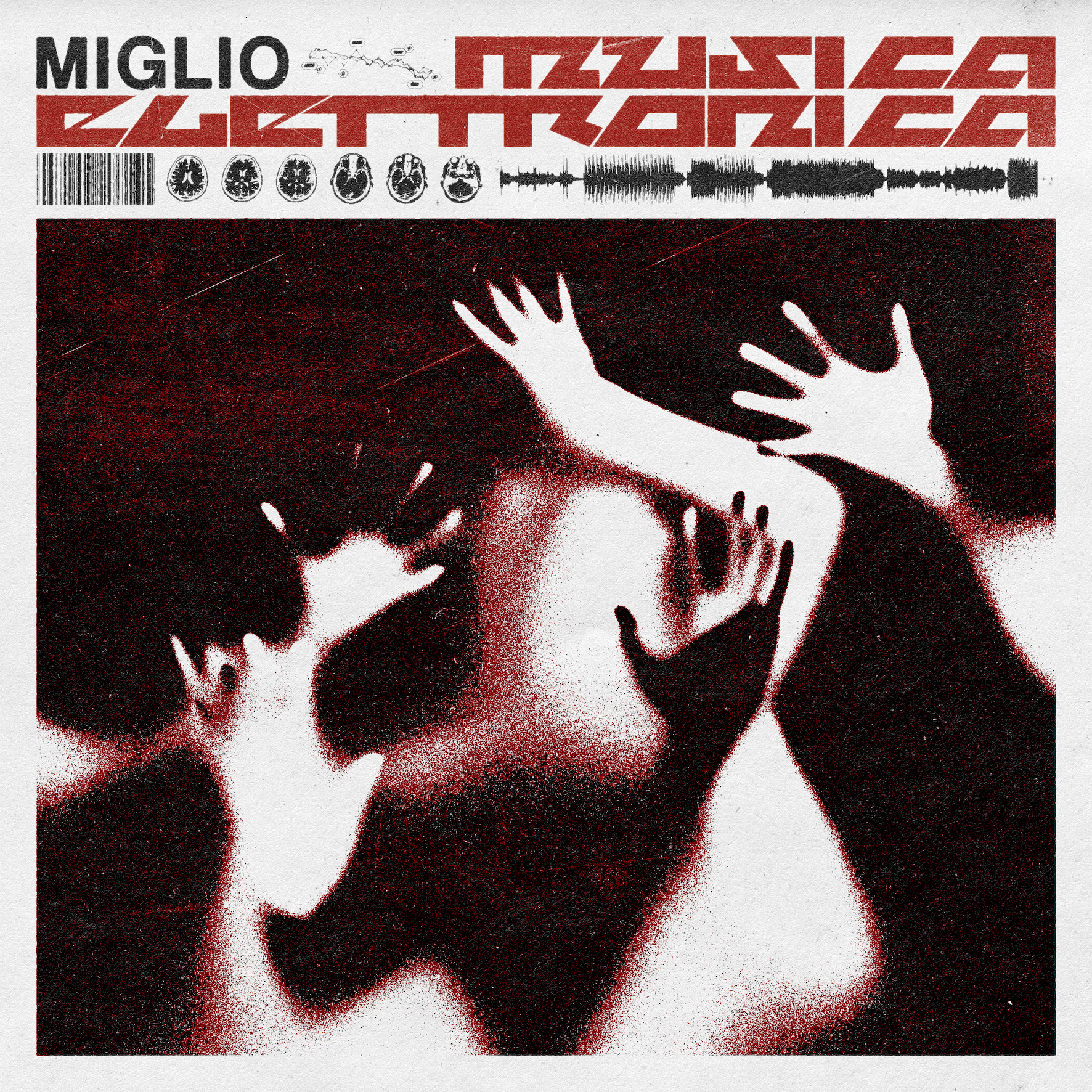
“Musica Elettronica” feels both intimate and rebellious — what moment or feeling first sparked its creation?
I remember perfectly the moment I started writing Musica Elettronica. I was playing the guitar, without a clear idea, with no intention of composing anything. Then that chord progression sparked something, and I immediately wrote the lyrics. That hadn’t happened in a long time — in recent years, I had mostly been writing on the piano or starting from sounds and synthesizers, working on the computer. Going back to the guitar was a familiar gesture that brought me back in time.
Was it a personal experience, a dream, or something more abstract that ignited the song?
It’s a track that originates from a personal story, which then expands into broader images.
You described the track as being born in a “post-industrial dream factory” — can you take us inside that space, sonically or emotionally? Is it a real place, or more of a metaphorical world where your music lives?
The sounds come from visual worlds that strike me — for example, abandoned places, old disused factories, certain cities, countryside, provincial areas. I’m drawn to places that fall outside of mass tourism and carry something unique and authentic. So yes, my music lives in real places — they might be intensified, but they often come from clear, real images.
There’s a strong visual and cinematic thread in your work. What did Berlin and Bologna in the ’80s mean to you creatively for this new chapter? Was it about aesthetics, politics, or something more atmospheric?
Bologna and Berlin are two diGerent cities, but they share some common ground. I didn’t exist in the 1980s, but back then people used to say that Bologna was like a smaller Berlin. The cultural ferment of that time, the artistic and intellectual figures of those years, have deeply fascinated me for their attitude and intentions.
How did working with Francesco Fantini influence the final shape of “Musica Elettronica”? What did he bring to the process that pushed you creatively into new territory?
The collaboration with Francesco was both important and lucky, because our visions aligned right away. He understood exactly what I wanted to convey sonically and supported it with great skill, he’s an exceptional musician. We also worked together on composing part of the track, which we revisited and shaped into its current final form.
From “Manifesti e immaginari sensibili” to “Futuro Splendido”, and now this — how would you describe the evolution of your sound and identity? Do you feel like you’re shedding skins, or adding layers?
Art must always be in motion and in transformation, you need to experiment and evolve. Right now, I feel like I’ve added more layers. I’ve written a lot over the past two years, and I did it with total freedom, doing exactly what I wanted and how I wanted. That’s what will allow me to keep experimenting with enthusiasm.
The song blends melancholy with momentum — a slow dance in an empty room, as you said. How do you channel that tension in your songwriting? Is it instinctive, or do you deliberately play with contrast and contradiction?
It’s an instinctive process. Nothing is planned or structured in advance. There’s a musical, textual, and emotional sensitivity that drives the creative process, without forcing anything.
You talk about electronic music as a space of resistance and collective expression. Do you see your music as political? If so, in what way — subtle, emotional, direct?
My music is also political, inevitably so. Politics, in its broader sense, democratic and civic, not dogmatic, ideological or partisan, is a form of expression that manifests every day. We are political through our bodies, our language, and our everyday actions. Art, therefore, can be a vehicle for messages, visions, participation, and the manifestation of anything.
What role does solitude play in your creative process, especially when crafting something so emotionally charged like this new track?
Solitude is necessary for me, at various moments, but especially when I’m writing music.
You’re currently working on your next album — can you share a glimpse into its mood or themes? Is it an extension of “Musica Elettronica”, or are you heading into even newer territory?
Musica Elettronica has a color of its own, but the album will be something else entirely. It’s going to be a dense work, both lyrically and textually, as well as sonically. Together with Francesco Fantini, who also produced the record, we did important work on the sound, shaping something that feels impactful to me. It will be a dark work, but with remarkable bursts of light. The themes will be multiple.
Finally, what’s something surprising you’ve learned about yourself through this phase of making music? Something you maybe didn’t expect before writing this track?
You end up discovering many things. Writing a track like Musica Elettronica, for example, was a discovery in itself. A while ago, I wouldn’t have thought I could write it.
