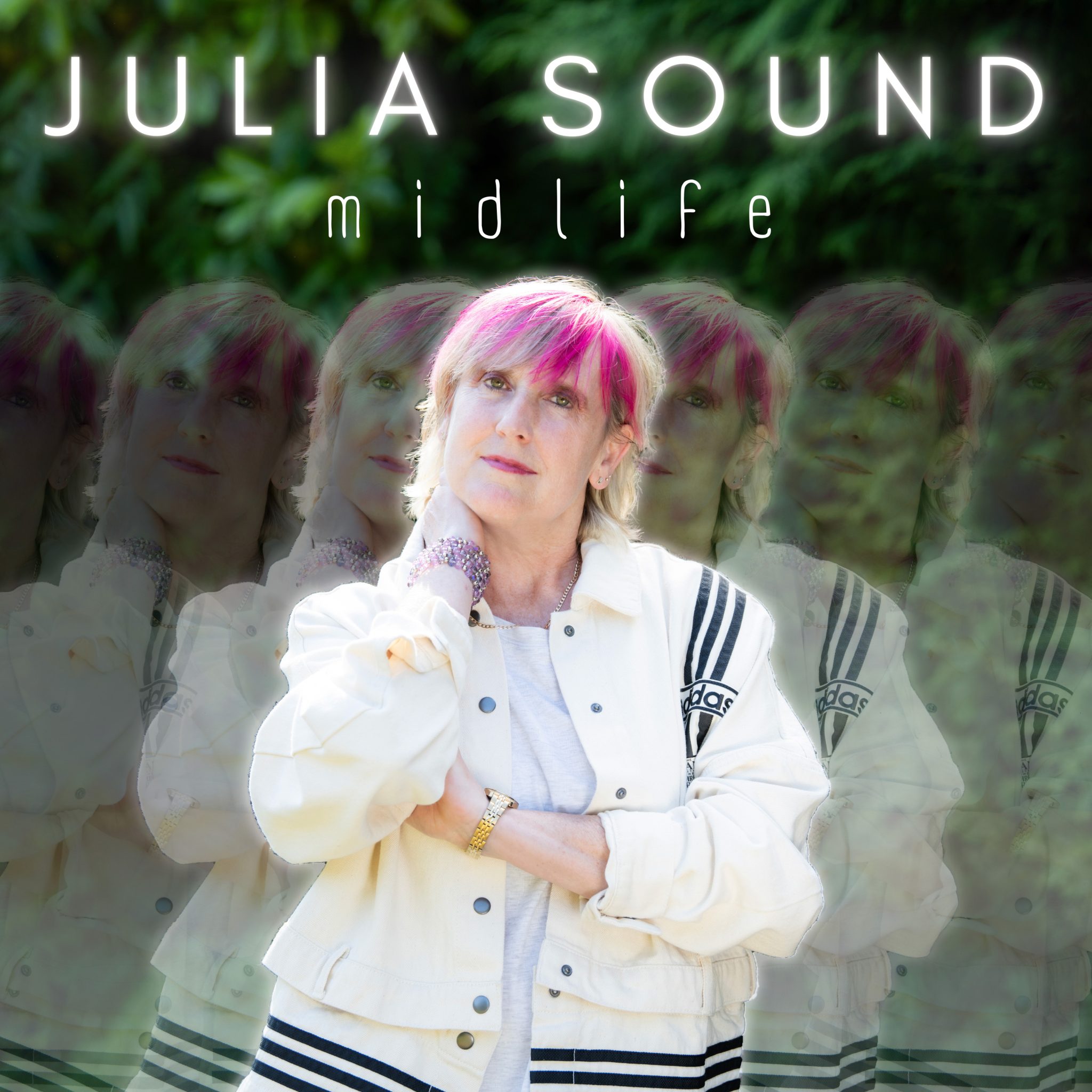
How did the idea behind midlife first begin to take shape, and at what point did you realise it was becoming the centre of a full album rather than just another collection of songs?
I’d released an album of instrumentals in 2024 and wanted to follow up with another album featuring vocal collaborations, so I knew right away this was going to be a full album. I just didn’t know how many songs it would include or who I’d end up collaborating with.
You wear many hats as a composer, producer, mixer and sound designer. When you start building a Julia Sound track, which part of that creative identity usually leads the process?
At the start of the process, it’s the composer and writer hat that takes the lead — exploring sounds and ideas and being relaxed about the outcome. I try to enjoy the process and see where it leads.
The record moves between mellow synth textures and moments of sharper energy. How did you approach balancing those atmospheric elements with the more urgent tones across the album?
Pretty much everything on the three previous albums has been chill, mellow and mid-tempo. But after playing a few live shows and seeing how audiences reacted to the music — and how they started moving and dancing on some mid-tempo tracks — it made me want to gently ramp up some of that energy. That was particularly to build momentum for future live shows.
I think I struck a good balance. It’s all different variations on a theme of electronic music, which I’ve always loved. The end-of-the-night hands-in-the-air dance floor moment and the 4am ambient chill vibe are all part of the same thing in my mind.
Several collaborators appear on midlife, including Dolly De Guerre, Yo Megasonic, Keely Halward and Kinnie Starr. What made each of them the right voice for those particular tracks?
These are all trusted collaborators I’ve worked with before, and I know each of them has unique talents, voices and perspectives. As I’m building each track, I tend to let the music inform me about who might best match the mood I’m creating. Every time, what each of these vocalists brings fits seamlessly.
Songs like “One Love” and “Shelter” carry a nostalgic warmth, while others feel more confrontational. Did that contrast develop intentionally, or did it emerge naturally as the songs evolved?
We’re living in very strange times, so I think it emerged naturally, likely influenced by the daily twists and turns we’re all experiencing. We’re watching the AI broligarchy and some absolutely insane narcissistic, nihilistic administrations in the US, Russia and Israel wreak havoc on the world. So a bit of edge and confrontation is bubbling within everyone, and it’s not surprising that this is coming through in people’s art.
But I always carry a thread of hope as well. I strongly believe that good humans outweigh the bad ones, even if the bad ones are controlling the narrative right now. I want to highlight themes of peace, calm, comfort and hope. It’s important that we don’t lose hope.
You’ve spent years working across film, television and video games as well. Do those worlds influence the way you shape music, almost like building a soundtrack for a scene or story?
I don’t think so, at least not consciously. When I look at my work in game audio in particular, there are layers and layers of complexity involved in creating those experiences, which I love — collaboration between artists, programmers, designers and writers all working together to build immersive worlds and fun player experiences.
Composing music for interactive systems requires additional skills and approaches. Creating four-minute songs is almost an easy antithesis to balance the complexity of interactive audio.
There’s a thread of social awareness running through the album. Were there particular moments or experiences that pushed those themes to the surface while writing?
I’m a bit obsessed with the news, which is probably not the healthiest habit. But very few people create in a vacuum. Using music to express my dismay about the state of the world — or to express values like peace and hope — is a way I process the messy experience of being human in the 21st century.
In an industry that increasingly prioritises constant output and online presence, how do you protect the space needed to actually create meaningful work?
I’m lucky. I’ve been working in music and audio for three decades and have achieved a lot in that time, including the realisation that views, followers and those kinds of metrics are ultimately meaningless. Because of that, it’s quite easy for me to shut out the noise and the nonsense.
The process of creating is the most important thing for me. Of course I still put some effort into making sure someone hears the work, but there’s a certain liberation in not really caring about numbers, likes or views. I do feel a bit sorry for younger generations who have only known this strange, fake “content creator” driven version of the music industry. I can confidently say that music appreciation — and the industry itself — felt healthier through the 80s and 90s.
Looking back at your earlier releases, what do you feel has changed most about your approach to songwriting and production over time?
I don’t think anything has radically changed. Different plugins and synths can help carve out a particular sonic identity for each release. That said, I’m definitely considering the next Julia Sound release being 100 percent faster-tempo, EDM-inspired house music, which would mark quite a shift.
When someone listens to midlife from start to finish, what do you hope they take away from the experience once the final track fades out?
Overall I think the album has a balanced emotional arc. It opens and closes with a sense of calm and peace, encouraging the listener not to lose hope and reminding them that empathy still matters. The middle of the album ramps up, leaning into personal angst on “Finally I’m Free” and political frustration on “Fk Leaders Who Don’t Lead,” before settling back down again.
Humans are complex emotional beings, and a healthy dose of anger at the world is sometimes necessary — perhaps more now than at any other time I’ve lived through. But we also need to stay focused on the positive aspects of our species. That’s why the album closes with the song “Make Empathy Great Again.” “MEGA” is far better than that other acronym I won’t even name. In the end, love is still the answer.
