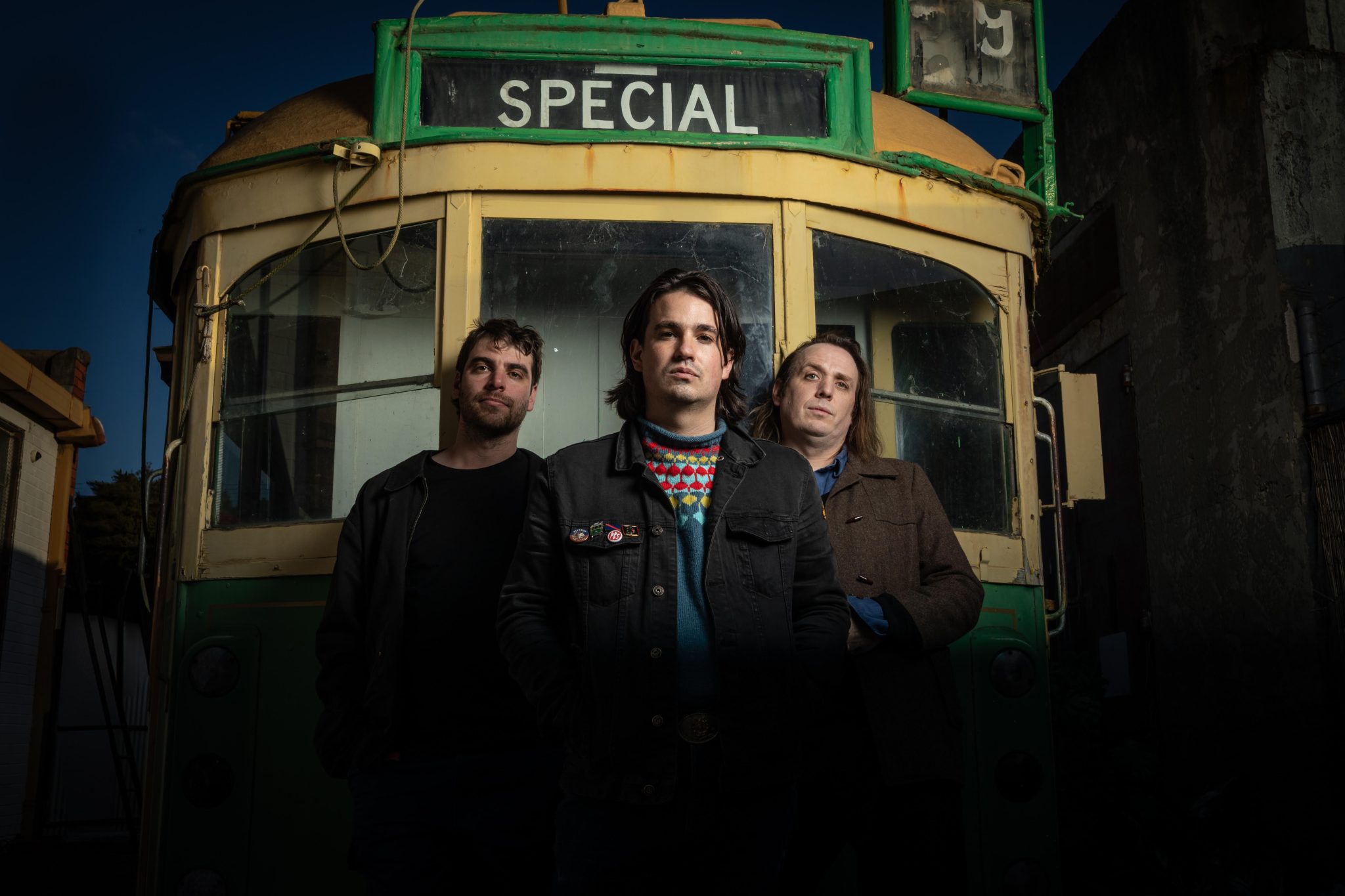
Your new album Electric Transport feels like a heartfelt return to form. What was the turning point that made you decide to get back into music after losing your mentors?
Spencer P. Jones & Brian Henry Hooper had always been there with me on my musical journey, so after they died, I had to reframe what my music would look like without them. Whilst my grief overshadowed everything for a while, I worked hard to reach a point where the reminder of their memory didn’t trigger sadness but instead made me want to go on and do what they loved doing.
This process took nearly two years, but once I started writing again amid the COVID lockdowns, I never looked back.
You were mentored by Spencer P. Jones early in your career. What’s something he taught you that still guides your songwriting today?
He taught me early on that I hate tequila that’s for sure haha.
When you saw Spencer play as much as I did, it’s obvious to anyone how great he was at working a room and getting the audience along for the ride. I have absolutely tried to do that in my own way as a performer, and one of the best pieces of advice he ever gave me regarding that was: “play to the people listening”.
However, it was more the life lessons that Spencer taught me, which guide me as a musician.
The man badly wanted to live, and he had a lot to live for, but it was years of alcohol and drug abuse which took its toll in the end and finally caught up to him.
All he wanted during his final years was to be able to play a gig and do what he loved.
We’re both the kinds of people who were put on Earth to do this and only this, so seeing that taken away from him, galvanised in me that I cannot let addictions, illness, or anything stop me from playing music.
Whilst I’ve had my own bumps in the road, I feel that I am truly turning that into actions these days. I just hope wherever he is, he’s proud.
How did forming The Boundary Riders change the way you approached writing and recording this record?
Joe and James showed me all the beautiful possibilities within my songs.
The songs all started life as solo country songs, but the way that the guys rocked them up (and in some cases quietened them down) meant I was always surprised and energised by their takes on them.
It’s made what we do live and, in the studio, much more of a team effort.
You’ve mentioned that the album captures the raw energy of your live set — what were some key moments in the studio that made that happen?
It was less about moments, and more about an atmosphere of comfort where we could relax into the recording of each song.
Our drummer James’s studio in Coburg was the perfect place for this to happen as we could all tune out if we needed to. For example, we could have a beer and watch the footy if a song wasn’t working, or simply just hang out for a while if we were all a bit tired after work and needed to wind down.
“Tramways In My Mind” has been with you for a decade. What made you feel like now was the right time to finally release it?
‘Tramways’ was a song which always needed a band to make it work, so when I got The Boundary Riders together, I immediately knew that the three of us could make that song absolutely rock. After a few rehearsals it was a no-brainer that it would be on the next album.
There’s a strong sense of nostalgia and place in your lyrics. How important is Melbourne — and its trams — to your identity as an artist?
Melbourne raised me along with my Mum, Dad, and Granny.
This city is amazing, fun, poetic, and has influenced every aspect of who I am.
Whilst yes, Melbourne is a big part of my artistic identity, there is a pragmatism to my references, as I have lived here and only here for my entire life.
It’s my only backdrop, and if I tried to reference anywhere else with the same sense of nostalgia, it would be fake and forced.
The trams and nostalgia attached to them are a funny one, as it’s all to do with comfort and happiness.
I have ADHD and (pending an expensive screening test) am probably autistic too.
When your brain is wired as mine is, your favourite subjects tend to be things which represent when you felt true comfort and safety as a kid.
My moment of safety, and its associated subject, is Trams.
School hadn’t started yet, so there was nothing and no one to tell me my brain was differently put together in how it saw the world.
Riding on the old green and yellow MET livery W class trams with my family and dreaming of being a Tram conductor, are moments I return to as an adult when I’m feeling lost, as they are truly beautiful and comforting memories.
“The Uncles” is a touching tribute to Spencer P. Jones and Brian Henry Hooper. What emotions did you experience while writing and recording it?
A sense of release in all honesty.
Songwriting is a catharsis for me, so it was deeply therapeutic writing and recording it.
Immortalising them in a song also just seemed like the right thing to do. If someone listens to that song and then delves into their back catalogues, then I truly feel like I have helped keep their memories alive.
You explore everything from heartbreak to writer’s block to growing old. Was there a particular message or emotion you wanted listeners to take away from the album as a whole?
This album is incredibly eclectic, so when it comes to the themes in particular songs, there is no real continuity.
But from the get-go, I wanted to make an album which evokes the records I adore.
There are bits of Hi-Fi Way by You Am I, John Prine’s first album, Paul Westerberg’s solo stuff, Robyn Hitchcock’s esoteric strangeness, and Spencer’s work floating around in ‘Electric Transport’, that I wanted included as a loving tribute to these seminal artists.
Your music blends alt-country, punk, and rock in a very natural way. How do you balance those influences without overthinking the sound?
It’s something which shouldn’t even come to mind when you’re writing or recording music. For it to sound honest, spontaneous, and like you, then you need to throw caution to the wind, and just let a song happen and speak for itself.
You’ve been part of the Australian indie scene since you were 15. Looking back now, what keeps you inspired to keep creating and performing?
I can safely say that at 33 years of age I love writing songs, singing, and performing more than I ever have before.
I am incredibly grateful to music as it’s given me purpose, identity, community, and belonging.
The only place on this planet, where a neurodivergent wreck like me feels normal, is on stage singing my songs, and I am very lucky to have a wife, family, and friends who all understand that completely.
There is a necessity to what I do, and that’s why I want to be on tour all the time and make a living off this. The world is quite hostile to differently wired folks like me and we are generally forced to adapt and mask, instead of being ourselves.
This is a survival mode tactic.
In music, I can thrive on my terms alone and eschew every mask I have.
ALBUM LAUNCH TOUR
JULES SHELDON – SOLO AND WITH THE BOUNDARY RIDERS
Nov 22 – Tanswells Hotel, Beechworth, VIC 8:30pm
w/ Guy Blackman
FB EVENT FREE ENTRY
Nov 28 – Palomino Lounge, Enmore Sydney, NSW 8pm
w/ Peter Black
FB EVENT FREE ENTRY
|

|


