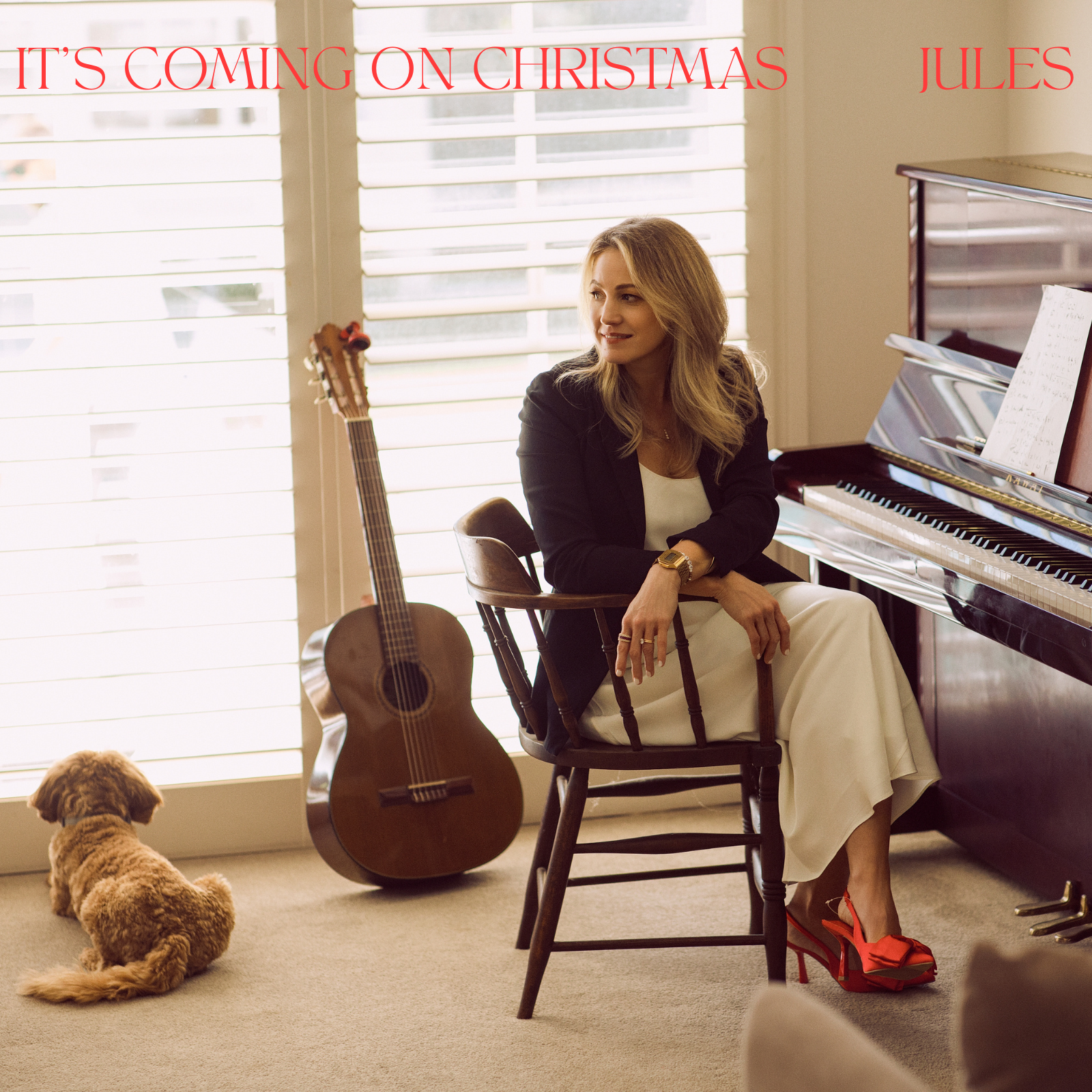
How did returning to Christmas music open a different creative or emotional space for you compared to your previous albums?
I am a songwriter and I sing my own songs. I have not regularly performed other people’s songs for twenty years. However, over the course of this project, I was captivated by the process of curation and how it is artistry of a different kind. Earlier this year I looked closely into how art and museum curators work. Placing different objects side by side, or in particular rooms, can take visitors on a specific journey through an exhibition. In curating the Christmas EP, I found myself doing the same, but sonically. The artistry involved was such a wonderful surprise.
As I have pursued the meaning of Christmas art, I have found the coexistence of light and darkness. Images of homes, greenery, merriment, and the warmth of fireplaces and hot summers sit against a backdrop of war, longing, death, and grief. There is a lot to work with.
What drew you to curate a collection that blends German hymns, wartime Hollywood ballads and early Laurel Canyon storytelling — and how did those influences shape the final EP?
Often, it’s easy to think of Christmas music as what we hear blaring through shopping centres. These tend to be seasonal songs of the Christmas experience like White Christmas or Jingle Bells. However, there is a huge pool of music to draw from.
One of the oldest and still very popular carols is O Come, O Come Emmanuel, which dates back to the eighth century, but there are even older tunes still used in Byzantine churches at Christmas time. One of the carols I chose for It’s Coming on Christmas is Lo, How a Rose is Blooming from around 1580. Silent Night dates to the early 1800s. These carols have a rich history and have survived the test of time.
However, the popular songs from wartime Hollywood like I’ll Be Home for Christmas and Have Yourself a Merry Little Christmas also have a rich history and interesting stories, especially around separation and longing for home. River by Joni Mitchell provides another perspective on the season. It’s not even a Christmas song, but it has become one because of its wide use. It is a very personal and complex song for Joni Mitchell. I wanted to record the songs and live in those different worlds that bridge the centuries.
When you talk about Christmas being “beautifully complex,” what memories, images or personal experiences informed that perspective while you were recording?
I have great memories of my childhood Christmas experiences. I am from a very big family – one of six children. We also have such a large extended family. Christmas has always been a huge affair.
However, in 2011, I lost my father, my uncle, and my seven-year-old niece within the span of three months. From that point on, Christmas has involved a lot of grief, but has also been a time when the memories of our traditions or the quirky, silly stories from our past provide a lot of comfort.
Your version of “River (It’s Coming On Christmas)” feels like a centrepiece of the EP — what did you want to emphasise or reinterpret in such an iconic and deeply melancholic song?
The song starts with familiar festive imagery and sounds – It’s coming on Christmas / They’re cutting down trees / They’re putting up reindeer and singing songs of joy and peace. Then Joni Mitchell hits us between the eyes when she sings, I wish I had a river I could skate away on.
To me, it’s like that lyric sums up how I have felt before. Even though there is a lot of joy happening, and everyone is caught up in regular rhythms of the season, I don’t want any part of it because it’s too painful.
This EP has been out for such a short time, but so many people say that this is the song that has touched them the most. River resonates with many people. It’s saying the outside does not match how I feel inside. That song speaks to me each time I hear it or think about the lyrics. Joni really is one of the best songwriters. What a gift she is to our world.
Working with Sean Carey at Church Street Studios brings a particular warmth and honesty to the recordings — how did that collaboration influence the atmosphere of the project?
Sean Carey was the perfect producer for It’s Coming on Christmas. Every moment in the studio was filled with ease, and I absolutely loved working with Sean. I performed at Church Street Studios in 2024. Before the show, I poked around the halls and found his magical studio. We met and then stayed in touch for about a year or more about working on some of my songs.
I reached out to him in July and said, what about a “Christmas-adjacent” EP? This is why Angel by Sarah McLachlan is on the EP. We wanted to touch the sides without going “Christmas proper.” Well, obviously we ended up making a proper Christmas record. But I think the honesty is there because the intention was that we wanted to record songs that brought comfort to people.
When we selected the songs, the benchmark was that they had to have a particular emotion, fragility, and sensitivity. He was the best person to create a soundscape that matched that intention. Sean has great taste and the kind of restraint needed for these recordings. It was just one of those rare times where it all fell into place. We were really in step, and it was completely stress-free.
As you explored Christmas music traditions from different countries, what surprised you the most about the way people use holiday music to cope, connect, or remember?
Okay, stick with me. I think music is a way to find comfort and solace. The seasonal music of Christmas especially feels familiar and safe. When I created the songs for my 2023 album Familiar Drama, I went on a journey to discover more about nostalgia. And this Christmas EP really extends those findings.
Nostalgia comes from two words, nostos and algos, which mean home and pain. However, there is so much more than wanting to go home. First of all, nostos is first used in Homer’s poem The Odyssey:
“Take off these clothes, and leave the raft to be carried on by the winds, and then, I tell you, strive for your nostos, the land of the Phaeacians, by swimming with your hands; your destiny is to flee [from death] there.”
While nostos has come to be known as home, in The Odyssey, it is not about home only. Instead, the word’s use in this poem also means escaping death, safe landing, returning from war, and being back home. When we think about nostalgia, we think it’s about wanting to return home.
I don’t think people really get that full satisfaction when they return home. Instead, this longing we call “nostalgia” could be simply an escape from difficult times. I like to think about this at Christmas because we want to go home, but sometimes, once there, it’s not all we remember it to be. All that to say, I think music at Christmas time is a way to live in a world that feels secure, and as you say, cope.
“Blue” seems to be a recurring emotional colour throughout the EP — how intentional was that palette, and what does “blue” mean to you in the context of the season?
I started working on pre-production for this in July. It was weird to immerse myself in Christmas while it was Winter, because this EP would come out in Australia in Summer. But in another sense, it wasn’t weird because Christmas comes with so many northern hemisphere Winter references.
However, I decided to lean into the Winter metaphor. I think this is what makes the album a little blue. I read Stopping By Woods on a Snowy Evening by Robert Frost, Susanna Clarke’s The World at Midwinter, and listened to Kate Bush’s 50 Words for Snow. Even though I will have a very summery Christmas and holiday season this year, I really enjoyed immersing myself in imaginary white Winters. We are having a private show and will perform White Winter Hymnal by Fleet Foxes. I find that Winter is magical, mysterious, and strangely comforting.
This is your first release since Familiar Drama — how did stepping into a Christmas EP help you reconnect with your artistry after the emotional weight of that record?
In a way, It’s Coming on Christmas extends the emotional arc found in Familiar Drama. That album is filled with grief, redemption, and nostalgia. It’s Coming on Christmas explores all those themes. Including Angel by Sarah McLachlan, as well as River, provides a bridge between the two.
Running your own label gives you a unique vantage point on independence and creative direction — how did Lights Record Label shape the way this EP took form?
I just love being over in my little corner of the world. I am not really part of the music scene; I play on the edges. I love to create and dream without any inhibitions, without worrying about where the work will end up.
Many years ago, I heard a visual artist talk about how he was going into the bush in South Australia with his 80-year-old Dutch mentor to paint for a few days. As they drove there, this 80-year-old said, “Oh by the way, everything we paint, we will burn.” Can you imagine? It meant that my friend could paint without any rules, take risks, paint for the joy of it, and be in the moment. I love that philosophy, and I think that’s what I try and do with Lights Record Label.
As listeners revisit these songs each December, what do you hope this collection adds to their own holiday memories, traditions or reflections?
When we recorded this music in Church Street Studios, I said over and over again, make it sound like a hug. I want to pour proverbial tea in an oversized gingerbread-man-shaped mug for people. I hope this brings comfort and bears witness to those who find Christmas a little tricky.
