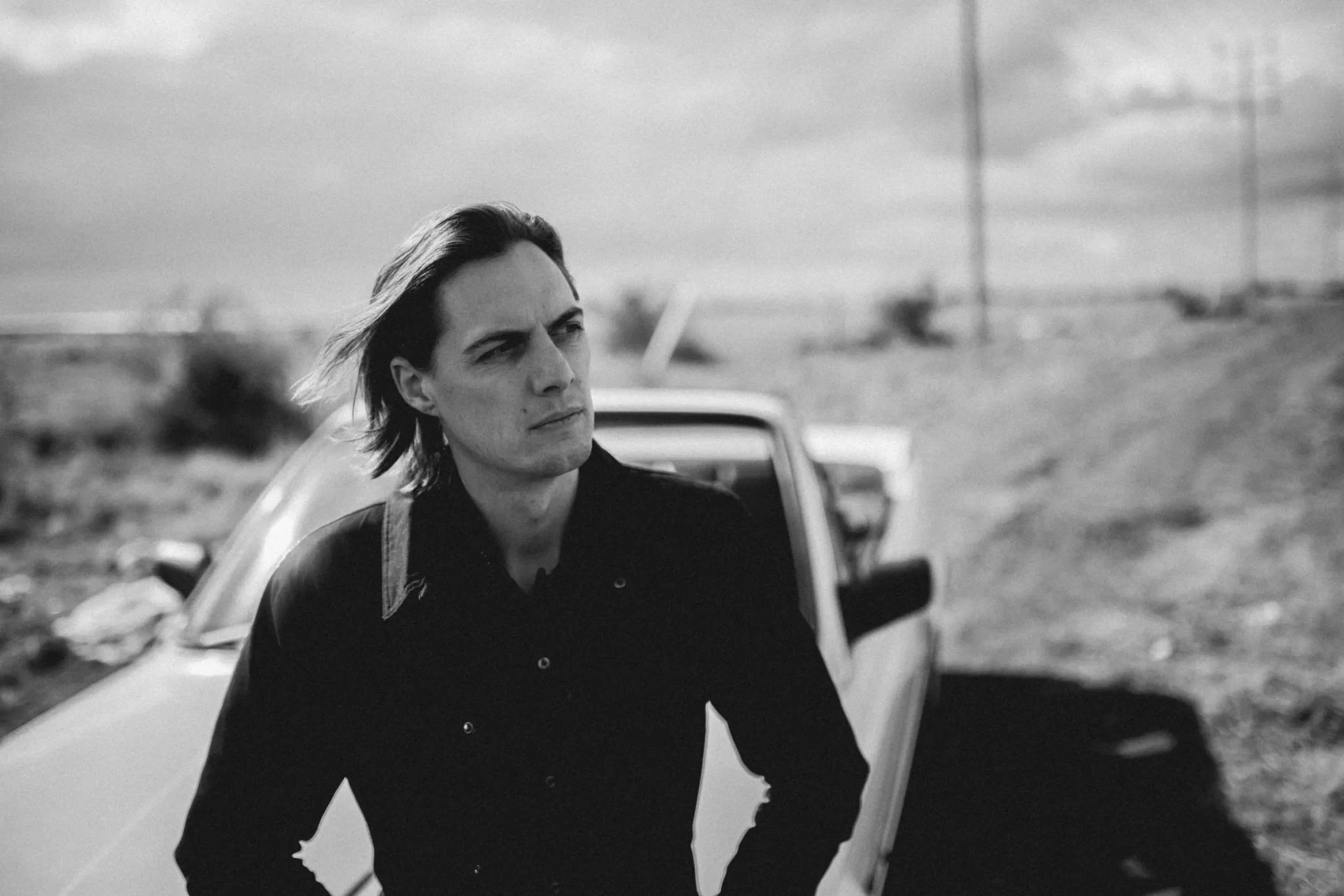
Photo credit: Marcus Coblyn
Dusk is described as a record about endings, but endings can also be the start of something new. When you were writing the album, what kind of emotional space were you living in at that time?
I’ve recently come to understand that I live mostly from a place of fear, grief and resignation, as opposed to faith, love and optimism—but in a positive, healthy way. The fear keeps me searching and fighting and aware of how safe the present moment is, while the grief is what proves just how much I love someone or something. The resignation helps me roll with the flow and let go of trying to maintain control over things that no one really has much, if any, control over. Dusk is mostly grief and resignation—suggesting fear, viewed through a positive and grateful lens.
Your debut album Outsider introduced listeners to a really vivid storytelling style. With Dusk, did you approach the songwriting any differently, or did the world of the record reveal itself gradually as you worked?
It was a gradual revelation. I knew I wanted to be as honest and uncensored as I could be without spoiling whatever mystery is in the songwriting. I really have to be conscious that I’m not just directly telling my thoughts to someone—there has to be some magic and ambiguity and poetry. Obviously the great songwriters do it perfectly. Trying to achieve close to the same is one of my favourite parts of songwriting.
You’ve mentioned that the album contains both fictional characters and very real moments from life. How do you balance storytelling with personal experience when writing songs?
Giving an experience to a character is a great way to view the experience a little more objectively. It helps me zoom out and see it from different perspectives, that way I’m not just including one side of the story. It also helps me to feel a little more comfortable sharing personal thoughts without feeling like I want to hold back.
The new single ‘45’ asks a pretty confronting question: whose life are you living? What first sparked that idea and how did the song take shape from there?
There have been times in my life I’ve wanted to chase something or attempt something and people have told me I shouldn’t, and I’ve listened. Mostly I come back later to thank them for saving me from myself, but at the time I might feel misunderstood or untrustworthy. This song is a bit of a vent during one of those “at the time” moments.
Musically, ‘45’ has that communal stomp-and-whistle feel that almost sounds celebratory, while the lyrics lean in a more reflective direction. Was that contrast something you were intentionally playing with?
Yes, it’s all deliberately intertwined, having to do with my feelings that new ideas usually feel unique, different and stand out—while “the majority” telling you not to can feel like advice steeped in hype from the masses, and why would you want to trust hype from the masses? There might be sparks from my own cynicism shining through here…
Alt-country often draws on a sense of place and atmosphere. Were there particular landscapes, towns or memories that helped shape the world of Dusk?
Yeah, I was focusing on capturing my headspace and inner world more than anything in the outer world. I mean, there are hints at another world or realm but that could all be regarded as internal anyway. Dark Night would be the exception—it views Earth from far away, but it includes all physical and mental aspects of “the world”.
You’ve spent the past couple of years performing alongside a wide range of artists and playing festivals across Australia. How have those experiences influenced the way you think about your own music?
I’ve yearned for that transfer of high energy from live shows, where the performance elevates and empowers everyone in the room. My songs don’t really do that—at least not from a physical standpoint—and I’ve come to terms with that. My songs are conversation starters, for thinkers who might want to question their perspective on different aspects of living, and dying. But I still would really like to give that to an audience one day. Maybe the next album will be full of songs with energy more like Dark Night, Harriet or Runaway. I’d like that.
Your songs often feel like snapshots of everyday life, but with something slightly ghostly or surreal beneath the surface. What draws you to that blend of the ordinary and the mysterious?
That’s really what my days are like—the ordinary always has some undercurrent of deeper meaning. Not in a mysticism way, more “wearing your unique perspective of the world and what happens in it day to day” on your sleeve. I know not everyone sees Earth and life as this incredible, unbelievable gift—you don’t have to broadcast it to everyone. But your uniqueness is just as special a gift and it gets stronger and really makes sense of things when you accept it.
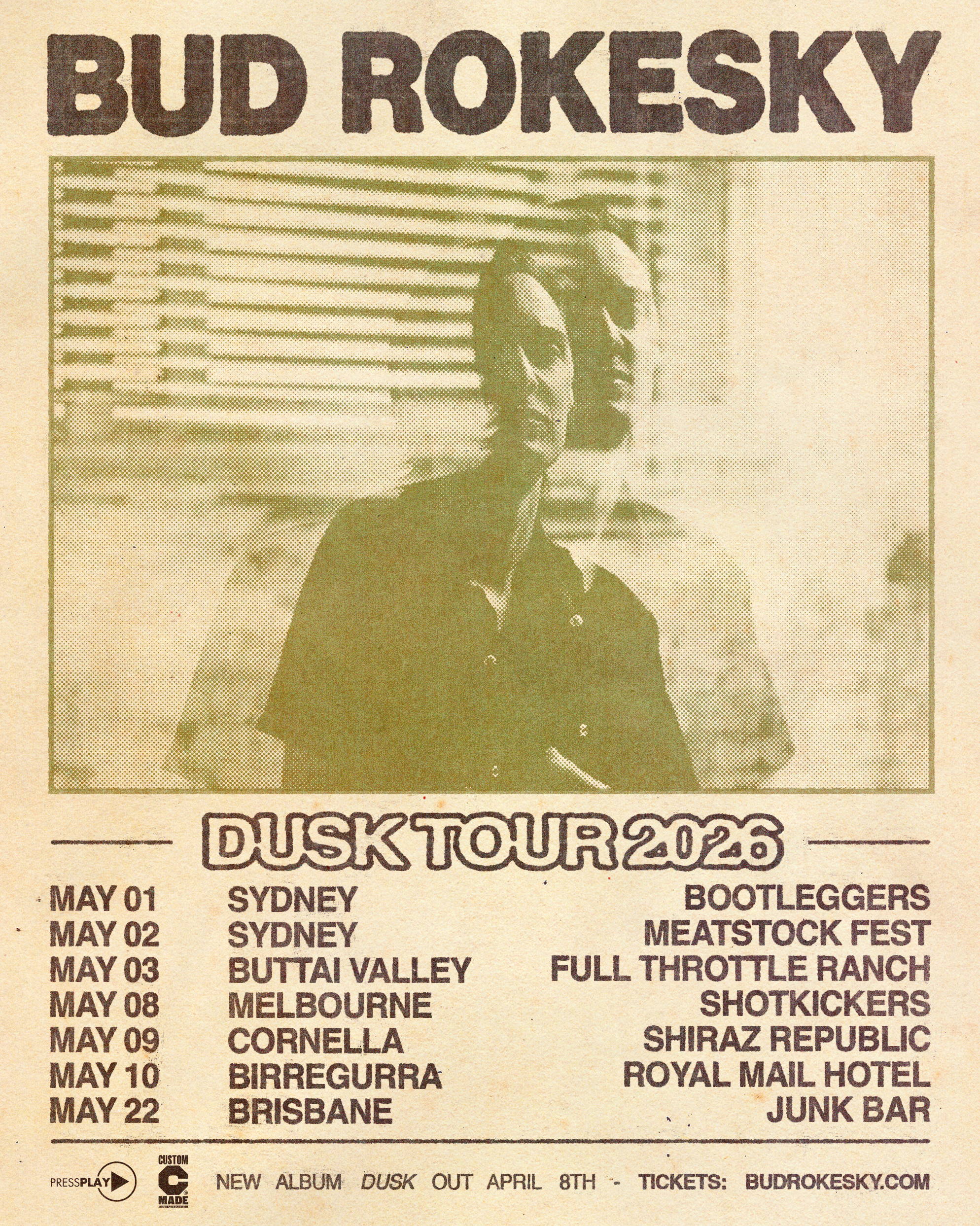
With Dusk out now and a national tour following in May, how does bringing these songs to a live audience change the way you experience them yourself?
Live shows are the tangible version of introducing your songs to the world—it’s undeniable that real people are listening to them, which is very special in what seems like a mostly online world. I like to consider how the audiences in the room with me for this tour will be the only people in the whole world experiencing that moment, and if we have nothing else in common, we will always have that. It certifies those people to be very important in my life.
When listeners sit down with the album from beginning to end, what do you hope they take away from the journey that Dusk creates?
That we are everything and nothing at the same time. That coincidence, consciousness, love, and human experiences are just as impactful and worth saving as the miracle of all life on Earth, and yet while we need Earth, it doesn’t need us. We should use that perspective for gratitude and use gratitude as fuel to be the ultimate caretaker of ourselves, the people around us, and the planet. Also that grief is very special because it means you are filled with love—be grateful for it and embrace it because what’s the alternative?
CONNECT WITH BUD ROKESKY:
INSTAGRAM | FACEBOOK | WEBSITE | YOUTUBE
