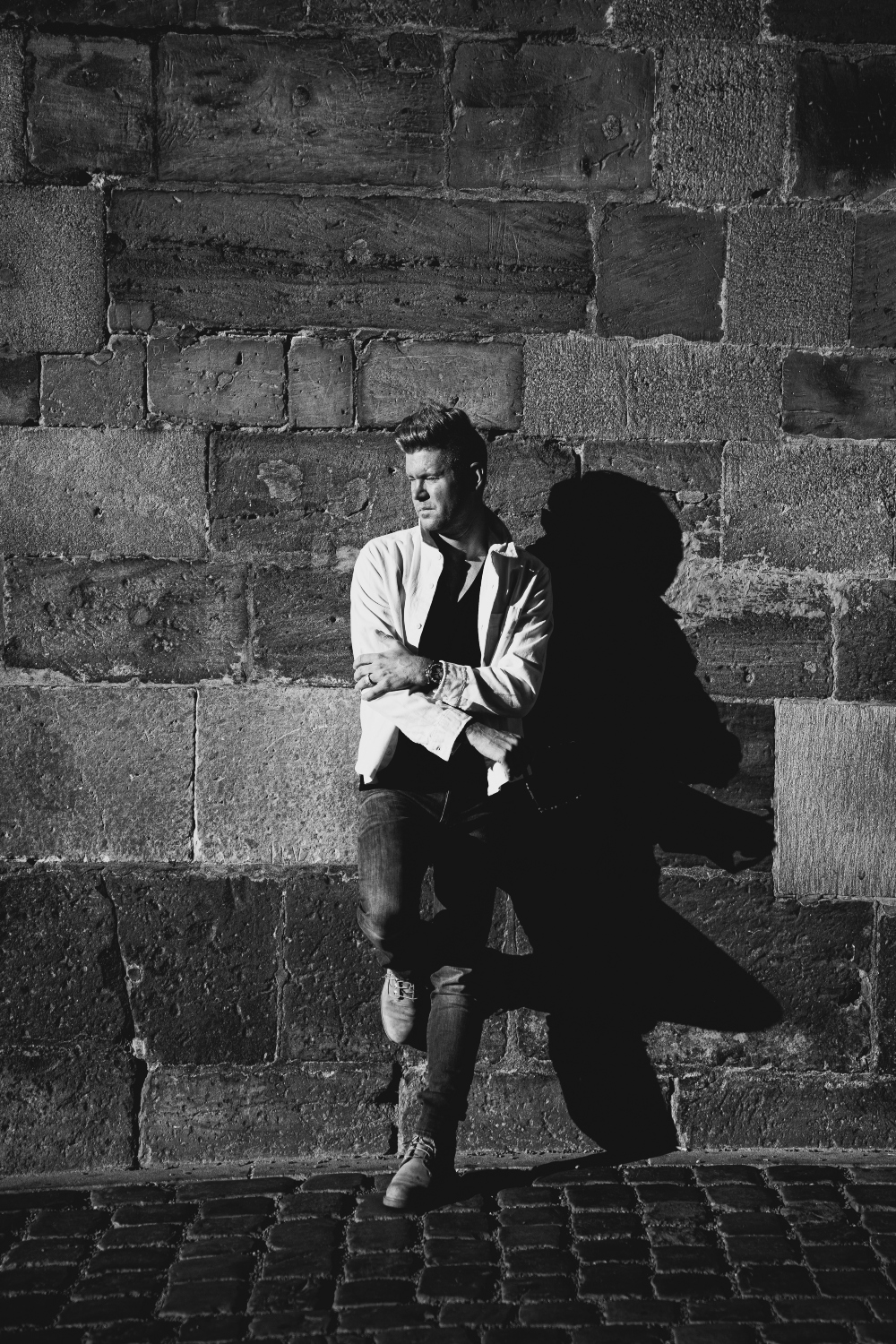
Your new single ‘Don’t Let Me Put A Track On You’ is fiercely defiant and sonically bold. What was the spark that led to writing this particular track in the south of France?
Musically, I kept vibing with sea, the beach, and walking along the Croissette in Cannes. It has this energy and pulse to it, it’s contagious. Lyrically, a family member was going through a tough time and catching a lot of heat for it. It started to spill on to me because I was supporting her… my response… “Don’t Let Me Put A Track On You” – they don’t want none of this.
You’ve performed in some remarkable locations — Château Les Alouettes, Villa Balbiano, and even the Paris premiere of Azur. How do these unique settings influence your creative process and live performance style?
Travel and diversity is so much to what I do. I like to explore, to push boundaries and be vulnerable in these unique atmospheres, it adds to the growth process. There is so much to learn, the more I learn the more I realize how much I don’t know.
Your music blends hip hop with cinematic sound design, funk, rock, and film score elements. How do you decide which influences to weave into a track without losing your signature sound?
I walk into the studio with ideas loaded and start creating. Instinct first, guardrails second. The beat leads; I layer textures. If it drops the energy, it’s gone. I set a tempo and let it carry me wherever it wants. Maybe that sounds crazy—I just go. Everything I’ve lived and everything I’m feeling rushes in, a haze that snaps into focus when the groove hits.
You mentioned there’s a “Caribbean pulse” beneath this track. Can you walk us through the production choices and instrumentation that brought that vibe to life?
The Caribbean pulse lives in the low end. I built it on a reggae-leaning bassline that gives the whole track that swaying feel. When the back half of Verse 1 hits, I open the arrangement—steel-drum colors and percussion kick up the dust. That’s straight Bahamian Junkanoo energy: parade vibes, celebration, movement, color. It’s party and pursuit at the same time—the groove invites you in, the chaos keeps you on your toes.
Storytelling is a key part of your work. When you sit down to write, do you think in terms of lyrics first, visuals, or soundscapes?
I start with sound. The tone and personality of the beat set the mood, the pace, and the point of view. I see pictures first—scenes, camera moves, colors—and then I write the lines that fit that frame. The lyrics chase the groove. If the beat feels like a party, I aim for movement; if it carries edge or weight, I sharpen the language and tighten the cadence. This track blends lanes—party energy, raw aggression, and real heart—so the story flips between celebration and pursuit without losing the signature voice.
Being completely self-written, self-produced, and self-performed is no small feat. How does that independence shape the authenticity of your music?
Thank you. That answer is pretty simple: I do what I want—and I own it. I write it, produce it, perform it, so the record never loses its face. No filters, no detours, just a straight line from my gut to the speakers.
Detroit’s underground scene clearly shaped you. How does your hometown continue to inspire your art, even while living in Cannes?
Michigan-made, Detroit-wired. The hustle and resilience from home run through everything I make. Midwest grit with Riviera glam — that’s the mix, every record.
The single features a calmer bridge with female vocals before exploding back into intensity. How did you approach that dynamic shift and the collaboration process for that section?
I had to let the song breathe. I’d written that section for another record and shelved it, but I was still in love with it. The way I catalog ideas, I knew right where to pull it from—and it fit perfectly here. The female vocal brings a calmer texture, but it’s the same message, same pulse. We give her space to carry it, then slam back in so the final hit feels earned.
Your music feels like it belongs in films and luxury campaigns. Do you see yourself expanding further into film scoring or fashion collaborations?
Absolutely. I don’t really “branch out” so much as integrate—sound, style, and cinema on one frequency. I’m already developing a feature where the music is the spine: a sexy, seductive love triangle told through shifting POVs, with the score driving the tension from first glance to fallout. I’m already in talks with filmmakers in New York, France and Prague. In fashion, I’m stepping in deeper: a capsule collection and an on-stage runway-meets-performance in Mumbai in March 2026 tied to a brand collaboration, where I handle the soundtrack and creative direction so the visuals and the music hit as one. That’s the lane—films you can feel, campaigns you can hear.
With nearly 2 million streams already, what’s next for you? Can fans expect an EP or full-length project following this single?
I don’t plan on slowing down. “Stick Figaro” lands Oct 10, then “YOLO 2 Yoga” drops in early November. In December, the full n=40 EP arrives—eight tracks with eight cinematic videos, one for each record. I’ll be performing across Europe this winter, then bringing a runway-meets-performance to Mumbai in March 2026 tied to my capsule collab. In Spring 2026 I drop L’Americain—a world of its own—with a live moment around the Cannes Film Festival in May, and I’m shooting videos for it across Europe, L.A., India, and the Caribbean. In parallel, I’m finishing a feature scored with 20+ originals—a seductive love triangle told in sound and light. EP now, album next, and a whole ecosystem to go with it.
Follow Jairic:
Website – Instagram – Soundcloud – Youtube – Spotify
