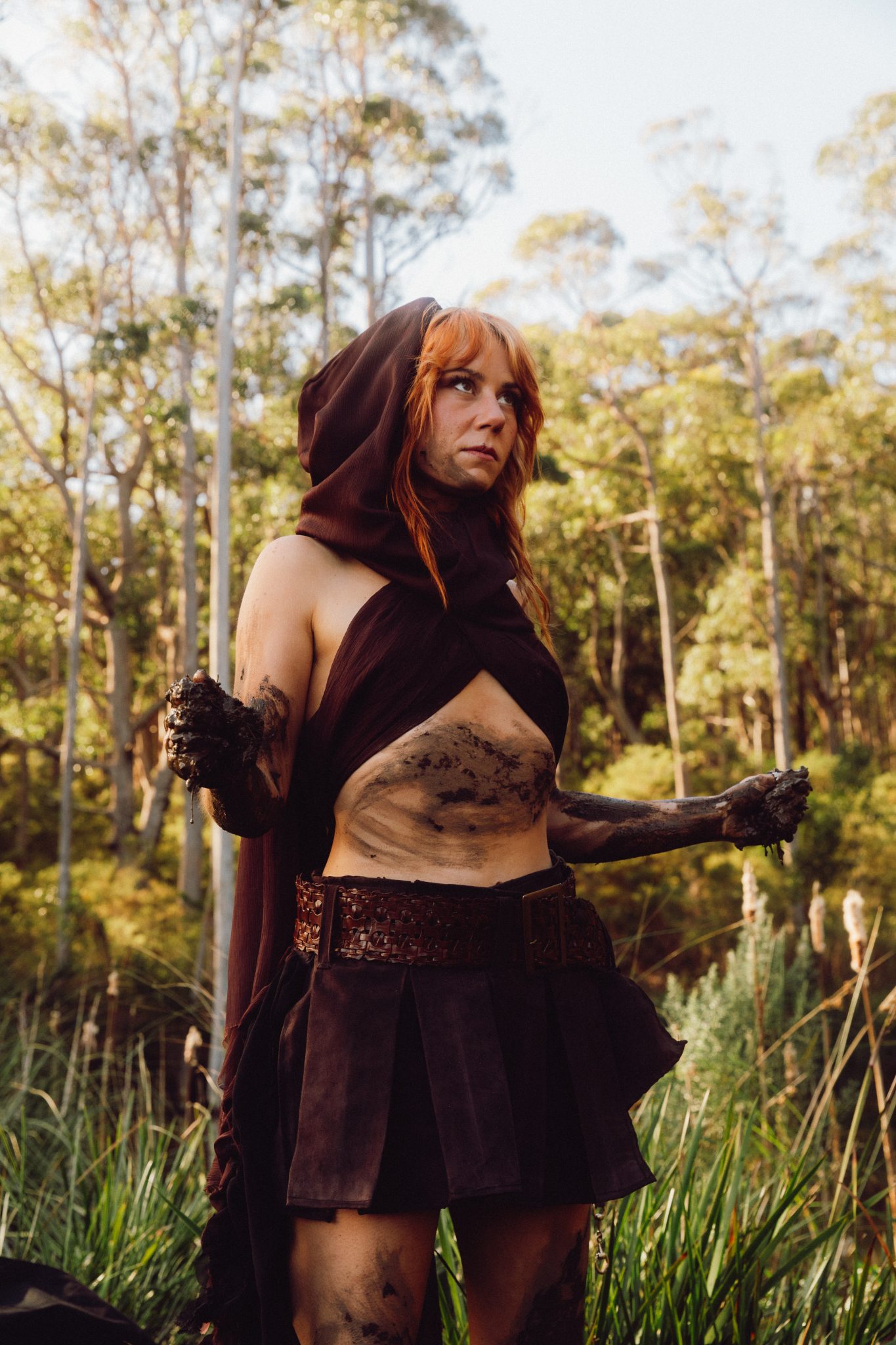
Clear As Mud Pt. 1 feels like a really personal and transformative project — what was the headspace you were in while writing these songs?
It has felt like that for sure. These songs initially came from a place of picking myself back up and when it came down to it, it was up to me to make what I want to happen, happen. The headspace I was in started as coming out of the pandemic with no team and a lot of uncertainty about the industry and was about not giving up. It felt like I could either throw in the towel or take stock of where I’ve come from, what I’ve done and have the chance to really do it how I want to. Experience in the music industry has helped me know what I want to do and what I don’t align with. I started out on my own with gaul and belief, things got weird, burnt out and clouded but now I have the chance to take my power back. It was a kind of nothing to lose moment and songs just started coming out. Then writing songs on top of the songs I already had with Alex Burnett, was when the real empowerment started to come out, really embracing myself and coming back to my most unapologetic self but with even more reason to be other than just being young and naive.
The EP dives into themes of identity, queerness, and rural womanhood — were there particular moments or experiences that shaped those stories?
There are three main things I think that shaped this; coming to terms with being queer and actually allowing myself to experience that, working through emotions of leaving it until I was nearly 30 to address that in myself, what that means as a girl who grew up in a rural area and alongside all of that, navigating self esteem, neurodivergence and how denying myself a part of my identity was a big thing that was holding me back in really accepting myself fully and therefore being able to express that. I think there is a strength in being a woman from a rural area and a determination to make something more for yourself. But that has also meant a realisation that I didn’t allow myself to fully be and needed experiences like I’ve had living in a city where queerness is celebrated and nurtured more than where I’m from.
You’ve said playing live is where it all makes sense — what do you want audiences to feel when they hear these songs in an intimate venue?
It’s where it connects, straight from me to people who care about these songs. It shows me right in my face that this doesn’t have much to do with me and the songs belong to the people who have connected their own feelings and related their own lives to them. It means the world to see first hand that these songs give back and mean something to someone else! That’s what I get out of it. But I want them to feel better about something that was bringing them down, lifted up, or feel like I encapsulated their hurt, feel understood, relate, feel like they can take on the world and stand up for what they believe in. Feel alive.
The record was produced with Alex Burnett and Oli Horton — how did that collaboration influence the sound and direction of the EP?
The production style of both of these great humans comes with a whole lot of passion and attention to detail. Working with them has made for really thought out production where everything has a reason and a purpose whilst not being over done or over complicated. There is a simplicity to the production of this EP because of that. The Bruny Island Tasmanian roots became a big part of the story and the sound too, an example of that being like a backing vocal that sounds like howling wind or an edgy guitar part that makes you feel like you’re bracing for the cold. It was also all about the feeling and bringing the main goal back to how it makes you feel.
Tasmania clearly grounds a lot of your artistry. How does being from Lutruwita/Tasmania shape the way you tell your stories?
It will forever be ingrained in me being from the island off the island off the island and through a slow journey I’ve really come back to being passionate about telling that part of the story through the music again. In a really honest way, Lutruwita and being from there comes with a lot of contrast. I think the contradictions are a part of being Tasmanian. It’s beautiful but isolated, feeling like I belong but the land does not belong to us, a sense of light with a dark past and heavy energy that is always there, connection and longing for understanding, quiet, leaving you with only your thoughts whilst being raw and unforgiving, forcing you to face it. These are all themes of these songs. It’s the honest, winter, cold, windy version of Lunawanna alonna, that no matter how harsh she is, is still full of beauty. In a raw, unapologetic way.
This is the first of a two-part project — how does Pt 1 set the stage for what’s to come in Pt 2?
Putting Pt 1 out first has allowed this project to lay the foundation of all these themes. I love how the songs we ended up putting on Pt 1 all have a moment and are all kind of different from each other but together form the journey of those themes, this is the start and first part of going through hurt, embracing the mud, pulling yourself out of the mud and accepting yourself whilst accepting you’ll never have it all worked out. Pt 2 will expand on these themes with even more self assurance and awareness and really kind of lean in to addressing hurt and embracing the lesson because I no longer fear it. If Pt 1 was the foundation, Pt 2 is where it all really makes sense, without having all the answers. So you can just let go and laugh at life in the end. Because THAT is clear as mud!
You’ve built a reputation for grit and honesty in your songwriting. Do you ever feel pressure to hold back, or is rawness something you fully lean into?
I normally don’t have trouble being honest. I’ve always been an open book. Sometimes that has gotten me in weird situations being so open in my personal life, so it has probably made me think about it. But when it comes to songs, I’ve found the more honest the better. I’ve always gotten something out of feeling like the person that will say the thing you’re thinking but won’t say or don’t know how to put it into words.
Each of the venues on this run — The Tote, Altar, Waywards — has its own kind of cult status. Was it important to you to choose those kinds of intimate, character-filled rooms?
For sure. I wanted it to be intimate but feel like a great venue that you want to be in so we can do a proper sweaty show full of vibes whilst still feeling intimate and special.
You’ve spoken about reclaiming identity and place in this chapter — does it feel like a new beginning for you as an artist?
It definitely does. It was important to not just keep doing the same thing over and over but grow and learn. It’s also just true to where I’m at and what has happened since I started out. This is a new kind of direction but at the same time it’s more driven, focused and more true to me than ever.
When people walk out of these shows, what’s the one thing you hope they carry with them from the experience?
As corny as it is, hope. Hope that can help them take on the world, feel understood, heard and powerful. And if they carry merch out that would be great too. Haha!

