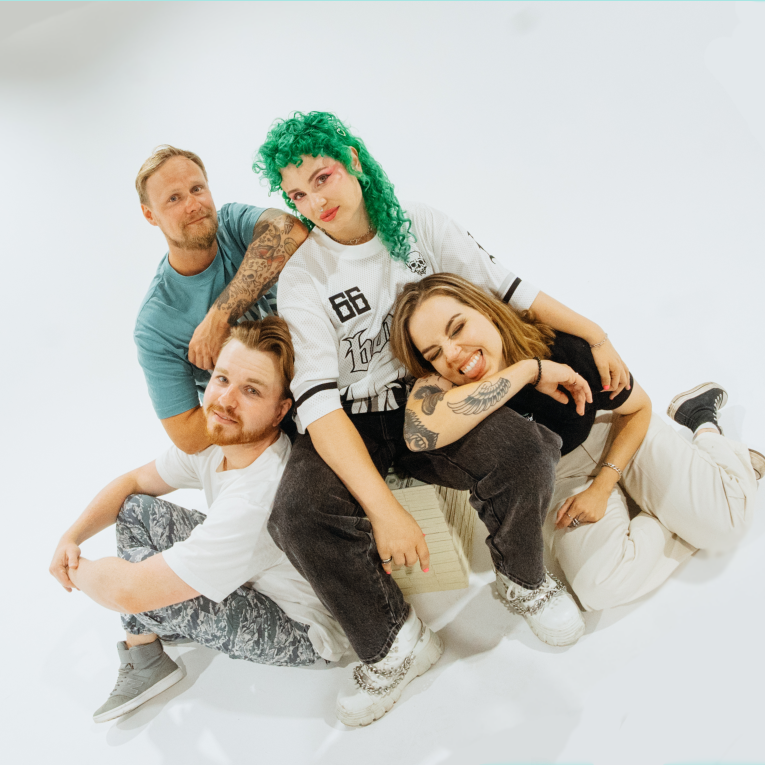
“SNAP” is a release of rage. How do you navigate the balance between speaking to global injustice and channeling your own experiences without one overshadowing the other?
I came to these lyrics through empathy. When I see people suffering through global atrocities, I think – that could happen to any of us. I’ve fallen into other people’s narratives or traps in my own life, so I relate deeply to that vulnerability in others. Every line of SNAP had to speak to both the intimate betrayals that have shaped me and the collective injustices I’ve witnessed. I wanted to humanise those experiences as much as I could.
You’ve mentioned the line “It starts slow, I never even felt it…” came from real moments of being pushed too far. Was there a specific personal experience that crystallised the emotional turning point of the song?
In danger, I don’t go straight to fight or flight. I freeze, fawn, or dissociate, and then it flips into a burst of fight. Even outside of danger, I’ll stay patient until the last straw, and then I erupt. When I wrote SNAP, I was coming out of a period where I’d been burned over and over. I’d been hit financially, forced to work myself into exhaustion, and it wrecked my health. Eventually I thought “this is bullshit!”. I needed to make changes. Rage can be healthy when it’s protective and that’s the energy at the core of this track.
This track marks your first time incorporating screamed vocals. What led you to that creative choice and was it more about emotional necessity, or musical evolution?
The song demanded it. I’ve wanted to scream on a track for years, but SNAP was what finally brought it out of me. I love that raw, unhinged kind of scream that sounds like you’re losing it. The challenge was finding a way to do it without wrecking my vocals. This is the first time I’ve truly encapsulated my rage in a song, and that makes it feel special.
The world you wrote “SNAP” in feels increasingly hostile to dissent, especially for femme and queer voices. Did you ever second guess being so raw or political in this song, or did the urgency demand full honesty?
While there has been real progress for women and queer people, we’ve also seen fascist thinking creep back into the West. The studio is my safe space, and once the music takes over, I don’t second guess what comes from my soul. Art is my God, and if my honesty is political, so be it.
There’s a juxtaposition in the song between control and chaos, was that something you and producer Chris Lalic worked toward consciously in the studio?
Excuse has been experimenting with light and shade for a while, so with SNAP the contrasting ideas came together naturally. The verses are sweet, but then the choruses let loose, and the outro has the energy of a full-on bar fight. Chris leaned into that tension-and-release energy immaculately, and we’re so thankful to him for it.
Excuse For An Exit have always created a space for outsiders, but this track feels like a call to arms. What kind of community are you hoping “SNAP” helps galvanise or strengthen?
There’s a real tenderness within Excuse and among our fans, and that’s something worth protecting. I hope SNAP strengthens that bond and gives people permission to stand their ground. I’m proud of what we bring to the Australian heavy music scene, and I want our community to feel a part of that.
Pop, punk, emo, electronic — your sound refuses to sit in a single box. Do you see genre as something political in itself, especially as a band pushing against mainstream expectations of how rage should sound?
We honestly can’t stop ourselves from experimenting. All art is political, so if our genre-skipping and bending feels liberating for others, I’m glad. It means a lot to bring an unrepresented voice of anger to the front, because so many feel this way and deserve to be heard.
You’ve said this track isn’t ‘overtly political,’ but the emotion is inseparable from activism. Do you think the music industry still struggles to take emotional expression seriously? Especially when it comes from women or femme artists?
Much of the music industry values sex, money and power over vulnerability and truth, and that’s where femininity and emotional expression get pushed aside. But there’s a huge community of people who crave unique honesty, raw emotion, and new ideas. That’s where I put my energy.
The response from your fans, especially around “ur villain” and your live shows, has been deeply supportive. Have you performed “SNAP” live yet? If so, what’s it like performing “SNAP” in front of people who see themselves in your anger?
We’ve only played it live once, at 2 Pizza 2 Planet Fest. I was nervous as hell! I was sick, it was the end of the set, and I didn’t know if I’d make it through. But when my voice started to crack, all I could hear was the fans at the front screaming with me. So I screamed right back. It turned into this unhinged, beautiful, chaotic moment, and I loved every second of it.
You’ve played grassroots festivals, raised money for Lifeline, and headlined sold-out shows — all while evolving sonically. What’s grounding you right now as you move into this next, more aggressive chapter?
My sister, my girlfriend, and my friends have always had my back, but getting stable again, with housing and finances, has been massive! Aggression in this chapter isn’t chaos for me. It’s focus. It’s me drawing a line and protecting what matters.
