Arcadia feels like a deeply personal journey through light and darkness. What inspired you to explore themes of the afterlife and transformation in this album?
Not to be morbid, but we are all going to die. It’s a reality that we all live with each day, and we see ourselves aging as those close to us are doing the same. I think it’s important to acknowledge this reality, and to make your peace with it in the here-and-now. I believe that there is a universal consciousness that we are all a part of—a consciousness that exists outside of space and time. Each of us is a unique expression of that universal consciousness, and we each have our own mind and consciousness that is unique to us. When we die, we shed our physical bodies and minds, and we return to the current of universal consciousness that we all came from. For me, that is the “afterlife”.
You blend plainchant melodies with ambient electronics in a really unique way. How do you approach balancing ancient musical traditions with modern sound design?
I guess I don’t really think of it that way when I’m writing. To me, it’s all part of a greater continuum, whether it’s from the 12th century or the 21st century. I’m always searching for the right combination, and this was the one that spoke to me as I was creating “Arcadia”.
The vocal performances by Sofía Campoamor are hauntingly beautiful. How did you come to collaborate with her, and what did she bring to the emotional core of the album?
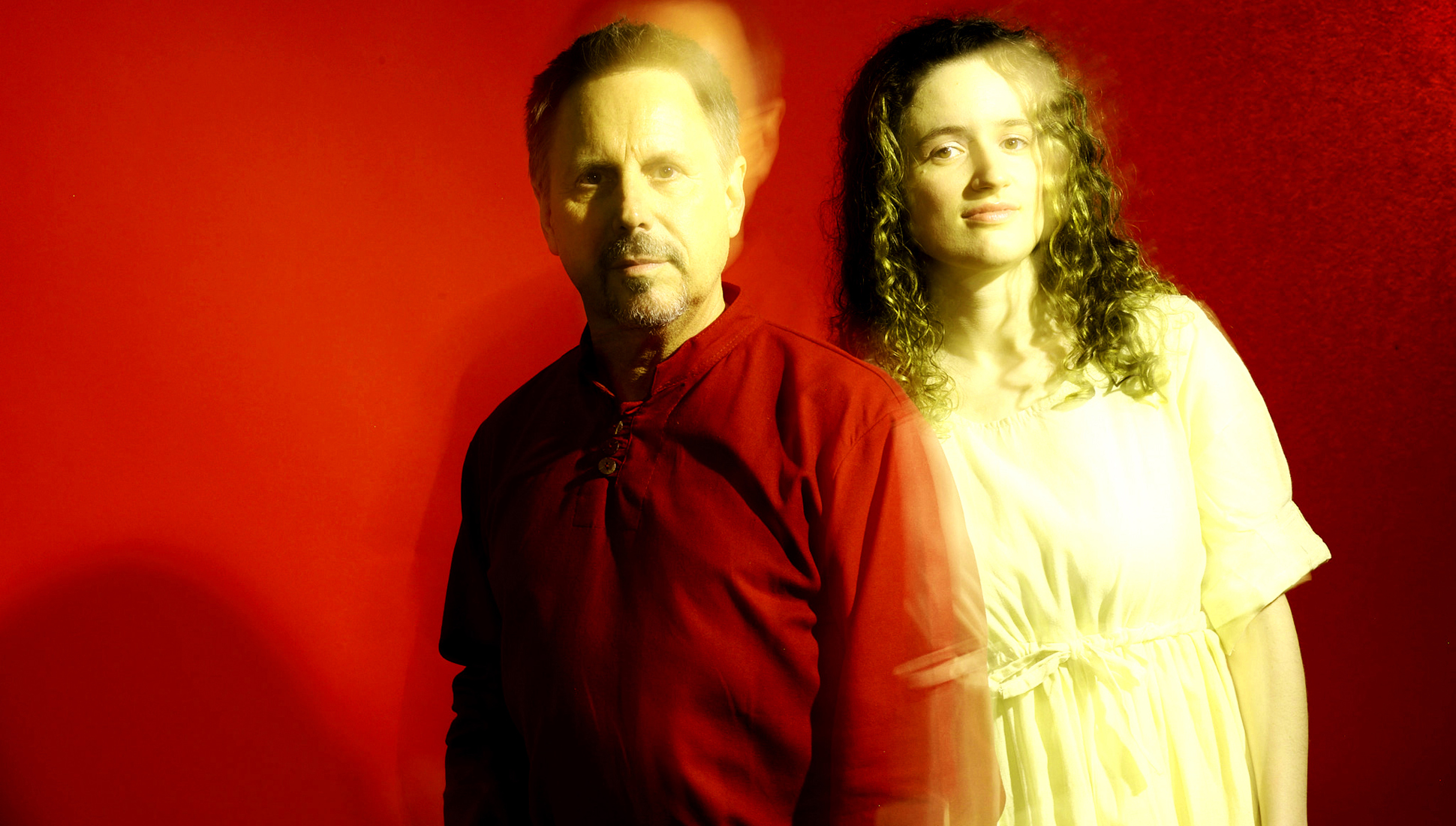
Sofía Campoamor and I met in 2023 just after “Evensong” was released. I had recently performed at a monthly music salon in Brooklyn called Soundshop, and Sofía performed at the following month’s salon. I fell in love with her voice and her spirit, and she and I became friends over the following year, attending each other’s shows and getting to know each other. At the end of 2024, I asked Sofía if she would be interested in working with me on a new album called “Arcadia”, and she was all-in on both singing and collaborating. This album was the first time that I collaborated with another composer, and together we developed 3 of the 8 tracks on the album. Sofía also helped me with the other tracks by coming into my studio and recording demos as I was writing. The resulting sound is unique because it’s a combination of our two musical voices.
Several tracks feature Latin texts—some original, some traditional. What drew you to Latin as a language for expressing the ideas in Arcadia?
I started with texts from Revelations, and from the traditional Requiem mass, and these are used in the first 2 tracks and on “Et lux perpetua”. For the bulk of the album, I wrote original texts and had them translated into Latin. Since “Evensong” was all in Latin, I wanted to maintain that narrative consistency, as I feel like Latin gives the music a sense of timelessness.
The album moves through a clear narrative arc from darkness to light. Did you have a story in mind as you composed, or did the journey reveal itself as you worked?
It’s funny—the narrative arc of “Arcadia” didn’t fully materialize until the album was done. Before that, I had an idea of what the album was about, but this changed once I heard the whole thing together. Originally, I had thought that the whole story takes place in Arcadia, a mythical paradise where everything is perfect and peaceful. I thought that the album would be about this idyllic paradise, but somewhere along the way, the story developed and became quite dark and dramatic, and I realized that the album is about the journey from death to Arcadia. We don’t actually arrive in paradise until the very last track. Everything leading up to that moment is more like the medieval concept of Purgatory, where the soul goes through a final test and a cleansing before entering Heaven.
Can you share a specific moment during the recording or production of Arcadia that was particularly meaningful or challenging for you?
My favorite part was getting to work with everyone again, in the same studio (Reservoir Studio in NYC), and with the same engineer (Robert L. Smith). We had such a great time making “Evensong” in that environment, and it was a real thrill to be back there 2 years later to make the follow-up album. We’ve become a well-oiled machine at this point!
The instrumentation blends strings, piano, synths, and layered vocals. How did you decide on this particular sonic palette, and how did it evolve during the creative process?
Over the 30+ years that I’ve been releasing music, I’ve always tried to innovate with each new album. I’m always looking for new sonic combinations, and new ways of expressing these big ideas of life and death and existence. Each album builds on the previous one, while also adding something new. Piano, synthesizer, and keyboards have always played a major role in my sound, along with live strings. On “Evensong”, I took the big step of incorporating live vocals in the sound, and “Arcadia” takes this a step further.
Arcadia is described as a sequel to Evensong. How does this album build on or differ from that earlier work, both musically and thematically?
“Arcadia” was written 2 years after the completion of “Evensong”. The music of “Evensong” expressed the journey from conception to death, and it had an open ending that could either return to the beginning of the life cycle or to some other place beyond death. After its release, “Evensong” also became the score for a full-length ballet by choreographer Maria Caruso. Maria’s choreography added a new level of depth to the music, and when I saw the ballet premier in late 2024, I was inspired to create a follow-up. Maria’s dance piece ended with the main dancer disappearing into the wings as the lights faded to black, and I found myself asking “Where did she go?” So, “Arcadia” answers this question.
Ambient music often invites listeners into a contemplative space. What do you hope listeners feel or take away from experiencing Arcadia?
I’m always aiming to take people on a journey. It’s my hope that they are inspired by “Arcadia”, and that it conjures up images and emotions for them.
Finally, as an artist who has worked across many styles and projects, how does Arcadia reflect your growth or shift in creative direction at this point in your career?
“Arcadia” really feels like a pinnacle for me. It feels like the culmination of everything I’ve done since 1994, while also being the start of something brand new. I have a feeling that there will be more music coming in the future from me and Sofia, since this album was such a joy to make.
